
by Milkomee Addisu (@milkomee)
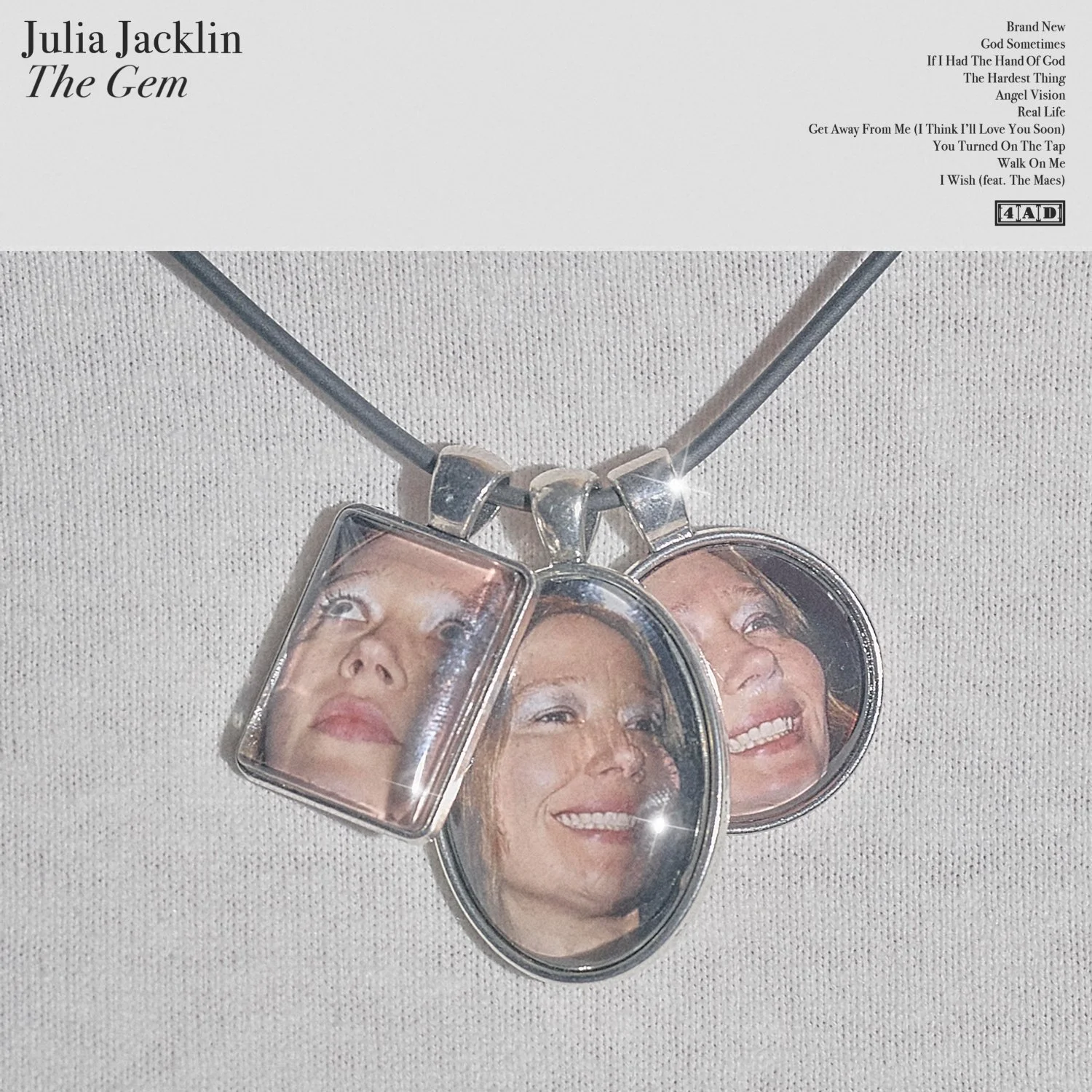
Raised underneath the billowing clouds of the Blue Mountains region, Australian singer-songwriter Julia Jacklin coats her new project, The Gem, with new and familiar lush tones. Her ten track release stretches itself thin to become translucent; enough for listeners to make out Jacklin’s experiences behind her soul-baring lyrics. Through her expansive wavering vibrato, to her whispers of doubt and caution, Jacklin paints an elaborate picture of her comprehensive humanity.
The Gem is doused in retrospection—a thematic thread in Jacklin’s discography. Her previous release, Pre-Pleasure, ruminates through the monotonous, blind consumption of habits passed down from previous generations. Habits that suffocate the natural growth of sexuality, friendships, and relationships. Now, she takes her curiosities to lengths beyond what’s tangible.
Her inability to be as omnipresent and all knowing as God builds with frustration over the first half of the album. Translated in “God Sometimes,” Jacklin prescribes control as a remedy for seasons of disaster. With metaphysical wisdom, maybe these seasons will become temperate under a forceful hand. In comparison to the collective religious mind—which was ubiquitous just this past century—it’s interesting to see this general shift in thought. Before, people would ask for the hand of God to bless their pure hearts to endure the unknown. Shown in Jacklin’s work, there seems to now be this understanding that the collective mind is solely responsible for changing or manipulating its own path.
The alternate translation found in “If I Had The Hand of God,” portrays a loss of certainty in divine intellect. Even if one is ordained with all the knowledge in the world, a life lived in perpetual solitude can leave your mind blank on how to operate. Jacklin describes the nature of this track to mirror her time on tour: “I have a lot of these odd, liminal-space periods where I’m somewhere strange, often by myself, waiting to start again.” Enduring a loss of time, Jacklin copes with giving up familiarity as a sacrificial lamb to appease the nomadic demands of tour—along with the relationships that live on without her.
This feeling of self betrayal blows south down her set of tracks. First, in “The Hardest Thing,” or rather known as a fateful goodbye to someone who wouldn’t allow themselves to be loved. Another in “Angel Vision,” a recalling of prolonged disappointment induced by a painful lesson already known; like a reckless mind habitually touching a hot stove. This is further found in its companion song “Walk On Me.” Stated as her longest piece to date, “Walk On Me” takes her usual introspection and flutters away in symphonic roaring agony. She lays herself bare to the humility of being knotted in a situation with someone who treats her poorly, and the embarrassment that comes from that. She sings, “Walk on me if you like / Take off your shoes, turn out the light / Don’t want anyone else to see / What I let you do to me.” In an NPR interview discussing the song she speaks in hindsight expressing, “Looking back, what gets you out of it is talking about it. But at the time, it can feel like that is too much, and you have to try to obscure what's happening to you.”
Jacklin’s incredible vulnerability in confessing, examining, and questioning her subconscious is unmatched on her final track “I Wish.” This ballad fixed in 20/20 vision, consoles Jacklin’s younger self—a teenager lost without support. Repeating her wishes, Jacklin sums up the album’s disposition: clarity. She wishes she had known better. She wishes she had the answers or someone there to help. Though, ultimately she wishes she had been the holistic person she sees herself as today.