
by Khagan Aslanov (@virgilcrude)
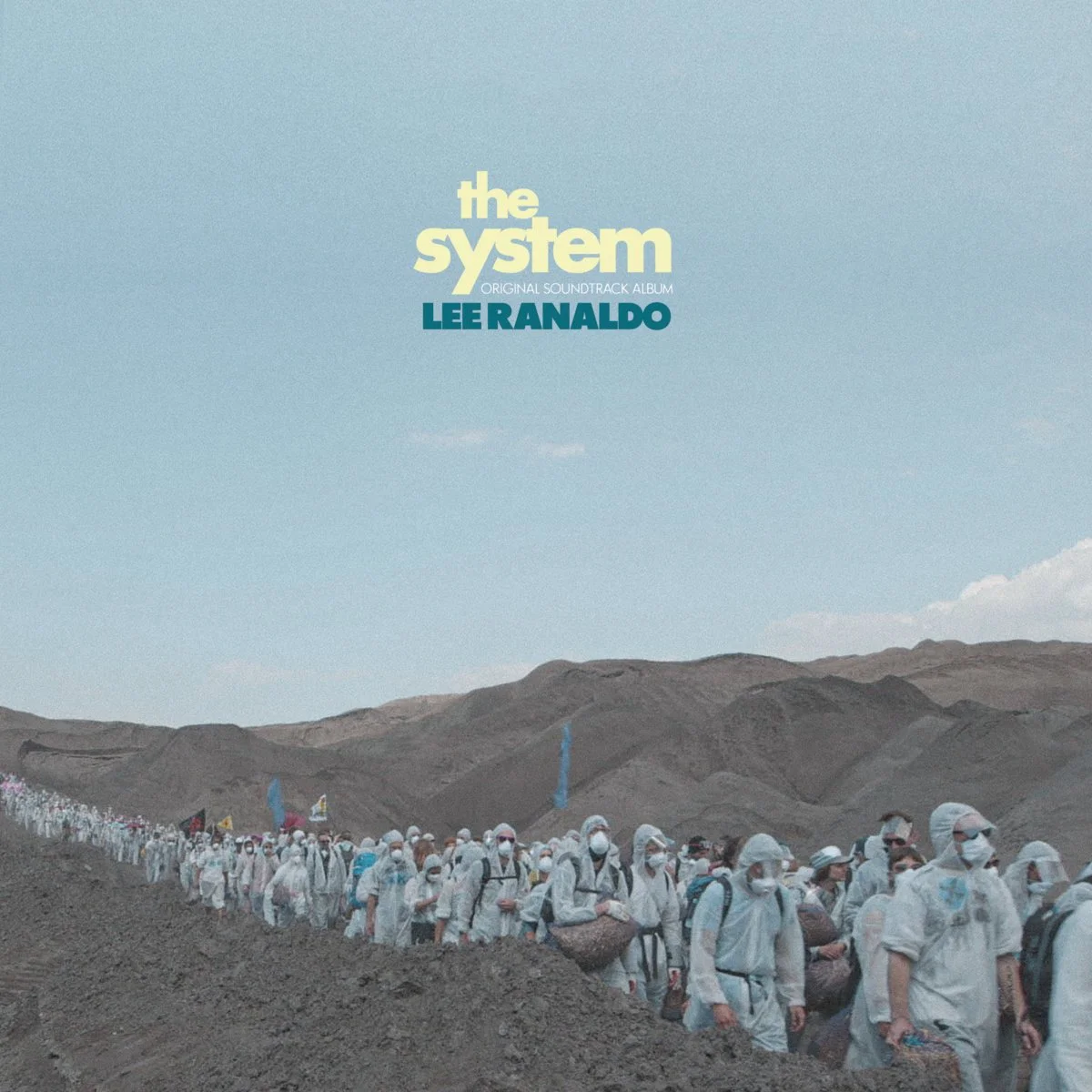
Those familiar with the long and profound history that guitarist and composer Lee Ranaldo has shared with arthouse cinema know that his film-scoring is never as simple as putting together a suite of mood pieces. Rather, what the iconic musician sees in scores is a dialogue between light, time, and the physical properties of vibration. From his seminal 90’s multi-projection quadraphonic Drift installations with visual artist Leah Singer, to his cinematic super-group excursions in Text of Light – where avant-garde film classics were met with walls of spontaneous, tactile noise – Ranaldo has rarely treated film as a passive canvas. Instead, his approach to soundtracks treats the visual as an additional resonant chamber, a place where the narrative trajectory is given weight and weightlessness by the structural decay of an electric note. With his reconfigured masterpiece for Silver Current Records, The System (Original Soundtrack), this lineage reaches a striking peak, turning Joris Postema’s eco-documentary into a deeply human, instrumental study of the very nature of harbouring hope amid collapse.
The album functions as a beautifully executed piece of sonic architecture, meticulously re-sequenced down to fifteen tracks, which are given the chance to breathe completely independently from its celluloid origins. Ranaldo strips away the narrative timing of film, allowing pieces like the opener "Tajikistan (Nice to Meet You)" to bloom with a rhythmic grime that feels both mechanical and alive. Collaborators like cellist Leila Bordreuil, filmmaker Jim Jarmusch, and drummer Brian Chase don't merely accompany him; they act as distinct harmonic elements within a perpetually shifting climate. In "Bergelmir," Ranaldo sets up a lattice of shimmering overtones, exploiting the microtonal anomalies of prepared guitars, while Bordreuil’s cello introduces a dark, anchoring drag. The technical restraint on display is astonishing; instead of relying on the aggressive, volume-heavy squalls of his past, Ranaldo leverages precise spaces between notes, utilizing long-tail, cavernous reverbs that make the silent intervals as heavy as the strikes.
Musically, the record breathes between two starkly contrasting geometric planes: the rigid, ritualistic pulse of industrial isolation and the wide, pastoral expanse of acoustic vulnerability. Tracks like "Berlin Blockade" rely on a dense, overlapping thrum – taut sequences of metallic friction and sustained feedback loops that create palpable unease. This building claustrophobia is then continually undone by moments of radiant warmth, such as the wood-and-wire intimacy of "Instruments of Violence," where cavernous acoustic strumming shatters the synthetic chill. The album's final transformation arrives with "Cool Water," a lonesome cowboy standard, re-imagined as a strange ambient ascension. Here, the tracking shifts from earthly tension to skyward flight – unhurried guitar plucks are caught in a web of shifting vocal harmonies, simulating the slow, dizzying dispersal of a cloud of dust caught in a sudden beam of light.
Ultimately, The System is less an accompaniment to a specific film and more an immersive environment in its own right – a hallucinatory ecosystem captured beautifully on Silver Current's handmade vinyl pressings. Ranaldo has succeeded in translating the terrifying, abstract geometry of global climate anxiety into something deeply intimate, an internal weather system made of copper, wood, and electricity. It is a record that refuses to lecture its listener; instead, it offers a sanctuary of beautiful noise, reminding us that even within the collapse of old frameworks, there are still new melodies waiting to be coaxed from the wreckage.