
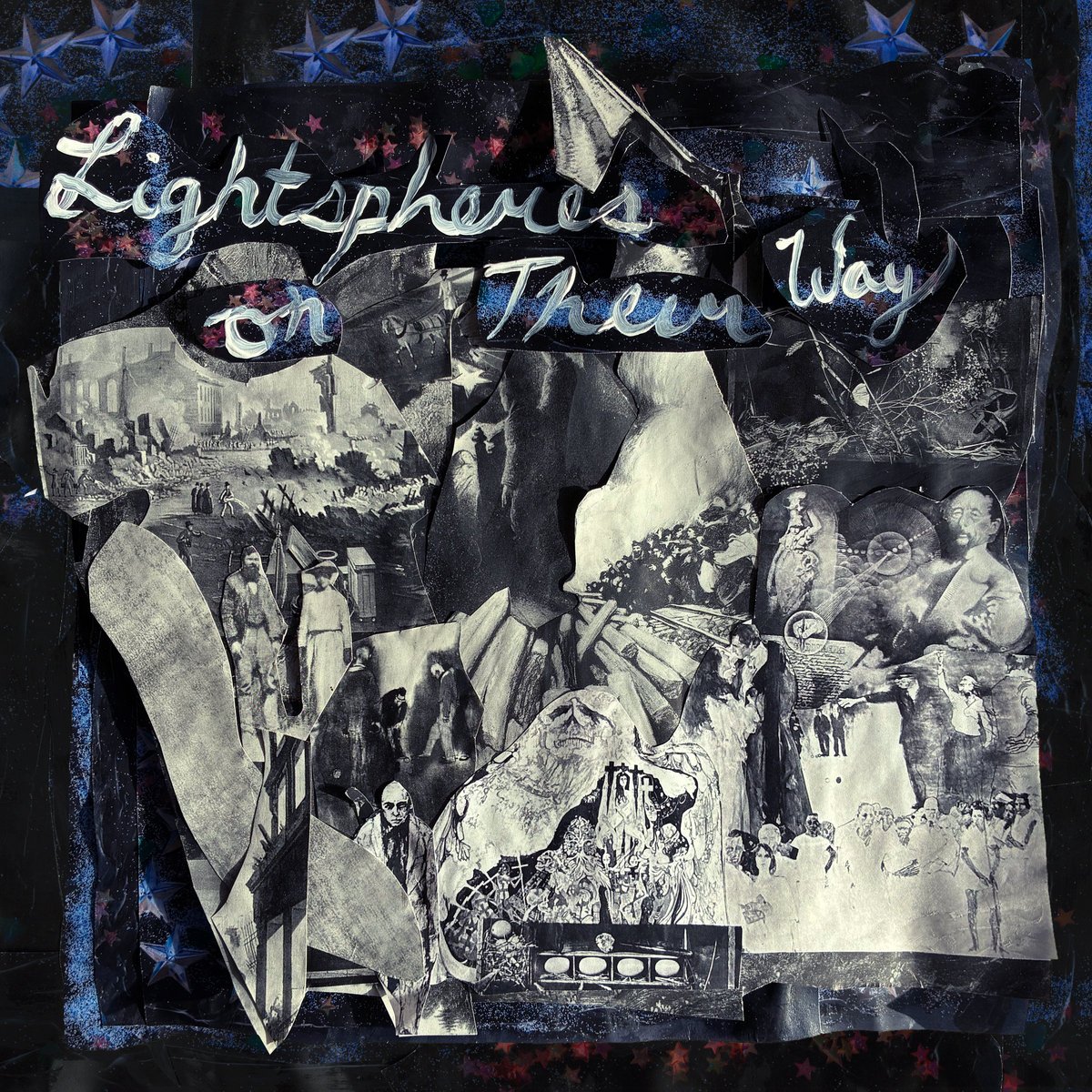
by Noah Galkin (@noah.hgalkin)
In episode three of the television series The X-Files, Scully and Mulder’s monster of the week is a genetic mutant called Eugene Tooms. He time travels through hibernation, returning every thirty years to harvest human livers for sustenance. He’s a serial killer, technically, and his calling card is stealing an object from the victim’s home – a shot of his collectibles reveals a gilded folding fan, a pipe wrapped with white animal hide, a doll-sized globe on a stack of doll-sized books. The objects seem to track the evolution of trinkets in the 20th century. It’s very well a runtime-padding detail, as it’s never really explained. Why would an alien of primitive, unemotional nature take interest in souvenirs, especially such intimate ones?
Lily Seabird, who grew up in the purported “UFO hotspot” of Pennsylvania – Bucks County – reads like someone who almost believes in magic. She references Neverland and Poltergeist in her lyrics, peppers interviews with mentions of lightspheres and space-specks. But most of all it’s how she writes of time, how it opens up and stretches like a membrane, how it gives and takes away, but mostly takes away. Maybe rumor used to creep around town that UFOs zoomed through the Bucks County night sky, but it’s the same sky that her mother would smoke and weep beneath. Time exponentially warps our perspectives and our bodies, and takes parts of our love with it. Maybe time itself is the real extraterrestrial, and it’s more like Tooms – unfeeling and predatory, and most noticeably present when it beams up our souvenirs.
Entering the homestretch of her 20s, Seabird resides in Burlington, Vermont, where she moved at 20 after growing overwhelmed by city life at The New School. She leads a decidedly domestic life, working at the coffee shop she used to regular, walking the town bike path with her partner. I wouldn’t go as far as to call her an “old soul,” though her latest, Lightspheres on Their Way, does suggest a certain heightened wisdom. The realities faced on the record are yet the revelations of a quarter life crisis, a series of solemn reflections from someone with a lot left to learn. A shimmering, dewy harmonium floats above opener “The Pulley” like the sobering light of dawn – “Am I still allowed to pray even if I don’t believe anymore?”
Grief is a cornerstone of her emotional register, with past LPs Alas, and Trash Mountain both grappling with the weight of loss. But never has her palette been this heavy, this leaden with the darkness at the fringes of every passing moment. The record hits a drain-circling center run that’s dark with depressive shades of Jason Molina black and gray. “Pennsy” is a wintry, Manchester-by-the-Sea-like lament on returning home, a place that Seabird wishes was haunted more like the movies, because that way she could turn it off. “Blackstar” is a dusty, eschatological vignette of a pre-apocalyptic rock show. She’s written her fair share of farewell transmissions, but none as potent as these.
As if there’s disease in the soil, time wilts love, too. Time runs out, or drags us along like roadkill, but either way love and comfort are moot as long as the clock keeps ticking. At least, that seems to be Seabird’s experience. “Portal to the Past,” the record’s most staggering song, is not your typical take-me-back breakup elegy: “Then I saw the lines on my hands and the marching band just fades away / Replace it with a dull roar of booze and cocaine.” This is a lament from the end of a pint, a rocker from rock-bottom. It reaches “Cowgirl in the Sand” levels of grime, but is far more desolate, Seabird’s guitar swaying drunkenly and alone. She told Paste Magazine that lightspheres are the “collective consciousness.” On “Portal,” she expresses an expectation that they’ll “fade to black,” that the lifeforce of the universe itself is threatened by the passage of time.
In episode twenty-one of The X-Files, Eugene Tooms is released from prison on parole, his only skeptic in court the detective Mulder. Later in the episode, Tooms breaks into Mulder’s home to impress his shoeprint into his own face, framing Mulder for assault. I thought, why would he do that? He’s essentially an animal – why would he be vengeful? Perhaps this is where the analogy becomes a stretch, but like Seabird’s take on the uncompromising nature of time, Tooms’ actions were survival interpreted as vengeance. The souvenirs he took don’t require an explanation because time itself cannot be explained. We may curse the cruelty of the universe for devastating our lives, question why God has exacted his revenge on us of all people, but the lightspheres are by nature utterly random.
The album’s heartwrenching, slow-burning finale and title track revives the harmonium from the opener, because change is cyclical. Seabird prods at the uncommon subject matter of expecting loss, of mourning in advance. Her final sentiment is that “[she’ll] be alright,” which she repeats until the phrase loses meaning and becomes a trembling, glowing sphere of hope. You believe her, because she’s made it this far.