
by B. Snapp (@snappstare.bsky.social)
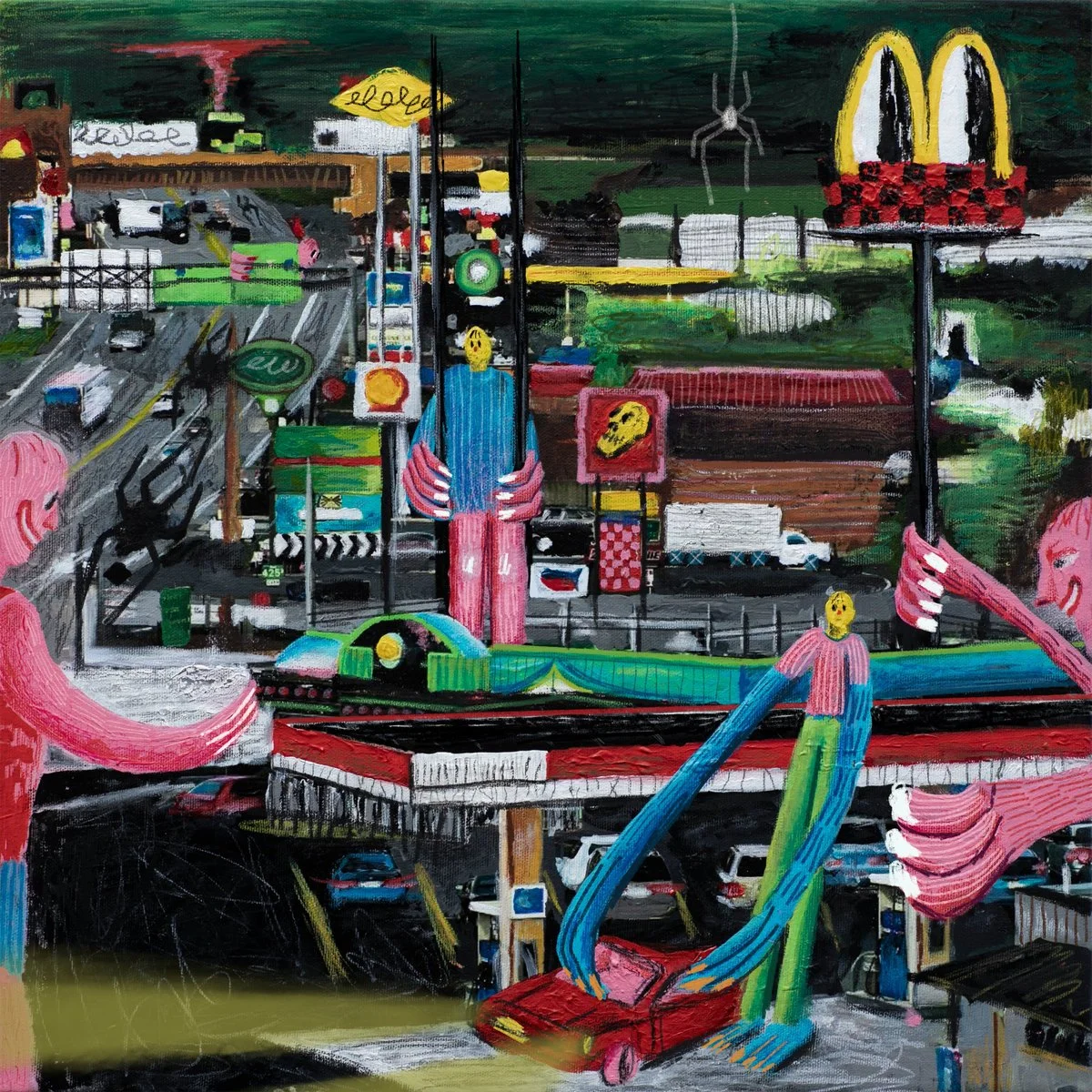
Lawn returns with their third LP, God Made the Highway. This is the first release since their Bigger Sprout EP in 2022. It’s their best thought-out self-expression since 2020's Johnny, and it’s their first album on Exploding In Sound Records. The band eclectically pivots between nostalgic jangle-pop and mordant post-punk, the juxtaposition of which is set up nicely on the first two tracks: “Water,” a slow rising tide that would fit an alt-country aesthetic like early My Morning Jacket, and “Lonely River Blues,” a driving rhythmic new wave groove with noise pop experimentation and sprechgesang vocals. The overall effect blurs and whirs by blending as songwriters Mac Folger and Rui De Magalhaes twist through their own lanes, creating a gear-shifting experience for the discerning ear.
The sonic whiplash between these openers and the subsequent track, “Davie,” suggests it’s best to buckle up for the first listen. As guitar rock goes, Lawn covers a wide indie-rock spectrum. Going back to their first LP, Blood on the Tracks, and its title track in particular, they have always possessed a knack for hooks and chorus melodies that sound simultaneously college-radio-friendly and left-of-the-dial, as if crafted for independent DJs and under-the-radar curators. With Elephant 6-reminiscent indie pop delights like “Davie,” the C86-sounding “Shade in the Pasture,” the lanky throwback ditty “Nowhere Walkin,” and newly unhinged art-punk bangers like “Pressure” and “Everyday Man,” the duo-powered Lawn ensures each song on God Made the Highway has its own sound and identity, jarring the listener to pay attention while equally inviting them to enjoy the ride. Ten people might each have a different favorite song.
The centerpiece track, co-written by Lawn and Jake Silvas, is the six-minute wandering “History Lesson,” which summons up as much of The Rolling Stones’ “Sympathy for the Devil” as it taps Minutemen’s lyrical approach and Parquet Courts’ delivery. The way the song builds lets you in on the layering going on everywhere on the album. First, the bass line, then a Clean-like guitar chord progression that is joined by the beat and another flanged rhythm guitar part underneath, leading up to a soloed hook, and the cherry on top, an infectious group-sung “baa-buh-ba-baa” melody. The verses are again spoken-sung, and the title of the album appears in the lyrics.
Those words recur within the title track “God Made the Highway,” which is not a song but a penultimate spoken-word track. It comes from an ethereally computerized voice, the type used to protect the identity of someone who agreed to be interviewed in a documentary as long as they’re silhouetted in a dark room and their voice is encoded and disguised. The sound of it could also be imagined just as easily as an AI chatbot’s confessional realization or an anonymous phone call using a vocoder to hide the provocateur’s actual voice. Whatever the intent, the context of the speech is speculating on why God made the highway, arriving at the conclusion that “I am success as much as I am failure… No one can stop me now.” It’s somewhat eerie and jarring, again; this could be a rally cry for a movement or something potentially devastating.
Then “Sports Gun” kicks in, its title implying something dangerous repurposed for fun. A driving bassline coupled with distorted guitar noise quickly overcomes a synthy twee beat, which expands into a dance-inducing jammer. The post-punk vocal attack has lyrics that branch out from what was seeded in the title track. What was once a dream becomes reality now; speculation becomes revelation. The chorus circles a mantra “no turning back, I feel alive, no turning back, I feel alive tonight! Son of a gun!”
The album’s enhanced texture is attributed to a handful of key collaborators. There’s engineer Greg Obis adding vocals to “Pressure.” Nicholas Corson adds guitar, additional vocals, keys, and additional engineering on all tracks. Mark Edlin plays drums and percussion. And Tyler Scurlock plays synth on “Lonely River Blues” and “Shade in the Pasture,” plus piano on “Pressure” and “History Lesson.” Duncan Troast is credited with piano/keys on “Davie” and “Barroom Wonder,” while Nic Gohl and Carolina Chauffe add vocals, rounding out the vibe and variety of sounds on the record.
Throughout the album’s lyrics and delivery, there’s a bevy of personal truth and rumination revealed behind a veil of zero-fucks-given attitude. With every repeat listen, the album’s switchback sequencing maneuvers through a sonic landscape of peaks and valleys — traversing cities and countryside alike before circling back again, as if God made the highway to get you places, lead you out into the world, and then find a way back home. But somehow, it’s different now.