
by Kurt Orzeck
Whether Eugene S. Robinson is an unstoppable force or an immovable object will be debated for centuries to come. Formerly of Whipping Boy and Oxbow, and now vocalist for avant-garde noise-rock band Buñuel, the highly provocative artist is, in a much briefer descriptor, a titan. His concert performances are stuff of legend; during most of them, he wades into the audience and deliver his oratories directly into the faces of those who dared attend his shows. Robinson’s personalized approach gave new meaning to the phrase “intimate concerts.”
And then there are his newsletters. Here is an excerpt from a 13,279-word missive this writer received on December 1, 2006, with the subject line "OXBOW Newsletter No. 53: THIS IS MY CRACK, THIS IS MY GUN.”:
WARNING: You are receiving the OXBOW Newsletter (more like it can be found at [http://www.theoxbow.com)]www.theoxbow.com) because you 1) are so cool. Soooooo fucking cool. Now that you don't have pictures on your underwear anymore, 2) secretly hope our mistakes will be your amusements, 3) know that there's no way you're smarter than those fellas in Slayer and/or 4) keep thinking those sexy sex sex thoughts and think this might help.
If you desire to be relieved of the onus of having to read this monthly paean to the powers of personal persuasion, call us at 650-714-4891, and we will tell you some truths about yourself that will hurt. Absofuckinglutely.
The insistent rhythms of your missals, missive missals rattled around in our heads in the same way that it does when it does so across some sad bed with someone asking you, repeatedly, "what's wrong? What's wrong?" in the face of the most immediate truth of them all: nothing. As a signal posting of all that is actually right and as if we had nothing better to do but sit around and write newsletters.
But that's OK, we think of saying. That's OK, because it shows you care. You care about your unslaked thirst for our failure since, of course, even if we fail at failing, given our original oath of service we have failed at succeeding in our most vital of endeavors: the murdering of ego.
Yours. Not ours.
And so it goes, the fictional numerical 2006 wheezes to a close and we've broken all of our promises to everyone that was foolish enough to believe that promises still held some sort of currency here. We've cheated, lied, stolen and caused great injury and did so all BRILLIANTLY.
So believe us when we say: we wished you could have been there.
The U.S. recently lost Robinson as a member of its citizenry after he decided it was no longer worth it to “fight for the soul of this country” and moved to Spain instead.
In this extensive interview, Robinson reveals the reasoning behind his decision to “self-deport” from America, what makes Buñuel — the name of both a municipality in Spain and a Spanish/Mexican avant-garde surrealist filmmaker — distinct from his other projects, and why he decided now was the right time to reissue the 1984 LP, Muru Muru, by his early band Whipping Boy.
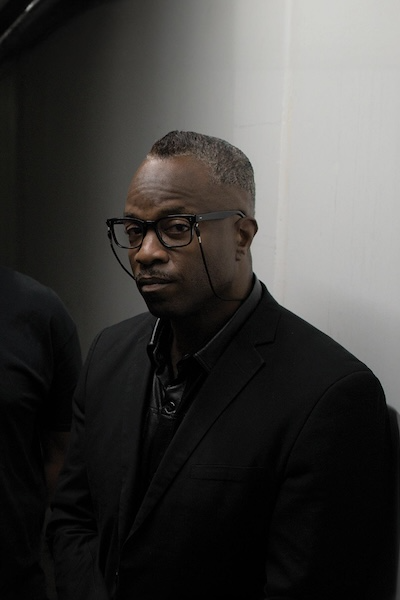
Eugene S. Robinson by Annapaola Martin
Kurt Orzeck: Before we get into music, I’m stunned by the incredible physical condition you’re in at age 63. Have you always taken really good care of yourself health-wise? What’s your regiment?
Eugene S. Robinson: It's changed over time. I started lifting weights when I was 9. I did my first bodybuilding show around 17. During that time, I wrestled a bit, and then boxed a bit, and took karate, and then Japanese jiu-jitsu. Then I didn't do anything in college except lift weights and play rugby. But then I hurt my back and didn't do anything for 10 years except a lot of LSD and music.
As college started to wind down, I started to lift weights again and started competing in bodybuilding again. I got blown out of the water. My last bodybuilding competition was supposed to be the California Naturals, but I was probably the only “natural” one in the house. And so I left disgusted and at that point started taking steroids, though I never competed again after that. I didn't want to use steroids as a leg up for competition. At that point, I just said, “Well, let me see what happens.” And so I got up to 265 pounds.
I started bouncing at night even though I always had a corporate job of some kind or another during the day. Through bouncing, I started taking Muay Thai. And then I ran into some guy who said, “You should talk to this combat wrestling guy.” And it was really the first strivings of Brazilian Jiu-Jitsu. I was with a lot of the guys in the first iteration of UFC like Paul “Polar Bear” Varelans, who just died about two years ago, and a few others at Javier Mendez's place, where Cain Velasquez and Khabib Nurmagomedov trained.
That was the first place I trained in combat wrestling. Then my coach there left, and I was a ronin for a bit. Eventually, I found this guy, Shara "Bullet" Magomedov, and trained with him seven days a week for about 15 years. He got a black belt in Jiu-Jitsu and competed.
I think I've got a world ranking of some kind, but I like to maintain that I still suck. I might be better than you, but in terms of the universe of Jiu-Jitsu players, I lack skill. I make up for it with strength and rage. When I first got into punk rock in ’77, it made me invisible. And then when hardcore hit, it made me an outsider because all those maximum rock and roll guys were obsessed with something that wasn't a New York obsession.
I came from New York to California in 1980, and nobody in New York gave a shit about jocks. There was no talk about jocks. But California hardcore was so mired in high school culture that there was always this talk about jocks. So people would make fun of us because we would jog and lift weights. I was like, “All right.” And all those people are dead now, incidentally.
There was a method to our madness of eating clean. Even when we were opening up for Minor Threat and those guys were skateboarding and they were giving me a hard time about something, I was like, “Yeah, look at you guys. You eat like shit. You're drinking sodas. You're eating candy bars. You guys are going to die, man.” And they were just, like, “Ah, you jock.” I was like, “All right, we'll see.”
This year I've had a hard time lifting, and these Buñuel shows I've been doing have been tough because I had knee surgery on April 24. Before that, I had ruptured a quadricep tendon, and I just ignored it. I did a CrossFit Open with a partially torn quadricep tendon, yet I made it through. I think I scored 28th nationally. And then, of course, three days after the Open, I was just doing a box jump, and my tendon snapped and detached completely. I still went off on tour of Europe with Buñuel, just duct-taped the leg and said, “Hope for the best.”
The doctors said, “Well, you need to get surgery.” And I was like, “No way, I'm busy.” They said, “Well, if you wait until December, we won't be able to pull a muscle down to reattach it. So we'll have to fuse your knee. You'll walk like a pirate. And that pretty much means no swimming, no Jiu Jitsu, no running. But if that's what you want to do, you can do it.” I was like, “OK, as soon as the plane lands, can I have surgery?” They go, “yeah.”
So the plane landed on the 22nd, and I rolled in for surgery on the 24th. I said, “You know, I got five weeks until I tour again. Can I do it? What should I watch out for?” And they said, “Well, wear your brace backwards. Don't jump off any stages.” And so I wore the brace backwards and just did 20 shows in 20 days.
The tour we ended, we flew back to Europe and I had two shows. Today [August 2] was the first day I started working out again. And boy, I felt great.
KO: Dude, I would want to write your biography, but you wrote a memoir [A Walk Across Dirty Water and Straight Into Murderer’s Row] two years ago. Is there a single incident or confrontation that stands out in your mind when you were with Oxbow in particular?
ESR: One guy at South by Southwest screamed, “Buckwheat,” at me from the audience during a quiet section between songs. And I just stopped and I said, “You know I can see you, right?” I addressed him directly because the whole audience went, “Oh.” And I go, “You know, I'm not offended by your joke, but if this is a harbinger of comments to come, and you're going to intrude on the show, then you're going to force me to make you part of the show. Is that your desire? Because we can just cut to the chase right now.” I saw him in the audience shaking his head and said, “OK.” And we finished the set without incident.
I haven't had an incident at a show in a long time, which means that people are reading the press, I guess. You want to see some music and go home without hurting, and antagonizing me is not a way to do that.
KO: I want to get back to when you were a teenager. How would you describe yourself, looking back when you were in high school, before you started music, in terms of personality and confidence?
ESR: A guy at Jiu Jitsu once described my level of confidence as “irrational.” He said, “You have no reason to be as confident as you are, and it's going to get you hurt.” And I was like, “What do you mean?” I'm more polite now and less of an asshole, but I was pretty hard to control in high school. Not in a bad way, I was just … it was exuberance and a 100 percent belief in myself, which is how I phrased it. Equal parts arrogant and skilled. And as a result of being who I was in high school, I got my ass kicked quite a lot, which I write about in the memoir. It wasn't until I actually learned how to fight well — and that didn't happen till I was like 20 or 21 — that the tide started to turn. But what goes with that is a certain quality of fearlessness.
It's always interested me with fourth- or fifth-generation hardcore kids who interview me for publications and say, “Oh, were you ostracized? Did scenes invite you in? The early scenes seemed so dangerous.” I go, “I have no idea what you're talking about.” In New York in 1978, ’79, I was so alienated in general. But everybody was. So I wasn't at shows to make friends. I wasn't there for a social grouping. I would get on the subway in Flatbush with a mohawk and let the chips fall where they may. I was answering some kind of spiritual call of where I needed to be at the time.
I was involved in theater stuff in elementary school and junior high, but when I got to high school, I just couldn't stand the theater kids. So I became crazy, obsessive, a weightlifter. I had aspirations bigger than high school. I auditioned for Woody Allen movies in high school when people were doing Man of La Mancha onstage for their parents. I didn't give a shit about that. I wanted to get paid for it. And I thought I could do it better than the people I saw in the movies.
The first time I went to Max's Kansas City, I was on the subway and some guy noticed I had a Black Flag button on. He goes, “Oh shit, you like this music?” I was like, “Yeah.” He goes, “Come on, Johnny Thunders is playing over at Max's tonight.” I go, “I can’t.” He goes, “What do you mean you can’t?” I go, “I don't have money to get back on the subway.” He goes, “Fuck that. We'll steal it. Let's go.”
So me and some total stranger, some adult male — I was 16 — we go to Max's and watch Johnny Thunders. He starts stealing tips off the bar and giving me the money. When you have that kind of level of confidence that I had, you do shit like that. A guy tried to rape me when I was 13, and I said, “This will never happen again.” So in addition to lifting weights, I was armed all the time. So I didn't really have any concerns about being assaulted in a club.
KO: Given that you felt solitary and alienated in high school, when you started Whipping Boy, was that the first time you felt a sense of community?
ESR: No. I had community. Outlaw communities. My community in high school were the guys at the gym. I cannibalized a lot of their stories for my novel A Long Slow Screw. A lot of them were mafia guys and had great stories, and I had to do something with them. So, again, my community well exceeded the boundaries of high school. And I had a couple of close friends in high school who were musicians.
KO: Did you ever see GG Allin play live?
ESR: I saw him once. But I say “saw,” but when he showed up, people were primed. Merle [Allin, bassist and older brother of GG], played one note, and a riot broke out and they smashed all the windows, almost burned the club down. GG ran down the street into the night. So I don't know that I really got a chance to “see” him.
I remember when I was working for Tim Tonooka at Ripper [Magazine], I was also writing for Maximum Rocknroll. And then I started putting out my own magazine. I got some scribbly letter from [GG] or Merle with some of their music. And I remember thinking, “This is absolute shit.” But there was a strange and crazy kind of attraction to it. You could feel it through the letters. And so I was not surprised that he became significant.
KO: Was that the entry point for you getting exposed to new music you hadn't heard before?
ESR: It's hard to remember, but my entrée into metal was through a guy on my block in Brooklyn. KISS was the first metal band I was really into. We already had Deep Purple in the house, which I liked, but I wouldn't call that metal. People forget that music press was a big thing. So I read about Black Flag before I ever saw Black Flag. And what caught me was a picture of them on the SoHo Weekly News, and [bassist Chuck] Dukowski was wearing a hat that said, “Redneck,” on it. And I was like, “These guys have a song named ‘White Minority?’ Well, I gotta go see them.” I had no idea if they were serious or not.
I remember after the Berlin Wall fell — I think I was working at Apple Computer then — they sent me to Germany to cover something or other, and they put me up in the hotel, and the guy who took me to the hotel said, “You know, things are generally pretty safe around there. Just don't walk down that way, because, you know, you're working for the East.” There were all these skinheads. And I was like, “OK, see you later.” As soon as he left, I said, “I’m kind of hungry. There's some food down there that way.” And that's exactly where I went. And I realized, “You know, as dangerous as [that guy] thinks it is, no place is more dangerous than any place in America.” So I walked as far east as I could until I got tired and got some food and went back to the hotel.
On that whole walk, I was the most dangerous guy there. I had two knives on me, plus all those years of Jiu Jitsu and boxing and wrestling.
KO: So let’s talk about the Whipping Boy reissue, which I gotta say, is one of the best records I’ve heard this year. I’m curious about a few things, but let’s start with the guitar sound, I don't feel like I've heard that kind of a fresh, different guitar sound since Steve Albini. Was that the result of the remixing or was it how the guitar sounded back then when you guys were playing those songs?
ESR: Well, it thrills me to death to hear you say that, because you have to understand that this record was much maligned, not appreciated, and almost career-ending. Albini, at one point, was talking to some studio guys, and he said, “If you went to a store and tried to buy toilet paper, but they gave you sandpaper, you'd be pretty pissed off.” And I was like, “Well, that's what we did.”
We were known as a hardcore band. And we decided, “Well, everybody who likes us just likes our aesthetic worldview, and they'll come with us wherever we go.” But the second record, which was Muru Muru, was not a hardcore record. I literally had distributors say, “Take this shit back. It's not our job to break new markets for you.” The reviews were like, “This is what happens when you take too much acid.” People were openly mocking us. Outside of the fact that we've been immune to mockery, that wasn't going to really stop us — and it didn't stop us. But we were always upset that we thought the record was misunderstood.
And part of it being misunderstood was that it was recorded badly. We didn't know what we were doing. Guitarist Steve Ballinger, at that point, had to have a studio guy explain the difference to him between a guitar chord and a speaker chord. But he is an unsung hero of guitar, in my mind. He spent the majority of his time actually playing football. And he was a brilliant guy. That's how he got to attend Stanford for free. He was on the Playboy Pigskin Preview, primed to get drafted by the pros — but then he got hurt. Steve played guitar for a long time but was largely unsung, I think, because he was self-taught.
And so what he did, where he forced his guitar to go, was purely like an act of will. He never tried to emulate Eddie Van Halen or someone like that. What he wanted to create artistically, and force it through a skill set that wasn't massively strong, resulted in a certain genius.
But Muru Muru failed. We felt it sucked too, because it doesn't sound like how we imagined it. But producer Joe Chiccarelli cleaned all that up. And I listen to it now, and it’s how we wanted it to sound. I yanked one song off it, called “Vision,” and Aaron Turner from Sumac said, “Why?” Because he knew the original record. And I go, “I don't know, man, it just sounds like Bad Brains to me, and not in a good way. And I've had 40-plus years to think about it.”
KO: Aaron did the artwork for the reissue, right?
ESR: He did the layout. Steve did the actual artwork for the cover. Steve can sculpt, he can paint, he can play guitar. And he's still in really good shape too. He’s two years older than me and keeps me in good shape.
KO: So in terms of the album being misunderstood, it really was because of the production aspect, right?
ESR: Oh, there were all sorts of reasons. I had a song called “Speed Racer” about taking meth and getting into fistfights. I was getting a lot of criticism from people who had no basis in reality for critiquing me at all. I remember another guy told me, “Ah, you gotta sing songs about what the kids like. Your shit's too obscure. Like, you need to sing songs.” I go, “About what?” He goes, “About Ben Davis.” I go, “Who's Ben Davis?” He goes, “I mean, the clothes. These kids are being beaten up by guys who wear Ben Davises. You need to tap in with the high school kids.”
The lyrics on Muru Muru, which is now called, Dysillusion: A Muru Muru Remix, are not hardcore lyrics. There's no “1-2-3-4-1-2-3-4” stuff on there. I didn't make sense of that until years later when I was trying to get a record deal for Oxbow. This was after the second or third record. People said Oxbow wasn’t punk enough. And I didn't understand. But that was when the Warped Tour started. And then I understood.
Punk had become manageable, sellable. It was coming in containers now. It was a genre, not an attitude or an approach. So I was out.
KO: Was there any impetus for releasing this reissue because you felt like the sort of climate that punk is in right now might be more accepting of a record like Muru Muru, that isn't so confined?
ESR: No. I don't think the punk community will change at all. And I say that recently having toured America with Buñuel. The people I knew from Whipping Boy, my hardcore crew, they refused to acknowledge the existence of Oxbow. For them, it's like I stopped making music completely. Every time somebody tries to sell Dysillusion [in terms of the history of] hardcore and punk rock, I go, “You're setting it up for failure.” If Rancid is your favorite band, you will not like this record.
So if you're a fan of Oxbow or Buñuel or Jesus Lizard or some such thing, it'll make sense. It'll sound good to you. My friends who have stayed in the game, I have a lot of respect for them and go to see them play with no hesitation at all. I'm talking about Agnostic Front and the Cro-Mags and so on. Those guys have been slogging it out from the very beginning.
I was at one or at least both of their first practices, and I'm super happy for them, how far they've come and that they've kept the torch lit. Ian MacKaye has a band with his wife now, The Evens. It's a good band. I like it. I like that he's evolving. Evolving means to me that you've gone far. But if you stay like Agnostic Front or the Cro-Mags, it means to me that you've gone deep. And what I do is go far and go deep.
KO: Why did you feel like Whipping Boy had to disband when it did? Was it because you hit your limit with the fact that people weren't understanding it?
ESR: No, no, no. I maintain that Whipping Boy is not broken up. And I maintain that because I had to sue Sony over the Irish band Whipping Boy, who had contacted me three times before to find out whether we were soft on them using the name or were OK with them using the name. And I was like, “No, you can't use it.” And then they came out with a record, and I called Sony.
I got a hold of their lawyer. The lawyer was completely fucking disrespectful. He's like, “OK, what do you want? Two hundred bucks?” And I go, “Hmm, is that what it would cost if I got a cease-and-desist order for you to pull every single record from every single record store in America?” And then he goes, “Oh, OK, well, you're driving a hard bargain. Two thousand.” And I go, “At some point in this conversation, we're going to be doing business like adults and not assholes.” And so I just kept running it up and running it up. And eventually we got to $22,000, which didn't come with a cease and desist. But a grandfathered clause in the existing music meant they couldn't go forward with new music. Otherwise, I could re-sue for treble damages. So they did it.
Later, Oxbow was playing Dublin. I'm sitting at the bar at Whelan’s, which was the venue that we were playing. Some guy sidles up next to me, and he's having a drink, and we're talking, and he said, “Say, weren't you in that band Whipping Boy?” I said, “I am in Whipping Boy.” And he's like, “Oh, well, you know, I was friends with the Irish Whipping Boy, and you kind of ruined their career.” I go, “They ruined their career. They had ample opportunity to change. I gave them three chances to change, and they just ignored me. They could have called themselves ‘The Whipping Boyhood,’ you know, or just any alteration. They got what was coming to them.” And he was like, “OK.”
And for the rest of the show, I was thinking, “I’m going to have to fight some guys before the show's out.” But it ended up peaceful.
So Whipping Boy still exists.
KO: Are you thinking about another Whipping Boy album in the near future?
ESR: No. There's been talk, but Steve and I don’t have the same emotional attachment to it
KO: You're obviously an extremely busy guy, and I've been looking forward to speaking with you for 20 years, so thank you so much for the opportunity.
ESR: Thank you so much. It's been a pleasure.