
by Emmanuel Castillo (@emmanuelscastle)
Most bands approach change and evolution with a sense of trepidation, hedging their bets and pulling their punches because they’re afraid of everything: how it will be perceived, whether or not the new songs will go off at the show, whether or not it’s too different, everything but whether or not the vision has been compromised. Ganser flips that fear on its head — their music deals with the anxieties and pressures of modern life, the high stakes micro-dramas and the absurd coping that follows, so the pressures of being in a band seem comparatively light, especially when the lyrics are highly tuned to how nothing seems to work anywhere. Line up changes have reshuffled the priorities, and you can see the evidence of the long gestation period in some of the aesthetic choices. Musically, the textures on Animal Hospital have deepened and there’s a greater emphasis on space, the band continuing to expand and experiment with the collision of dance music atop a foundation of noisy guitar, propulsive rhythms, and tense melodies that began in earnest on Nothing You Do Matters.
“Black Sand” starts with an unadorned rhythm on the toms crashing around an insistent, surfy tremolo picked guitar. Right away, the album pulls you in a few different directions by contrasting the musical tension with Sophie Sputnik’s languid delivery and paranoid lyrics before all your attention gets sucked in by a Twin Peaks interpolation on the synth. Brian Cundiff’s drumming moves deftly from tom to hi hat grooves, from four on the floor fills that dance with the bass to slick syncopation that add interest to the guitar, reaching a climax without having to establish a typical melody, a risky move with a satisfying pay off.
“Stripe” is the oldest track on the album, its origins dating back to a demo from 2001 and giving the album an additional out of time quality. Alicia Gaines sings one of her hookiest melodies, catchy and full of dread at the same time, over clubby hi-hats, washed out synth, and slinky bass. The cumulative effect is of a song that wouldn’t be out of place on a Portishead record. That the origins of the song predate the band itself is impressive given how much it has in common with their recent sonic palette, but that it manages to contribute to their world view and the general feeling of the album without sticking out is a real feat.
The band’s real bread and butter is their noisier side, simple and dissonant riffs in thrashy rhythms that wind themselves around the taut command of the beat. This time around, guitar duties are split between Charlie Landsman and Dove Hollis. It’s unclear which guitar parts are whose, but album highlight “Half Plastic” was being road tested by the band while Landsman was still in it and it loses none of its immediate and raw energy in its recorded form. There’s that classic Ganser sense of humor, terse, simple, and true when Sputnik sings “Rubber necking / Keep it moving!” and contrasts it with the songs hypnotic hook (“I hold my breath til I see spots,” goes the compulsive mantra).
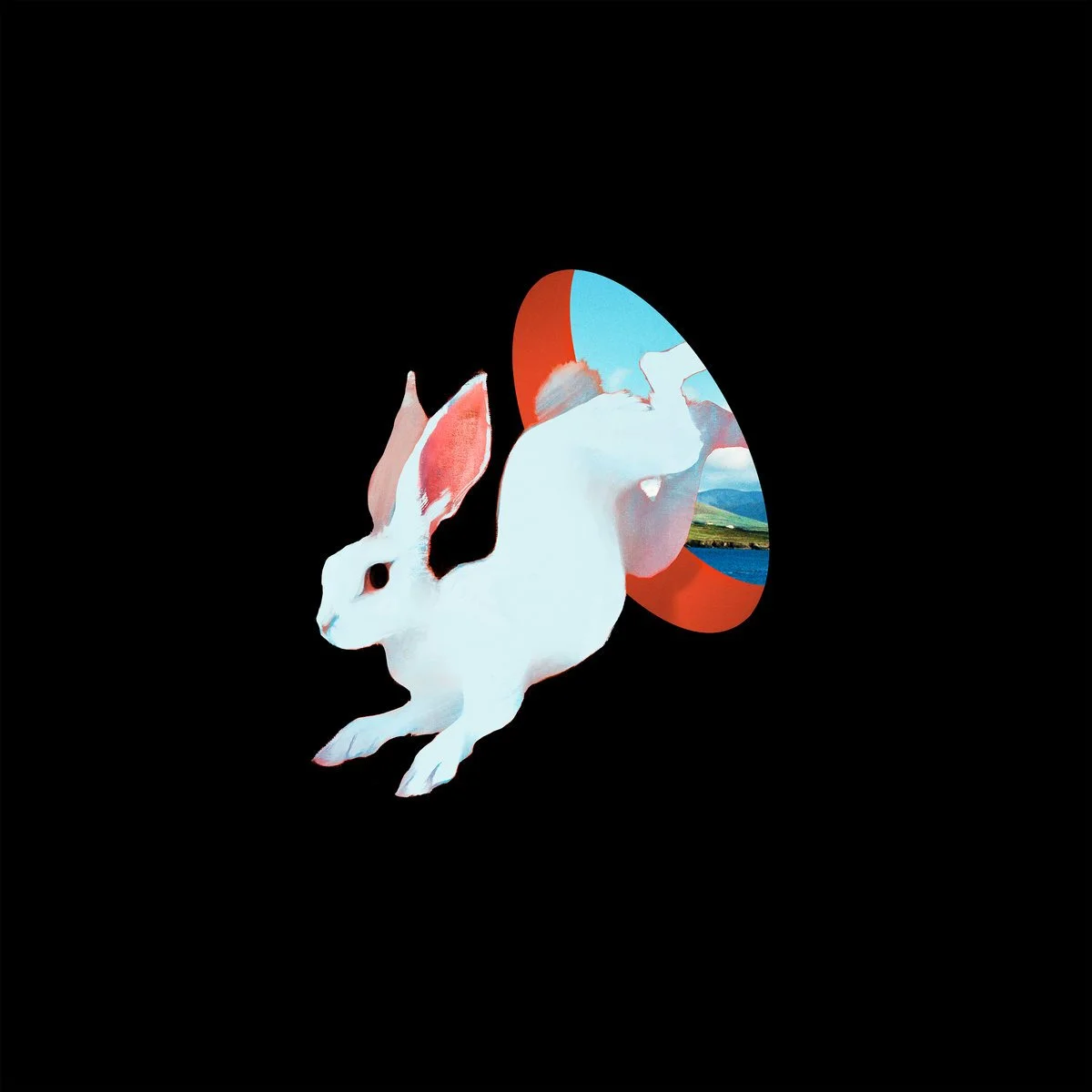
Animal Hospital’s title and artwork bring to mind an escaped patient from some sort of animal psych ward, like if Joanne Greenberg’s I Never Promised You a Rose Garden crossed over with Through the Looking Glass. It gains a bit of a tongue in cheek quality in the context of the songs, many of which deal with internal disruptions while mining the band’s peculiar brand of dissociative catharsis. This quality crystallizes by the time we hit “Plato,” a stand out on the album’s back half: “She don’t really wanna know you’re a fucking animal / You don’t even wanna know you’re a fucking animal.” The white rabbit on the cover is you and you’re starting to look silly pretending you’re above your animal needs. Despite the subject matter, there’s more humor that bleeds through the bleakness, like when Sputnik mutters later, “She said she doesn’t believe in evolution / I said ‘let’s talk about it,’/ She says won’t, she won’t,” a sentiment combining fatalism and numbness to produce a tidy portrait of alienation.
Many of Animal Hospital’s choices resemble Elastica’s under-appreciated The Menace, an album where electronic experimentation and mood pieces met with the band’s most bombastic material. Similarly, Ganser make those songs co-exist in a way that makes it clear the band isn’t just writing songs for the audience, but refining the possibilities of their band as they get to better stretch their point of view. Ganser seem to be immune to what is happening around them; though they respond to the zeitgeist, the band does not bend to it by caving to pressure to create slavish recreations of genre pastiche, and their consistency in their band identity — tied intimately to the creative process — makes them stand out amidst a sea of bands that make their decisions arbitrarily in an effort to maintain fairweather interest.
Like fellow American anglophiles in Protomartyr, Ceremony, and Dummy, there’s a desire to make sense of abstracted emotions through disquieting, unsettling sounds without abandoning the immediacy of loud guitars. The goal is dance music of a cold, cerebral kind, like Wire on Chairs Missing or Seventeen Seconds era The Cure shot through with speed you didn’t even have to test. The results are compelling on their own, but repeated listens will reveal the warmth under the aesthetic that elevates Animal Hospital to a strange kind of uplift, a pleasure in the grind of living. Ganser’s parting advice: “Set some goals / That you know you can’t meet.” Somehow, it feels sweeter than if they’d gone for something overtly hopeful.