
by Kurt Orzeck
Pop quiz: which is more rare, an athlete who comes out of retirement and performs better than before or a band that pulls off that feat? Our money is on the latter. Despite an apparent consensus, the Pixies do not qualify in this regard; however, At the Gates, Slowdive, Faith No More, and Killing Joke certainly do (or did). We’d also drop mclusky in that bucket, as The World Is Still Here and So Are We was properly regarded as one of last year’s best post-punk records.
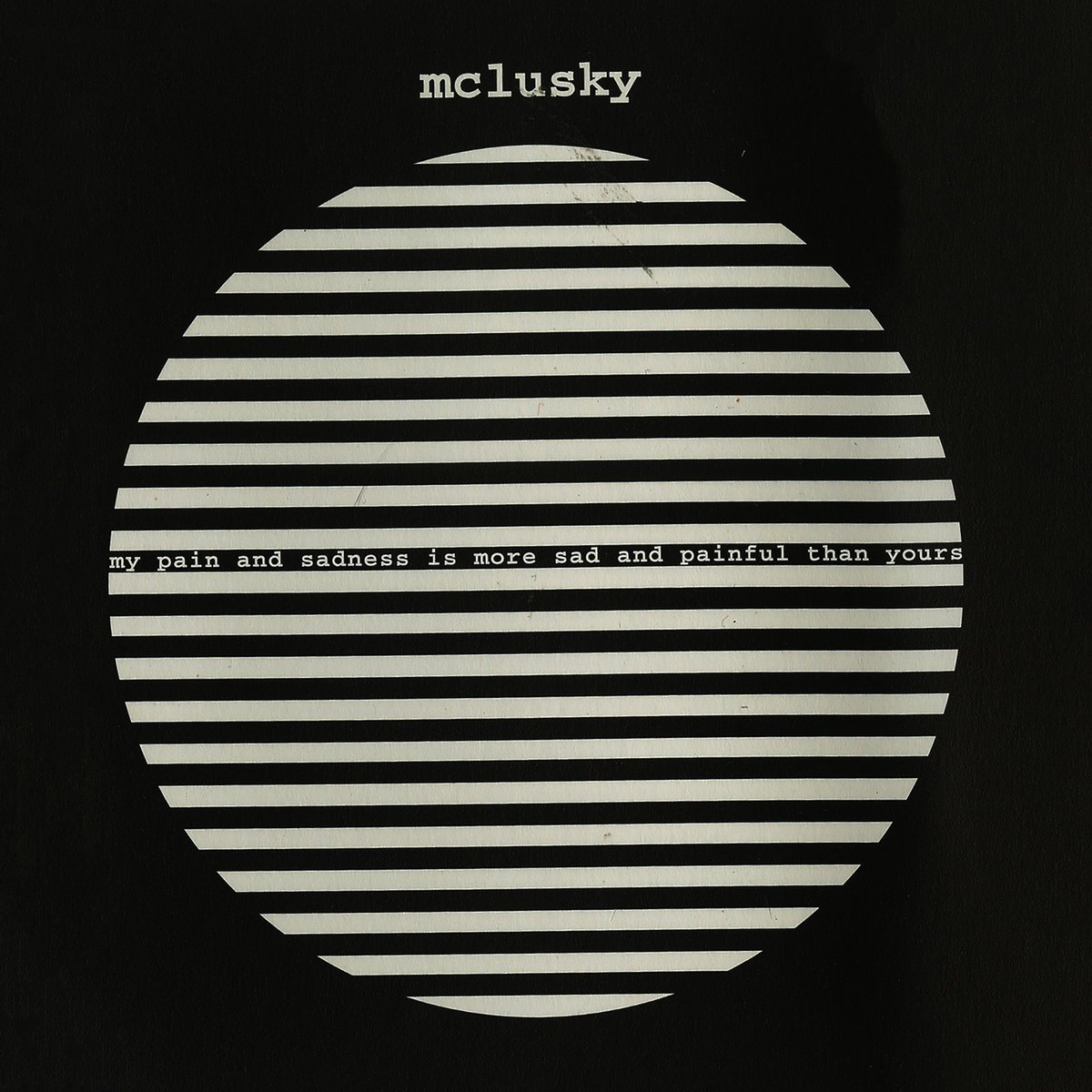
So then, how come, now that the brash Brits are back in the saddle and trotting along at a strong clip, would they wanna look back at My Pain and Sadness Is More Sad and Painful Than Yours — and re-release it in remastered form, no less? Well, because greatness is relative. Yes, The World Is Still Here could very well be the best record that mclusky have issued to date, but would they have managed to create it — even with the ten year breakup — were it not for that initial release?
My Pain and Sadness is an oddity, no doubt about it. For one thing, the band’s “debut” is essentially a collection of fifteen polished demos. For another, it was reissued in 2003, just three years after its initial release and sandwiched between the band’s other two studio full-lengths: 2002’s Mclusky Do Dallas and 2004’s The Difference Between Me and You Is That I'm Not on Fire (man, does this band have a priceless sense of humor or what?). To dig into the minutiae a bit, Too Pure, mclusky’s label for a few years before they signed to Ipecac, implied that the first version of My Pain and Sadness did not qualify as true album but that Too Pure’s re-release of it did, because they had reworked the demos into actual songs.
Make of that what you will, but the theme of mclusky’s first foray into recorded music has remained intact ever since My Pain and Sadness’ initial release. It established that, right out of the gate, drummer Mat Harding, guitarist/vocalist Andrew Falkous and bassist/vocalist Jon Chapple were so sardonic that they must’ve had their tongues pressing against their cheeks throughout the entire record (whether that be of the demos or the studio versions of the songs). To ask whether mclusky were more devoted to late ’90s/early ‘00s sarcasm or social commentary would be the equivalent of calling heads or tails before a soccer game.
For example, some of the lyrics on closing track “World Cup Drumming” go like this: “I’m dead of course/ Enrolled on a popular culture course/ But I can't save nothing but world cup drumming/ It's stuck in my throat like it used to mean something … Like French and Saunders/ He talked for hours/ Through costume dramas/ Watched by piranhas/ And rows and rows and rows and rows of Muppets staring straight at the sun.”
The type of deep-rooted cynicism that often doesn’t appear until a band’s third or fourth record was there from the start with My Pain and Sadness. Cracks about aliens in toilets, Obi-Wan Kenobi and fake-speaking in tongues to prank religious extremists abound on the record, with "White Liberal on White Liberal Action" succeeding the best in combining mclusky’s humor with their bashing of politics. And yet the thickest through line of the band’s first set of songs is a self-admitted inability to concentrate, which casts the band’s jesting in an entirely different light. Especially because they made the record at a very young age, one can see that they quite possibly leaned on humor as a crutch, a way to distract people from ADHD by creating art and using it to blanket their inner personal struggles. Case in point, the most honest song on the record, “(Sometimes) I Have to Concentrate.”
So here’s the rub: My Pain and Sadness is not mclusky’s best album; in fact, it’s probably their weakest one. But while most off us usually brush off the “remastered” promo pitch — and for good reason, because major labels often overstate (read: lie) about a massive improvement in sound with such reissues, this new treatment of mclusky’s first foray succeeds in spit-shining the demos into proper songs that finally don’t sound like throwaways (as one could argue the tracks on Pixies’ Come on Pilgrim still do); So good on mclusky for polishing these tracks one more time, with such good treatment that the band should be proud of them – and let’s see if their next reunion record is even better than their last.