
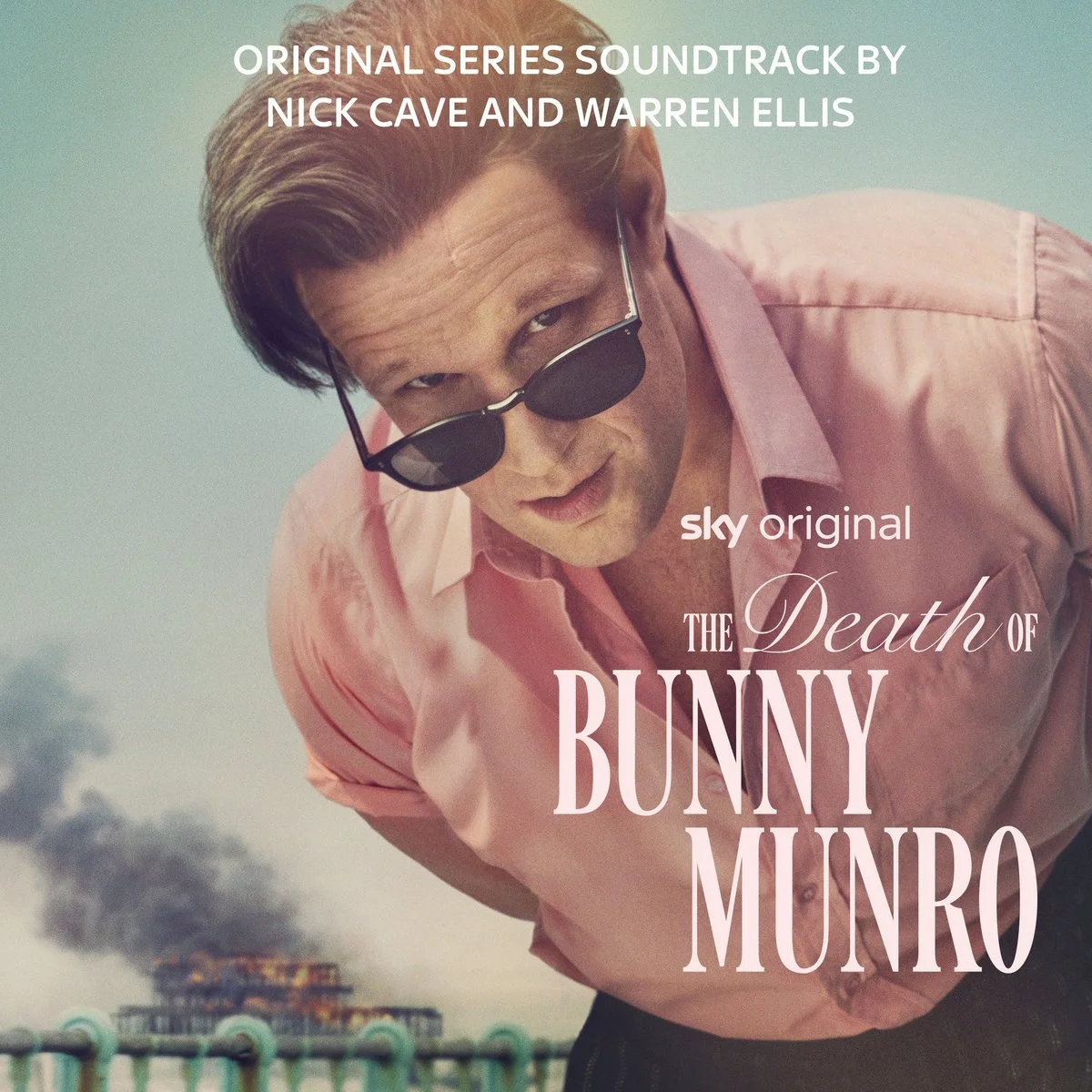
by Brett Abrahamsen
There aren’t enough synonyms for the word “evocative” to describe Warren Ellis and Nick Cave’s The Death Of Bunny Munro. It’s perhaps the greatest album either of them have made since Skeleton Tree, and it’s imbued with a similar sense of tragedy. This is a haunting and poignant work, and it reaffirms their mastery of film score ambience.
“Opening” introduces the elegiac violin of Ellis in all its melancholic glory. “Hands Full,” on the other hand, is a cryptic nightmare. Cave sings on “Bunny Munro,” and it’s surprisingly frantic and terrifying. “Libby,” on the other hand, is solemn and beautiful. Ellis’ violin returns on the evocative “Marry Me,” which has a rural feel that’s somehow reminiscent of Lullaby for the Working Class. “Libby Found” introduces a bit of suspense (it also plagiarizes “Won’t Get Fooled Again,” the main drawback to an otherwise majestic piece). The ghostly “Hymn” has a suitably spiritual feel. “Love Bunny” seems to borrow some from Michael Nyman. “Don’t Feel Right,” on the other hand, sounds more like Eno (with some of Cave’s best piano work). “Night Words” is imbued with a ghostly atmosphere, but it’s less spiritual than “Hymn.” Cave’s piano starts to seem redundant on “The Wake,” but Ellis rescues the song with stunningly poignant violin work. “Til the Cows Come Home” brings to mind a much earlier Cave - the opening sounds like “The Weeping Song.” “Hello Magazine” brings in heavy distorted guitars, an effective move considering that the album was perhaps in danger of becoming too lachrymose. “Getaway” is atypically glitchy, sounding something like an an Aphex Twin remix of a Dirty Three song. “Left Behind” again sounds like a Dirty Three cut; it would have been a masterpiece if it was the first song Ellis had ever released, but it’s nothing we haven’t heard from him before. “At the Beach” creates an intriguing Eno-esque atmosphere but ruins it with some obnoxious vocals. Ellis’ violin sounds gritty and mournful on “Waking Boy,” though one wishes it were framed by the Dirty Three rhythm section instead of the ever-present electronic soup. “Girl by the Pool” is one of the more symphonic pieces. “Sins of the Father” is one of the album’s best songs, a creepy and evocative nightmare that lives up to its title. “Mary” continues in a similar vein. “Catch Me If You Can” is a rather lame title, and also a misleading one - the music is hardly fast paced or suspenseful. However, this is a very intriguing piece for about twenty seconds, right before the final piano sonata. “Love One Another (or Die)” - another highlight - is as messianic as its title would suggest. “Real Devil” is a poignant comedown from the previous track. “Fate” is both beautiful and nightmarish. “Preshow” fails to capture one’s attention, but “Dance With the Devil” is a disturbing and memorable finale.
This album has two main flaws. One, the central section is comparatively weak. Two, the album as a whole perhaps feels a bit too much like “muzak,” despite some intense moments. Nonetheless, this album is vastly superior to the acclaimed Ghosteen, Carnage, and Wild God. It is also perhaps superior to Cave’s novel of the same name - I can’t say for sure as I gave up midway through, finding it a mediocre bore (unlike his harrowing, fascinating debut novel And The Ass Saw The Angel, which is definitely worth checking out). All in all, this is a fascinating work which should intrigue those who listen to it.