
by Dom Lepore (@dom.lepore)
You can succinctly describe Mouseatouille as a “band of many members,” but they’re so much more than that. The Melbourne nine-piece is one of the city’s most inventive local bands, an ensemble of tight-knit friends who live and breathe music. They’re not afraid to wear their influences on their sleeves, which recall slacker rock, indie folk, and chamber pop from decades past. This wholesome sound is so familiar, it’s hard not to hold it close to your heart. By their sprawling size alone, Mouseatouille are capturing something special that few others are doing in Melbourne.
Friendship is the key theme in the Mouseatouille story. Starting as a recording project by lead singer and guitarist Harry Green and drummer Spencer Noonan during high school, the line-up would grow, and their Bandcamp output too—their 2019 double album Out of the Hospital and Into the Morgue is their ambitious, cult concept record, bolstered by dozens of collaborations. Afterwards, they’d keep busy with special support slots for Black Country, New Road’s debut Australia tour, and Your Arms Are My Cocoon’s especially intimate DIY show in the city’s suburbs. It was the following five years of writing and eventual label support that pushed the band to release its follow-up in 2025, DJ Set, a tender photobook of their young lives during that period.
Since then, they've been on the rise. More crowds are discovering them, with appearances at Meredith, one of Melbourne’s largest music festivals, and Black Country, New Road’s second tour down under. DJ Set later received the remix treatment from their friends Katie Dey, Tex Patrello, and Weatherday. They’re deservedly being embraced with greater adoration. After all, the band also juggle their full-time jobs, making their selfless efforts even more remarkable.
I recently caught up with Harry Green and talked about Mouseatouille’s growing recognition, how they miraculously find time to operate as a band, their crossover with internet culture, and what the future holds for the band.
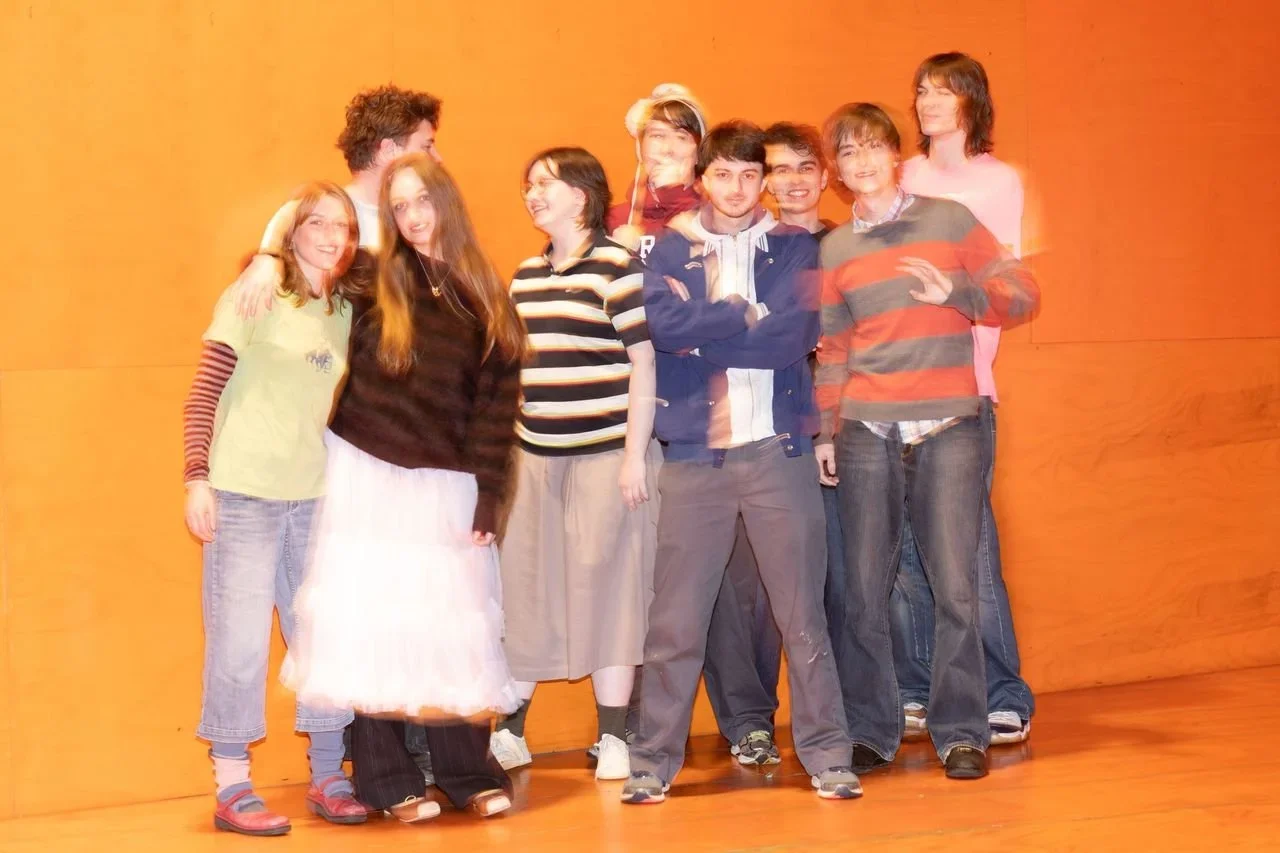
Mouseatouille by Edward Dean
This interview has been edited for length and clarity.
Dom Lepore: The last time we spoke about the band was a couple of years ago, when you mentioned DJ Set was nearly finished. How early can you trace back that material?
Harry Green: Really, really early. Some of it we started before we finished Out of the Hospital in mid–2019. The song “My Love” was originally by a band I was in that no longer exists, called Firstkiss. I can tell what’s old and what’s not because over the five years we spent writing, we were trying to figure out what we wanted to do.
DL: What did it take for everyone to push it to completion?
HG: It was a number of things. I can’t remember where we were when we last spoke, but I have a strong suspicion there was no talk of Remote Control being involved. That’s probably the major catalyst—we’re not used to any industry, anything. The idea that someone wanted to hear a finished product, we were like, “Oh fuck, we actually have to do something.” We couldn’t keep rerecording, remixing, and deleting stuff.
In the end, it all came together super quickly. That’s not to say the first four and a bit years were nothing—they were intensive, we were constantly working on it, taking months off here and there. I don’t think we were fussed if it never got finished. We were already satisfied with Out of the Hospital. It took external interest for us to be bothered to actually finish DJ Set.
DL: You’ve all got jobs too, so how do you manage to find time to record and rehearse? It seems like a miracle.
HG: It is a bit of a miracle. That’s something people ask us a lot at gigs. We’re pretty strict about some things: We get together every Wednesday to practice, even if we don’t have anything going on. The album was a bit the same, where we’d set dates to work on it, even without a goal. In the end, we were used to this incredibly long and messy turnaround time. The label was just expecting to hear something because they heard we’d been working on it for five years.
A lot of work was done in a very short time, which is normal in the music industry, but not for us. We take things incredibly slowly. I always think about this: My favourite tool in terms of making anything is time. Time is a really good way to measure things in terms of liking something. If you’re struggling with something and wonder what it needs, sometimes it literally just needs time.
DL: For sure. You can sit on something you’ve made, then get back to it later after however long you need, and something else comes about.
HG: Yes, exactly. It’s a very underrated tool. Especially with the way the music industry works now, everything is very quick, and attention spans are short. Time is not utilized as often as it used to be.
DL: When DJ Set came together with contributions from the band, you didn’t exclusively do the writing, which is a first. What was that democratic process like?
HG: It initially was about efficiency, where we’d have a new song and be really excited to play it because we’d only have Wednesday night to work on it until next Wednesday. Instead of me having the luxury of planning everything out, people would have to start contributing to get anything done. The challenge for me was forfeiting some of the control-freak nature I have with music. By doing that, I realised this is the much superior way to go about making stuff.
A big teaching moment for us was when we were touring with Black Country, New Road for the first time, before Forever Howlong. Australia was one of the first places where the early versions of those songs were performed. We just saw their approach. They were doing a lot of problem-solving during soundcheck, composing and rearranging—things we weren’t used to doing instantaneously. I think we had this idea in our heads that if something’s good, it must require heaps of thought and planning, but they were writing on the fly. It was so inspiring.
DL: Yeah, like they weren’t getting so caught up in the songwriting process.
HG: Exactly, which is not how we typically function, but it was an important skill for us to learn. If we had any chance of operating as a traditional band—I mean, we still definitely aren’t operating as a traditional band—but if we’re gonna get close, we need to pick these things up.
DL: Do you think that dynamic makes playing as a band more enjoyable?
HG: 100%. I think about a song like “Tom’s Lament,” which I don’t know if it’s fun for the audience, but it’s very fun for us because it’s something we all arrived upon together. Everyone wrote their own little bit; some people wrote other people’s parts. Everyone contributed equally to that song, which is a really rewarding feeling, especially when you have nine people on a song. It’s very difficult to get that to happen.
DL: I imagine it’s also because of the band being a massive ensemble, writing optimistic indie rock music. It’s like Broken Social Scene, I haven’t picked up on anyone else doing that here.
HG: Yeah, Broken Social Scene, we love them. Thank you.
DL: That’s who I most often hear in your music, but what constitutes that sound? Everyone has got different lives and tastes being poured into Mouseatouille, so I’m wondering if you could touch on that.
HG: I think that’s exactly the way it functions. We have a lot of overlap in terms of what we’re interested in. The musical DNA of Mouseatouille is a dozen or so very obvious influences that we tend to wear on our sleeves, but everyone has their niche. Some people like bands that others really don’t like. That’s important, otherwise it’s easy to become a genre band or do whatever’s popular at the moment.
We’re all incredibly nerdy about music in an internet way. Some of us are kind of music snobs. We have this almost opposite inclination, where if something is popular, we have an intense desire not to do it, you know? Not for the sake of it, but we’re cautious of coming across as a gimmick. If you’ve got nine people, you have to make sure that it’s actually necessary. It’s hard having nine people in your band. It’d be easier if it were four or three of us, so if we’re making this decision, the music needs to facilitate that. People listening are gonna have to understand it’s not a silly, frivolous thing.
One of the main benefits of having nine members is that everyone brings something different to the table. At the end of last year, we had a couple of gigs planned, and one member couldn’t make them for whatever reason. We’d get a fill-in, and it was weird. It was still incredibly rewarding to have our friends fill in, but it made us acutely aware that everyone does contribute significantly.
DL: That’s interesting because just from an audience point of view, watching the band perform on the stage is like everything is falling into place. It makes sense for you, yourself, who’s in it, to second-guess if that’s translating at all.
HG: That’s a big thing. Not to say we’re doing anything revolutionary, like you’d mentioned Broken Social Scene, there’s also the Polyphonic Spree and the Elephant 6 bands—we’re not the first people to do this. It’s one of those things that’s not done super often, and I think we as people who are super critical, music nerds—Pitchfork and RateYourMusic people—we have this inclination to pick things apart. I think we mostly do that to ourselves, rather than any band.
DL: The excitement of seeing a big collective happen is certainly what draws a lot of people to Mouseatouille, especially in Melbourne, where the scene is very tight-knit. People know each other, but you can only go so far because Australia is so far from other countries.
HG: I think that does different things to different people. Being in Australia is both a blessing and occasionally a curse. As you said, we are incredibly geographically isolated from the rest of the world. So, the prospect of doing a US tour, even if you’re a three-piece band, is not on the cards until you’re pretty successful. You can have this attitude of being successful—which is fair enough, being successful is cool—but you’re incentivized to do something safe because that’s the style of commercial music here. It’s cheaper, and you get more opportunities. The other perspective is that if we’re geographically isolated, you may as well just have fun and do whatever you want.
Melbourne is a small music community. I see all these other bands and have chats with everyone. That’s what we try to do: Connect with the people we see around all the time. In my opinion, that’s more rewarding than having a listener base that is completely intangible because they’re an adoring mass. I’m sure that’d be awesome, but to bump into someone and they say face-to-face, “I’ve listened to your album, I think it’s quite good,” it’s really nice to get that reaction. We’ve been playing for almost ten years now, and that’s a more practical goal.
DL: It’s more rewarding for sure. Given the band’s weird nature, to get that response is so deserved.
HG: Thank you, it’s an interesting thing. I think about the article you wrote about the Your Arms Are My Cocoon show because your interpretation of that show was exactly what I wanted to happen. I’m sure Tyler and Katie felt the same way because we want that stuff to happen. We want to go to cool stuff. It’s about doing something you would care about as a listener, you know what I mean?
DL: Definitely. I think the weirdness in what you do allows you to lean into the internet-y stuff. It’s tongue-in-cheek, like the track “Mike & Melissa” from DJ Set. Even who you perform with too. Letting that online world in… You don’t really see that happen too often here.
HG: We’re quite lucky in some ways. It is facilitated by us all working full-time jobs and also not caring. I think a lot of that is because there’s nine of us. I was talking about this to someone the other day: If a band is playing a gig and the crowd doesn’t care, it’s probably incredibly difficult to summon energy to put on a good show because you need some energy from other people. With us on stage now, I’ll stand with my back to the crowd because I’ll need to tell the band what to do, or we’ll need to look at each other for our cues. We’re able to summon a tremendous amount of energy just from one another, which is very fortunate. That is definitely down to having nine people who are friends with each other.
It’s funny to do stuff people find kind of strange. On connecting with people again, the “Mike & Melissa” thing, these really lovely people showed up to the album launch with custom t-shirts that were a reference to the Mike & Melissa cartoon. Most people who’d come to our shows wouldn’t understand that, but it’s really fun to have a little inside joke with people, which is really important to us. Especially if we’re putting out an album on a label and doing the things traditional bands do, we needed to make a song about a furry cartoon.
DL: Haha, just sneaking that stuff in. It makes the ride more fun.
HG: Yeah, I think so too.
DL: Now you’re being a more “traditional” band with a stable album rollout and playing bigger shows like Meredith—wow. How’s it been navigating that?
HG: It’s great. Everyone is very lovely to us, and all the crowds are incredibly accepting. I’m proud of those achievements, like playing Meredith, which we were so excited about. That’s such a cool festival, maybe the coolest in its ethos and booking. It’s BYO and very DIY for such a big affair that so many people go to. Getting the opportunity to play it is crazy. We definitely didn’t think we’d ever do that, but we’re very fortunate to be there. We always laugh when we see our name on posters, but it’s fun.
DL: There’s the DJ Set remixes too. I’d love to talk about those.
HG: That came from me talking to some of my friends. It might’ve been Katie who got the ball rolling. I was sort of like, “Who else would be good?” Weatherday was such a slam dunk. Sputnik and I talk every now and again, but I didn’t think they would say yes to that sort of thing. Every time someone sent me a remix, it was exactly what I thought it’d sound like. The Tex Patrello one is just unbelievably cool. Tex Patrello is quite underrated as a producer, her production is just off the chain. She put out her album Minotaur in 2024, which I’m obsessed with, so to have her interpret one of the songs is crazy.
DL: It must be awesome seeing the already-personal songs be refreshed with that extra touch.
HG: Exactly. I let everyone pick what one they wanted to do, and I was pleasantly surprised by everyone’s choices. When Katie said she wanted to do “Dogshow,” I was like, “Really?” Then, when she sent it to me, it made so much sense. I got exactly what she was hearing. It’s nice.
DL: Going forward, and maybe it’s too early to say, but can we see more output coming out at a regular pace?
HG: I really hope so. Again, it’s something we aspire to do. We would be so interested in the experience of recording something traditionally. Is it something within our capabilities as perfectionists in the way we operate? I’m not sure, but it’s definitely something that we want to have a go at doing.
I don’t know how much attention we really have, but we have the awesome people at Remote Control who get it—I’m more surprised that someone as cool as them would talk to us. We just want to go as far as we can, especially with new music, we’re gonna try to be our most Mouseatouille kind of selves. Now it feels like we have a bit of license to do that.
DJ Set was like this thing that was taking forever, we cared so much about it. Being able to let it go has been very freeing, so we’ll see what happens. We’ve started working on new stuff already, and I imagine we’ll continue to do that.
DJ Set is out now via Dot Dash Recordings / Remote Control Records.