
by Attila Peter
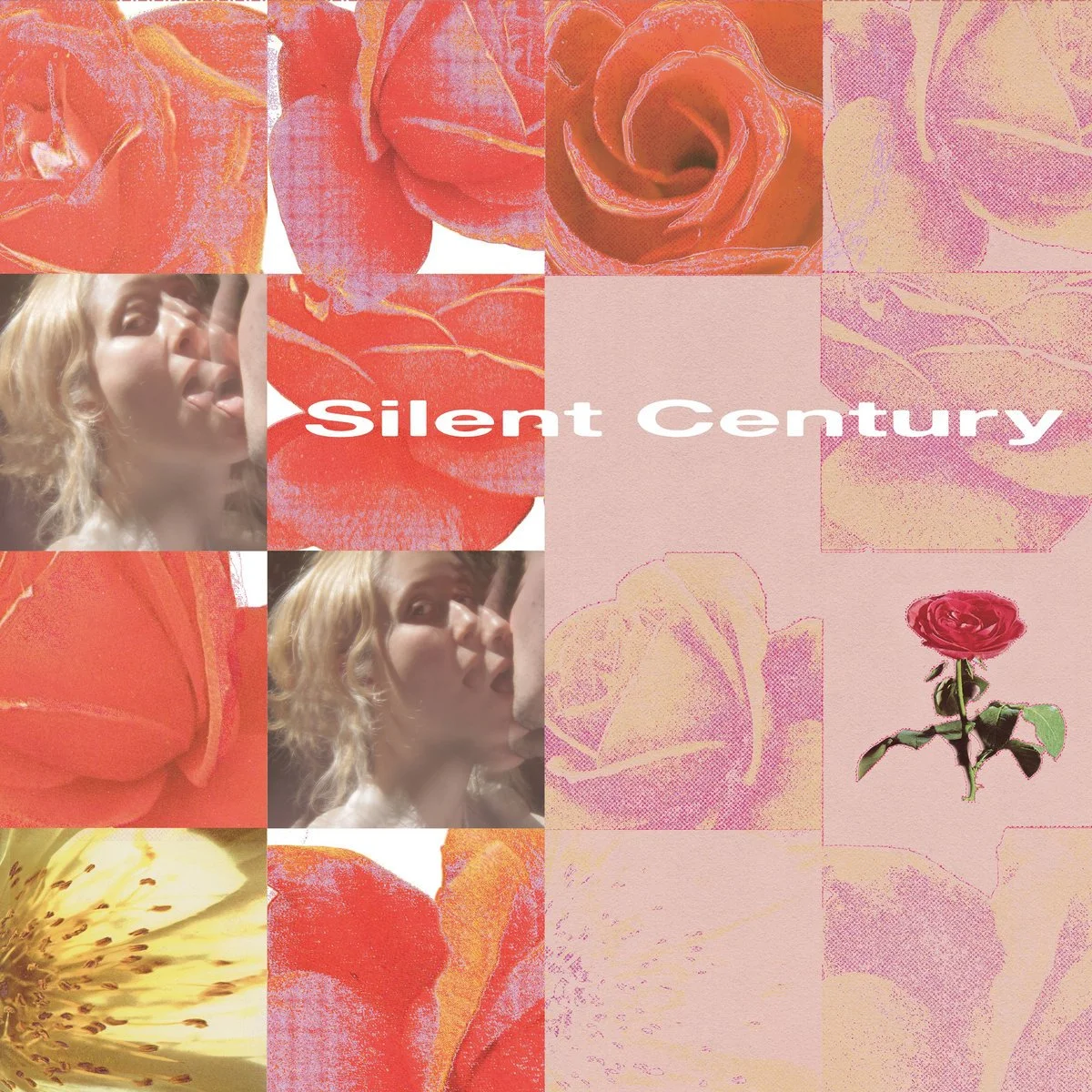
Late August, 2025. Nothing much going on. I was half-working, half-scrolling, with a playlist running in the background. “Offer” came on, a song by an artist called Jackie West, who I’d never heard of. It reminded me of the Cowboy Junkies’ cover of “Sweet Jane,” the Velvet Underground classic, but it was looser, and somehow both more fun and more unsettling. And a good six minutes longer. Addressing generational trauma, quantum theory, and, well, seven-dollar coffees, it blew me away, and I’ll bet many listeners will feel the same way when they hear it wrap up West’s second album, Silent Century, out now on Ruination Record Co.
Oddly enough, I didn’t look up West upon hearing “Offer,” but the name crossed my path only a couple of months later when I reviewed the magnificent Watch the Sunflowers by Adeline Hotel. On that record, a certain Jackie West provides backing vocals that are subtle but impossible to ignore. I did Google her that time: yep, the same Jackie West, a Brooklyn-based singer-songwriter. This finally sent me to her 2024 debut, Close to the Mystery, a dream-like album where folk, bossa nova, and shoegaze live side-by-side. However, regardless of the genre she draws from, there is a constant in West’s songwriting: valuing her craft both as a guitarist and a lyricist, she makes sure the arrangement is part of the storytelling.
On Silent Century, West and her fellow musicians – Dan Knishkowy (Adeline Hotel), Sean Mullins (Moon Mullins), Nico Osborne (Nicomo), and Katie Von Schleicher and Nate Mendelsohn (Market) – stay on that path, and the sense of intimacy that characterized her debut is intact, but the album is bolder and more expansive than its predecessor. It feels as if West is testing boundaries as she moves from introspection to observation or philosophical musings; all against the backdrop of an external world at odds with her inner one. There are struggles, pressures, expectations out there, and even though she never loses her restraint, she acknowledges the rift created by all that tension. Not only that, she lets it drive her—and the record—forward. It’s a restless momentum, though.
Questioning her narration or shifting perspectives mid-song, West takes you to a hall of mirrors, and her musical ideas are similarly disorienting, but in a pleasant way. On the straightforward-sounding title track, the time signature changes for the chorus, and the addition of a jagged guitar unsettles the song’s folky intimacy. This touch of friction keeps the track from feeling too settled or comforting, and West adds it elsewhere, too. What these slight disruptions – the fuzzy guitar that wails on “Thunder Ideal” is another example – provide aren’t so much layers as a bit of edge or intrigue. “These Are Not Sweet Girls,” inspired by an anthology of poetry by Latin American women, starts out like an early Joni Mitchell song, only to turn into another track around the two-minute mark. Different rhythm, different instrumentation, and, as it transpires, it is the chorus of the song.
Even though West’s lines won’t spoonfeed you anything, the album circles the idea of voices. Who gets to have one, who learns to trust it, who is told not to use it. All of that is connected to the concepts of gender and power; a world where there’s little certainty as to how, or if, you’ll get on. They may lord it over you, as on “Overlooking Glass” (“Somebody told me don’t be sad and weary”), you might feel you’re in charge (“I’m not alone in this city / I’ve got control of this city” – the quiet, dreamy “City Makes Me”) and sometimes “All that you are is a glimmer,” as she whispers on the feathery “Waves.”
And then there’s “Offer.” Recorded in one take, it is essentially a list of things West is preoccupied with, and all of us should be too; a list that would sound exhausting if it wasn’t for her delivery and endearing quirks. There’s calmness, humor, doubt, Socrates and the need for dialogue, stressing over yourself, over other people, your life, and other people’s lives. She switches from sprechgesang to singing and back while the guitar goes berserk in the background, drops a couple of F-bombs, then casually acknowledges the profound truth that “When you’re hurting people, you’re hurting yourself.” You wonder if she’ll manage to offer some sort of climax, and when her fellow musicians join her to sing “You call, you call, you call,” you get your answer – a resounding yes.
“I’m complaining about how much money I spend on recording music / It’s the best thing I could ever do,” West remarks at some point in “Offer” and you hope she’ll always have the financial means to keep doing it. Her sophomore effort is alive, honest, and inspired. She should never be silent.