
by Esin Nisan Yildirim (@esinnisann)
Maine-based Dead Gowns recently released their latest album, Vegas, a record about remembering, about making sense of distance through the lens of grief, and the isolation of it. I talked to Geneviève Beaudoin while she was on the road as she had recently begun tour. Her album lingered with me for days and opened up rooms in my mind I hadn’t visited in a while. We talked about how the record feels like a full circle from the first track to the last, and about processing everything it carries. More than that, we talked about finding the truth in grief, in leaving places and people, and about belonging. Additionally, I couldn’t help asking if any movie comes to her mind when she thinks about Vegas, and it led to a very interesting conversation.
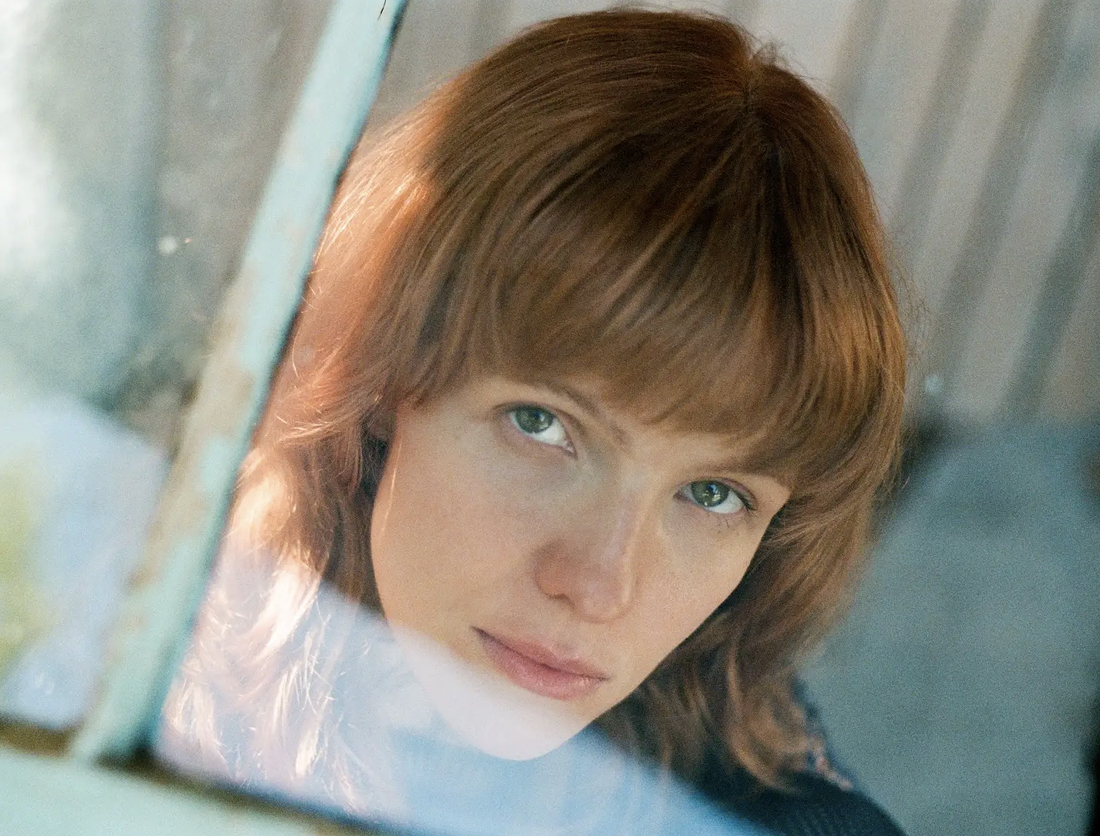
photo credit: Emilie Silvestri
Esin: Your album Vegas is out, and you've recently started touring. How has everything been going so far?
Dead Gowns: Yeah, we started the tour, like, actually three or two days before the album even came out. So it's been really fun to immediately start playing it out as soon as it came out. I think there were some nerves at the beginning, just because I think putting out a record is a really vulnerable thing. For me, I feel very carved out on release day. Like, the day an album comes out, I feel like there's nothing left in my cavity. Like, my stomach is just pulled apart.
Esin: Like you’re depleted? I don’t mean it in a bad way. I can understand.
Dead Gowns: Exactly. You're depleted. I've given it everything. And so the day it truly comes out, I feel very bare and empty, and it feels like, “this is the offering,” you know? To also play shows, I think I just was very sensitive. I just became very vulnerable. It was not bad. It was positive, but I am sensitive.
Esin: Given the fact that your album is pretty vulnerable too, I can only imagine how sensitive you must be feeling right now. Do you feel like the meanings of the songs change the more you play them? I'm always very curious about what happens night after night when you play the same songs.
Dead Gowns:It definitely does. In one sense, I sometimes feel flooded by memories because I had written these songs, but they weren't out yet. I wasn't really touring with them as an album. And so you kind of, like—not that you forget, but you just don't feel it. You're not accessing it. So there have been some songs where I'm like, "Oh yeah, I really laid it all out here, like how much this friendship meant to me and how painful this is." But then there's also, like, the album ends with a song called "Fruit."
Esin: Yeah, one of my favorites.
Dead Gowns: Thank you. We're actually playing it right now with somewhat more of a dance-like arrangement. We've changed the arrangement, and it feels hopeful. It's so nice to play that song and the heartbreak that's in it, but also that song is really about wanting to reconnect and the dream of reconnecting. So, to find a new way to access that dream in a shared, live space is really nice.
Esin: I feel like the opening and closing tracks bring the album full circle. That's how I felt listening to it. "Everything You Wanted" starts so softly, but its ending is just incredible. Then you close the whole album with "Fruit," which leaves you with this lingering feeling. Was that circular connection something you had in mind when putting the album together?
Dead Gowns: Yeah. You know, "Everything You Wanted" was actually the first song I tried to write about this. When I knew I was going to sit down and start writing my next record, I started with "Everything You Wanted" because I wanted to include some context about my life with this person before Vegas. I think, for me, "Everything You Wanted" is so quiet, and there's a lot of space in the production until it gets cacophonous at the end because it's, like, so much time and so much distance. "Fruit" is also about when you think you're past it. It's a reflection on time, and again: How much longer will we go before we can talk again? The dream is that it's sooner, not longer.
Esin: Now that we're talking about the tracks, how did the writing process go? Because these things can be heavy to process, you know? How do you know when you're actually processing things through songwriting? I'm just trying to understand how it all sits with you.
Dead Gowns: Well, I think I learned from some really beautiful records that you write a lot more than you actually put on the record. I wrote even more songs about this, but they weren't all pretty, and sometimes it was just about dumping memories out. Once I could look at, like, "Okay, here are twenty songs I've tried to write about this friendship," it became clear which songs maybe had a purpose beyond just processing, like, the song isn't just about processing what happened. My hope is that the song moves through that processing to some nugget of truth. I think songs can really help a listener, but also the performer, to grasp what they need to learn to move forward with their life. It's beyond emotional processing. It's in the spirit of moving forward.
Esin: Yeah, exactly. I think the distinction between simply processing something emotionally and moving beyond that isn't always well understood. This is turning into a therapy session, I can feel it! It's been interesting to listen to your album through the lens of grief. Having left friendships and multiple cities myself, I've realized that these little griefs can really add up. How do you approach that feeling? Where do you start and how do you know when you've worked through it? I know it's a bit abstract but I found so much of this connected to your album.
Dead Gowns: Yeah, I mean, I think one tool was to try to ground songs in scenes. I have a background in theater, and “Vegas Dream” for example starts off with fighting with my ex-best friend because I didn't read the contract for the rental car correctly. I wanted to ground the grief and the anger in, like, a specific [way]… we're in this rental car and I messed up, you know? Like in the song “Grass,” I find a letter, and it feels so empty to read this old letter from a person I don't talk to anymore because so much has happened. The way I can best process grief is to turn it into something that guides me through my life. It is just like, “What is the image? What is the tactile? What is the physical? What is the phenomenon? What's in front of me right now?” Because you're so right.
Esin: Now that we're talking about your album’s themes and concepts, I'd love to hear how the idea of making Vegas first took shape in your mind.
Dead Gowns: I knew I had to make an album about it because it was on my mind all the time. It was just reliving this difficult week in Las Vegas, and I knew this was really the task at hand.
Esin: It was a call for adventure!
Dead Gowns: Yes, exactly. From there it was just, like “Okay, I think the album is about Las Vegas, but it's also really about leaving Las Vegas and going home to Maine”. It’s the opposite side of the country. Just a very different place. I both love and sometimes hate where I live. I would say I really struggle with my relationship to the place, because Maine is so important to my songwriting, and yet sometimes I feel really isolated and confined. So, I thought it was really interesting to think about this person in Las Vegas with these bright lights…totally different climate and environment. I'm processing this grief in my home and I'm not always happy about my home base. So there was a purposeful juxtaposition of, like, I'm gonna actually write about Vegas, but I'm also gonna write about Maine and isolation, and when you feel grief, but you also feel just, like, entirely alone.
Esin: I relate to what you're saying about the idea of going back to your hometown after having been elsewhere. You know, even among the people I talk to in my life, there's often this love-hate relationship with their hometowns, myself included. It can bring up a whole range of emotions and memories.
Dead Gowns:You said it so well. Yeah. Absolutely.
Esin: In relation to hometowns, leaving cities, and how these experiences are reflected in your new album, Vegas, how has making this album shaped or changed your relationship with the idea of belonging? Do you think there are any connections?
Dead Gowns: Actually, it's really funny because I haven't been asked about belonging regarding this album before. I think you've hit on it where, you know, when we leave a relationship, whether it's a romantic relationship, a familial one, or a friend, you don't belong to them anymore. My friend was done with me. I thought we could make up. I think that goes to that sense of belonging, like our friends make up our identity. At the time I felt like I really messed up. I think part of the record is me seeing that I wasn't the only one who messed up and sometimes this is just what happens when two people grow and change.
Also, in this record we invited new collaborators. We gave a lot more room in the arrangements to my voice. I had the chance to do new things with my voice and in that there is a sense of belonging and staying true to yourself.
Esin: I'd love to hear your thoughts on the production of Vegas in comparison to your previous record, which was released just last year. I'm sure they're different in terms of where you were creatively when making them, but given how close they are in time, I was curious whether you see any connections between the two.
Dead Gowns: Yeah. Well, so the story is that I had written a lot of It's Summer, I Love You and I'm Surrounded by Snow, my first record, in around 2019 and 2020. We started recording it in 2020. It took a really long time to get it out. Then, honestly I was just like “Okay, we have an album coming out in 2025 but I’m ready to make the next record now.” Because who knows how long it’s going to take to get it out? So luckily our label was very down to do two albums like a year apart. This is a really beautiful and new way of making a record for me. The previous record was a lot of home recordings. It was in Maine - I mean the second record was also recorded in Maine, but it was very much like we’re just in our home studio.
We were doing so many takes. I was a perfectionist back then. I couldn’t just let something be. I was always thinking like I could do a better vocal. To be honest, this is probably the reason why it took five years to get that album out. With Vegas, we went to a studio in the mountains. We kind of decided to not do heavy pre-production in terms of rehearsals or planning. Each day, we'd start by singing the song with just a guitar and vocals. Then the four of us—my partner Luke (Kalloch), the production team, Sam Kassirer and Colin Fleming, and me—would start building on that live performance. We'd do this every morning, and the whole process was really about trusting your first instinct, trusting your first idea, and building from there. It was very organic. I wasn’t trying to be so perfect. We didn't choose the perfect takes; we chose the takes that felt authentic. We let everyone play to their strengths. Sam Kassirer is such a beautiful pianist, and the keyboard parts he contributed to the record were just extraordinary. Colin is a drummer as well as a mix engineer, so he played drums. Luke took on both lead guitar and bass, and he just has an incredible ear. I think the whole process was really about trusting everyone's instincts and going with our first ideas.
Esin: Was there anything that surprised you while making this album? Anything that stands out or that you didn't quite expect? Or perhaps something that surprised you during the touring process?
Dead Gowns: Some of the first ideas on the record turned out to be quite different from how I'd originally imagined the songs before going into the studio. Take "No Longer Contacted" for example, I thought it might be a sunny, acoustic, slow folk song, but then someone suggested, "What if we approached it with a late-'80s, early-'90s alternative rock riff?" and that completely transformed the song. I ended up loving that version so much more, but it came about because someone had an idea that genuinely surprised me. Then there's playing the songs live. I think I sometimes have an idea of which songs are going to resonate with people, or how they'll connect with certain songs, but you never really know. People come up to me and tell me which songs they've connected with, and it's their own journey and their own path through the music. That's always a surprise to me, because everyone hears something different.
Esin: If you were to recommend Vegas to someone, and suggest they listen to the album and then watch a particular movie afterwards, what film would come to mind?
Dead Gowns: I love this question! Okay, I’m gonna tell you one. And I think it’s clear by the album cover. I think the album cover and, like, the portraiture we did, like the... not the music videos, but the actual photos for the album. Did you see Portrait of a Lady on Fire?
Esin: Absolutely! Such a great movie. So that’s your suggestion?
Dead Gowns: I think so. Okay, and here's why. I think that movie, because of its visual landscape, has such an intense, isolated coastline, which I feel is very akin to how I experience Maine and the Maine coast. It's very stark. When I think of that movie, I think of all the slow moments, the tension. It's a slow movie. You need to take in the visuals and the feelings. Not everything is said all the time, you know? And just the inherent tension of, like, what is this love? I don't know. That's why we wanted the album cover to almost read as though my head had been cut off. We wanted it to feel that dramatic, because the loss of that friendship was that dramatic.
Also, Luke has an answer. He says Eternal Sunshine of the Spotless Mind and he has another film in mind but he says he can’t remember.* But this is such an amazing question! I hope you ask every artist you ever interview that question, because that is so fun. That is so cool.
Esin: You’re gonna think about it for the rest of the tour now. Jokes aside, I came up with that question because sometimes, when I listen to albums or whenever I enjoy anything, really, I always associate it with different art forms in my mind and I was curious how you would think about it. Lastly, what did you learn about yourself after making this record or throughout the process?
Dead Gowns: I think I... I mean, I definitely saw some patterns of behavior in myself through writing that made me think I can be a better person and a better friend to people. So I'm going to work on some patterns that I'm seeing in myself. That was definitely a personal takeaway. It's becoming clearer to me what I want to do with my voice and my songwriting. I feel very grateful to have found some stability in that perspective of, like, knowing, “okay, where do we go from here?” because there are already ideas for the next record.
*After listening carefully to the recording, I think Luke was trying to recall the movie Outrun, which parallels the feelings of isolation and the Scottish landscapes that Geneviève was trying to describe. If not, take it as a movie suggestion from me!