
by Steve Kenny (@steve.kenny.1007)
Hen Ogledd is an “Old Welsh” or Brythonic (ancient British/Celtic) term meaning Old North. It refers specifically to an area of the North-East of England and the Southern part of Scotland where, coincidentally, the band are based. The title is entirely fitting, as the band comprises Scottish, Welsh and (North-East) English personnel, all with deep roots in both the regional folk sounds of their respective and collective heartlands, plus avant-garde classical and electric music.
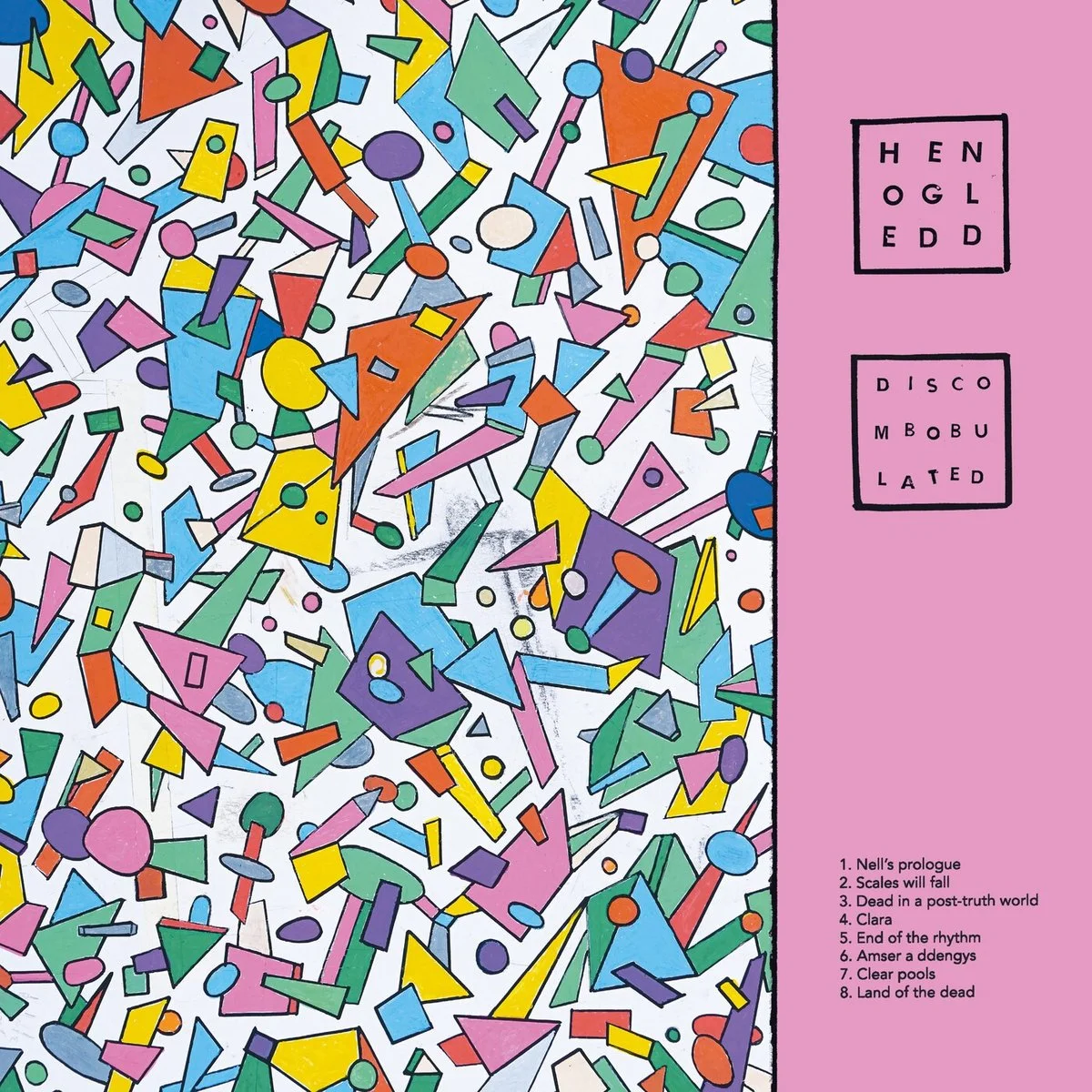
Discombobulated is Hen Ogledd’s - national treasure and prolific solo artist/collaborator Richard Dawson, PhD musicologist Dawn Bothwell, avant-garde harpist Rhodri Davies and multi-instrumentalist Sally Pilkington - third full length studio album, following on from 2018’s Mogic and 2020’s Free Humans which were themselves preceded by EPs Hen Ogledd in 2013 and Bronze in 2016. All band members sing (and rap in Bothwell’s case), sometimes in Welsh, and (again in Bothwell’s case), sometimes in a strong Scottish brogue.
The band’s relationship has been long and fruitful, with Davies and Pilkington contributing strongly to Dawson’s touring band in addition to Dawson and Pilkington recording a number of mini-albums during the Covid-19 lockdown, under the name Bulbils. Dawson and Davies were mainly responsible for the early Hen Ogledd mini-albums, with assistance from Bothwell on Bronze. The tone of the two mini-albums being minimalist and avant-garde, with some similarity to the American Primitive guitar stylists, is very different to the later full-length albums.
Moving on to Hen Ogledd’s new record, Discombobulated, but beginning this by way of reference to Mogic and Free Humans, the signature instrumental sound has changed a bit over time. The vocals are still recognizable from the earlier full-length albums, the members all sharing lead vocal duties with strong regional accents to the fore. There is a smattering of Welsh language on all three albums, including children, reciting after an adult, seemingly giving them language lessons. Overall, with Hen Ogledd, there is more of an indie rock/pop feel than is the case on Dawson’s solo albums (think folk-prog-blues as his go-to sound). The unavoidable Celtic influence, given the core band make-up, brings to mind artists such as Cate Le Bon, H. Hawkline and Gorky’s Zygotic Myncis (for those old enough to remember them). A possible description on their style on the first two full-length albums could be krautrock infused space pop, and fans of Stereolab, and Beak> for example, might well enjoy this outfit too.
Discombobulated begins with “Nell’s prologue,” a Northern English child’s voice reciting a piece of descriptive prose about the countryside over an eerie electronic/ambient musical backdrop. This sets the tone for the album, and is closely followed by the “Bardic Rap” of Dawn Bothwell leading the band into “Scales Will Fall” (think a Scottish Kae Tempest backed by Mike Oldfield). Next, is the most obviously political song here, “Dead in a post-truth world” which begins in Welsh, morphing into an English section referencing “snake oil” and other unsavory personality traits of someone, who is also described as “a devil”. Any idea who they are talking about here, folks?
Following the peaceful, ambient sounds of “Clara” comes the stand-out, propulsive “End of the rhythm,” with a powerful contribution from drummer/cat herder, Will Guthrie, who has been credited with getting the band into the studio in the first place to start recording. This track has also some great trumpet from Nate Wooley. Overall, this album is both more sophisticated and organic sounding than the previous two records, with more of a jazz, folk and ambient influence than their previous electro-pop stylings. There is still a krautrock feel in places, mainly due to the treated electric guitar of Richard Dawson, reminding the listener of Faust, maybe. There are only eight tracks on this 49-minute album, as the penultimate track, “Clear Pools” is nineteen minutes in length. Apart from the influences already mentioned, and largely down to the choice of guest musicians and arrangements, Robert Wyatt’s solo work is strongly brought to mind. There is also more spoken and sung Welsh on this album, but even if the listener isn’t fluent, the overall effect is well in-keeping with the musical content.
This record is both a step-forward for Hen Ogledd, and a statement of how they are now a world-class and eclectic force in modern music, one who will sadly not get the plaudits they deserve as their roots and influences don’t make them fashionable. Given their passion and togetherness as a collective and collaborative unit, this probably doesn’t bother them too much.