
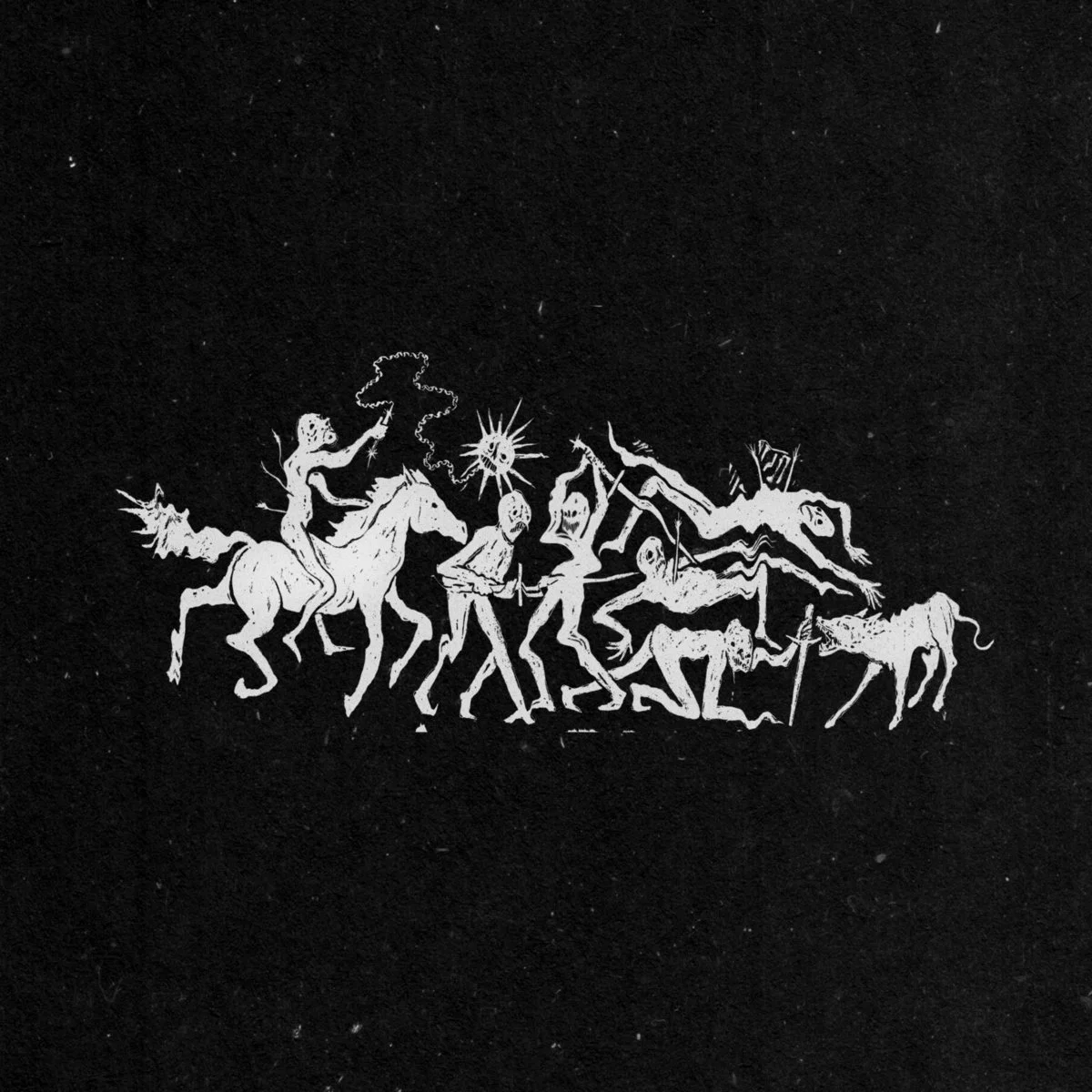
by Devin Birse (@devvvvi.b)
Mud Again seems to work against leather.head as a title. As cathartic and vicious as the Brighton five-piece’s music can be, earthy isn’t necessarily an adjective that comes to mind. Ornate, maybe. But since first hearing their excellent debut single “Hordes” in 2022, I've never considered leather.head to be earthy or sludgey. But in reality, as the album's eight tracks unpeel, Mud Again emerges as a perfect title.
There's a strong sense of deconstruction at play here. Not necessarily of style or genre—the band treats both as more of a buffet or pick and mix than creed or clan—but rather a deconstruction of feelings. emotions and states of slowly descending strength. Rather than bearing the raw catharsis of screamo, Mud Again’s emotion is slow and withering, like a hair circling the drain or a sandcastle reduced to mud.
Mud Again’s musical disintegration is a clever maneuver embedded within leather.head’s songwriting. Delicate guitar lines slowly shift into crunches of noise on opener “World Building.” Toby Evans Jesra’s gentle vocals trick the listener into expecting some slowcore-indebted indie, before a clash of drums and blast of distortion announce a hall of screams. Often songs appear two-faced, Jesra laying out the initial emotional palette before the rest of the band destroys it. It’s like someone putting on a brave face at a dull party before running into the bathroom screaming.
There's a jazz-like quality to the structures, a motif being laid down and reappearing in uncertain moments. Brief, subtle solos of gliding sax or a short guitar riff initiate shifts in scene or tempo. While post-hardcore comparisons are cliched, leather.head bears a clear resemblance to the greats of the nineties underground in their raw musical chemistry.
A sense of communication between the players comes out in the form of clear communication to the listener. While clearly emo influenced, what's remarkable about leather.head is how that emotion is projected through their instrumentation. On “Dusk,” delicate drum tapping and looping riffs underlay a key tension, as the bass and sax lay over a thick mood. Elsewhere on “Bastards,” marching rhythms create a continuously climaxing build, the switch to cymbal strikes erupting like an emotional outburst. While the rage is clear, those vocals feel more a part of the instrumentation than a layer over them.
While math rock can often be a genre that prioritises complexity over emotion, leather.head’s complexities betray emotion. This sincerity and technical proficiency have always been leather.head’s strengths, but Mud Again brings it to the forefront through the sheer quality of its songwriting. The tracks are ballads caught somewhere between emo, prog, and post-rock, but with a calm and cold aesthetic. The exquisite miniature epic “Traintracks” encapsulates the band's distinct atmosphere perfectly. At points the song is brash and loud. At others, contemplative and quiet, with gasps of no-wave tilting against Midwest math rock but always with focus and direction. For all their complexity, leather.head lacks theatrics.
Part of this is the voices on the album. Toby Evans Jesra’s vocals are gentle and sincere without ever appearing self-effacing or whiny. The screams from the other band members are proficient but not overly polished; every element feels raw and exposed. It lends an earnestness to the album's unsubtle misery; police officers tackling the homeless across the street, family members in worse health, and death in the headlines.
While the style of harsh, no-wavey drum-heavy post-rock they draw upon is often associated with the apocalypse, its singers often appear as harbingers or maniacs. Yet with leather.head, the focus is always human. Rather than sounding like the end of the world, Mud Again is the reaction to its imminent arrival. As the tide reduces the skyscrapers to rust, leather.head remain steeled with a mixture of melancholy and hope. As Jesra’s voice slips between the cracks of distortion on closer “friends,” he sounds like the last man in the world. The rousing ending falls into despair as it overtakes his voice in a whirl of noise until nothing is left but the last guitar strokes. All emotion and feeling reduced back to mud, overcast skies obscuring the before and after in fog.