
by Charlie Bailey (@hectic-skeptic)
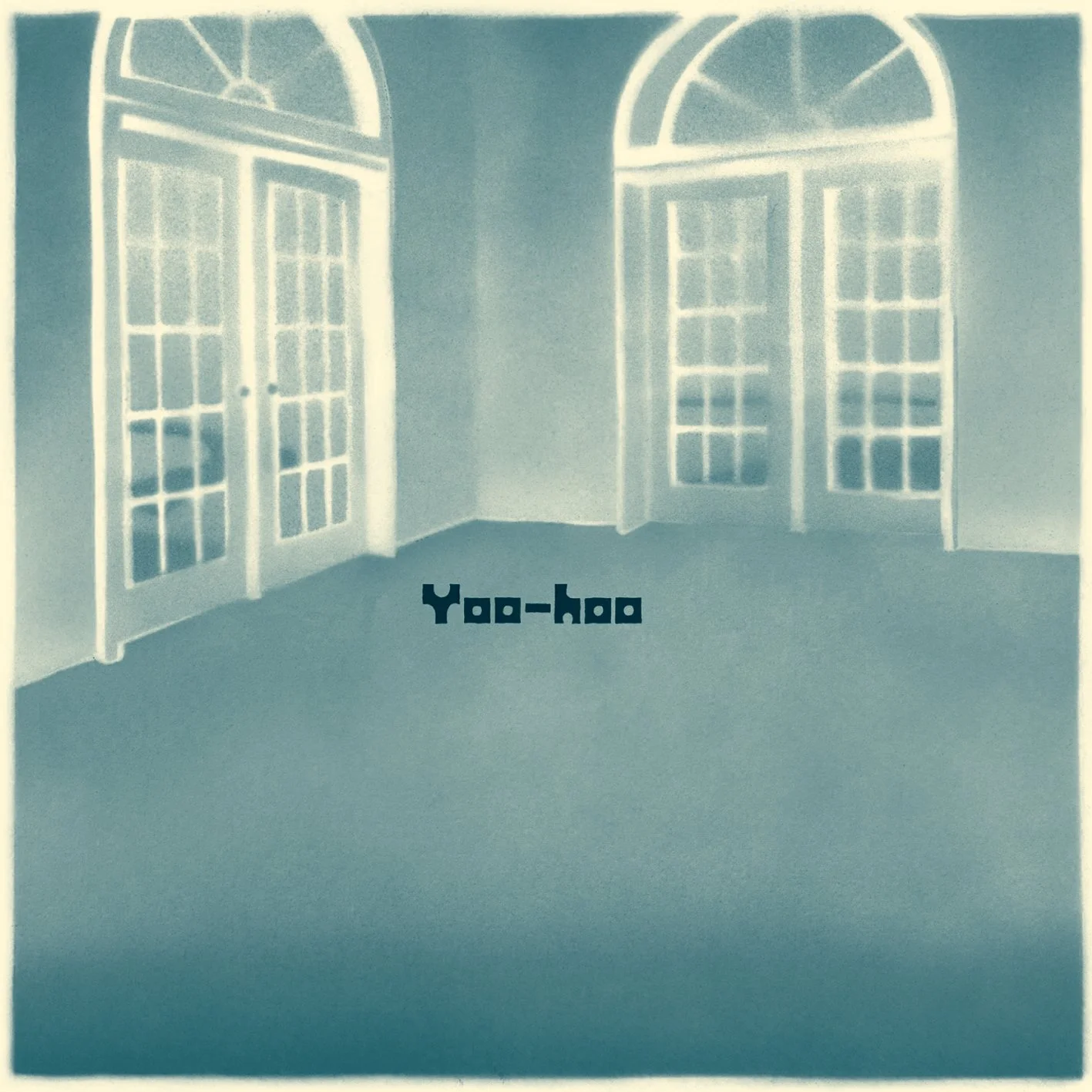
On a 0° day in the heart of a frigid Chicago winter, some tropical, existential lucidity is exactly what is needed. With a sound at once paradoxical and reminiscent, Shintaro Sakamoto brings us exactly that with his new album Yoo-Hoo.
Beginning his solo career in 2010 after the dissolution of the cult-classic Japanese psych-rock band Yura Yura Teikoku, the 58-year-old guitarist/vocalist continues to draw out phantasmagorical worlds of spectral death in the most relaxed and restrained way possible. Dwelling on the passage of time, the liminal, and his own position in the world, Sakamoto tracks a quietly moving narrative from the turbulent society of today to some unidentifiable fated future where everything will be alright; then Sakamoto croons “I’ll always be right here.”
The production of Yoo-Hoo, as with Sakamoto’s previous solo albums, is largely left to the Shintaro Sakamoto Band with Yuta Suganuma on drums, bass and backing vocals by AYA (of OOIOO), and saxophone and flute by Tetsu Nishiuchi. Musically, Sakamoto reaches into a grab bag of experience, with different influences showing up on Yoo-Hoo in the forms of blues, mood kayō, 1960s soul, surf instrumentals, and funk. Imagine the feeling of being on a foggy beach in a world devoid of people… Yoo-Hoo would be the soundtrack.
Beginning with the single “Dear Grandpa,” Sakamoto kicks off with shimmering, sliding guitars and a deceptively simple refrain, “Grandpa, the world’s in chaos / But just lie down, I’ll take it from here.” Outward confidence transitions into introspective skepticism as Sakamoto introduces one of the recurring themes on the album: what is his role in the musical world (not to mention the world as a whole) now that he’s 58-years-old?
I can’t help but to compare Yoo-Hoo with the contemporary novels and novelists of Japan; Haruki Murakami, Banana Yoshimoto, Ryū Murakami. There is a post-modern mysticism in Sakamoto’s writing that seems uniquely Japanese and uniquely of the time, especially feeling at home amongst other artists at a later period in their respective careers. Using an almost novelistic approach he sees himself walking through a literal ghost town, filled with empty invisible people and their graves, longing to join them in “Ghost Town.” He spins narratives of long lost lovers reuniting in dream worlds and narratives of fated encounters waiting to happen in tracks like “On The Other Side Of Time” and “Yoo-Hoo.”
But on the back half of the album, Sakamoto is battling with feelings of emptiness; feeling like a shell of himself and lost in the world. Again and again the answer for his track “Why Do I Do This?” is “…I’m just doing what I like, for no real reason.” This feeling culminates on “Numb,” perhaps the most expressive, energetic song on the album. Exploding with saxophone, background vocals, and held-back shout-singing. This is as close to anger as he gets.
Yoo-Hoo is an album that masquerades as being the opposite of urgent. Hiding behind languid dips into bluesy surf chill and folky flute, it is in fact incredibly timely and temporal. The expressions of going about life listlessly and without feeling, constantly searching for meaning, always pining for the one magical encounter that will change your life—these aren’t just the sentiments of an aging Japanese music legend—these are emotions and ideas that are universal no matter the age and no matter the culture. Even for non-native speakers the music itself is wryly deep and gives you that idiosyncratic sinking feeling that something is always just slipping through your fingers.