
by Nick Levi (@nick.g.levi)
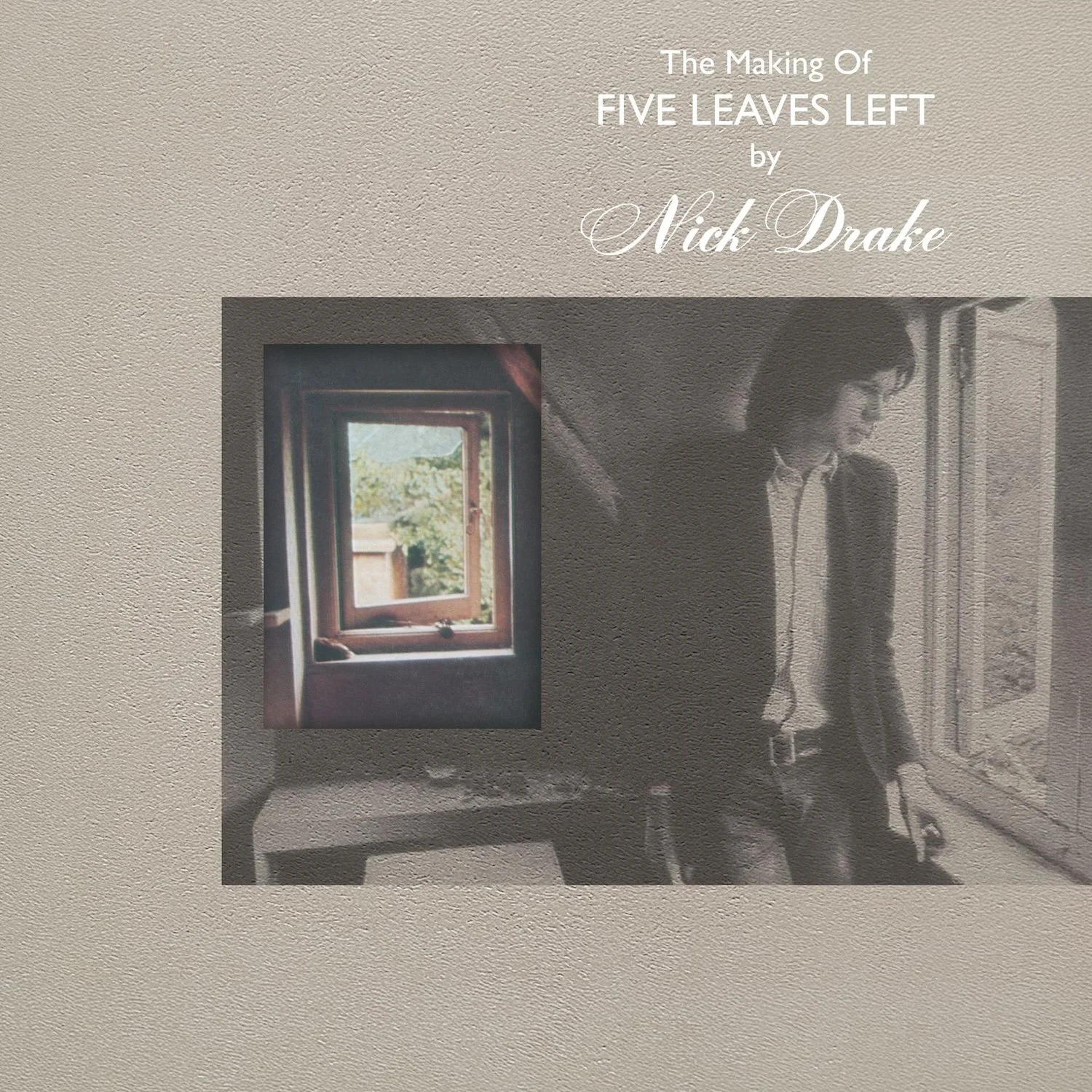
When college student and aspiring musician Nick Drake met 25-year-old American producer Joe Boyd in 1968, the two formed an immediate bond and began a creative partnership. Boyd saw something extraordinary in this “man of few words” — in his intimate, hard-to-categorize songwriting — and believed he had discovered another prodigy in the lineage of Leonard Cohen or Bob Dylan. Nearly six decades later, The Making of Five Leaves Left box set, which chronicles Drake’s groundbreaking debut, was nominated for a Grammy for Best Historical Album, highlighting the enduring significance of his work.
However, when Drake’s debut album was first released in 1969, it received mixed reviews and disappointing sales. This was partly due to Drake’s reserved personality and refusal to tour or appear on radio — then the main routes to visibility — and partly because audiences may not have been ready for such raw, personal music. Drake followed Five Leaves Left with the fuller Bryter Layter (1970), which received modest attention but sold poorly, and the stark, intimate Pink Moon (1972), likewise was commercially unsuccessful. He died by suicide in 1974 at 26.
It took years for listeners to rediscover his work, thanks in part to a TV commercial that featured one of his songs and in part to Patrick Humphries’ 1997 book Nick Drake: The Biography. Today, Drake is celebrated for his minimalist guitar work, fragile arrangements, and deeply personal lyrics — and is frequently cited as one of the greatest songwriters of his era. In 2025, after nine years of compilation and preparation, The Making of Five Leaves Left box set was finally released.
The Nick Drake Estate had long resisted producing deluxe anniversary editions, hoping to preserve the purity of the original album. But the rediscovery of master reels and long-misplaced tapes — including those held by British singer Beverley Martyn and by Caius College — changed their position. Released in both 4LP and 4CD formats, the box set’s first three discs compile demos, alternate studio takes, and home recordings. The fourth disc presents the original album, remastered and sequenced as Joe Boyd prepared it in 1969. It includes a 60-page book by Neil Storey and Richard Morton‑Jack, detailing the recording history of every track.
Over the years, Five Leaves Left gained cult status despite its commercial failure at release. Drake’s pastoral, autumnal mood, the folk foundation tinged with classical touches, his soft vocals, and his delicate, unconventionally tuned guitar work form the essential ingredients of an album that feels timeless. Much of the music from the late 1960s is instantly recognizable as belonging to its moment, yet Five Leaves Left stands apart from the period’s trends. The fashions of an era may fade, but the honest, unguarded songwriting Drake offered on his debut remains contemporary and relevant to any audience.
The new box set is more than a collection of studio sessions, a book, and a remastered album. It is an invitation into the mind and private world of a singer-songwriter who remained unwaveringly true to his voice and style. The material is curated with great care, taste, and restraint, preserving Drake’s mystique rather than demystifying or over-explaining his work. Across the four discs, we glimpse his working relationships with producer Joe Boyd, engineer John Wood, and arranger Robert Kirby — a trio whose quiet brilliance shaped Drake’s sound as profoundly as his own guitar.
Did we need this box set? Probably not. But it allows us to re-experience — and re-appreciate — the original album through a combination of historical insight and refined sound. For longtime admirers and curious new listeners alike, it offers a rare and respectful window into the making of one of folk music’s most enduring masterpieces.
The Making of Five Leaves Left was nominated for a Grammy for Best Historical Album. The 68th Annual Grammy Awards is scheduled for February 1, 2026.