
by Sam Cohen (@thevinyljournalist)
Feeble Little Horse want to be the best band in the world. Well, all bands want to be the best, and maybe this larger-than-life motivation for a new record was a silly throwaway line used in a press release, but their third album, Bitknot, proves it’s possible.
No singles or previous mention of new music on the way, Feeble announced Bitknot five days before its release. Although a week-long album rollout was the last thing fans who cherished 2023’s Girl with Fish expected, the accelerated announcement kept attention on the music: eleven tracks and 25 minutes of bleary, melodic, often pop-driven distortion. Full of pop culture clashes on “Dior” (“I think I dodgеd a bullet not going to Wednesday's show”) and anti-capitalist jabs on “DMT” (“Death, money, tеch, DMT, check”), the three-year gap between records enabled the Pittsburgh trio to mature.
Feeble’s development extends past their digitally ripened sound. In 2025, founding member Ryan Walchonski left the group to work on his project, Aunt Katrina. Because Ryan worked with the band remotely, his departure allowed the rest of the group to record solely in person. Bouncing between their respective homes, Lydia Slocum (vocals, bass), Sebastian Kinsler (guitar), and Jake Kelley (drums) worked as a single unit to assemble Bitknot. Recording the album as their fandom quietly grew, they entered the era of Feeble 3.0.
Catchy and noisy, 3.0 looks like DIY house shows, one-minute ballads, and an effort to recycle the lost innocence of the internet. The new era is equally transparent in its raucous guitars as it is in its visuals. Feeble’s gravelly home recordings simmer beside an aesthetic born in the midst of Slocum’s exploration into the abandoned aesthetics of GeoCities. Bitknot’s cover, based on the coincidental core memory matrix, ties in her digital fascinations with her disgust of capitalism. “The cover is my rendering of something that has a power that I don't actually understand,” Slocum said.
In between stints on their Bitknot tour, I caught up with Slocum and Kinsler, and chatted about creating a new collaborative process, mansplaining David Berman, and the visuals that inspired Feeble’s vintage-meets-tumblr aesthetic.
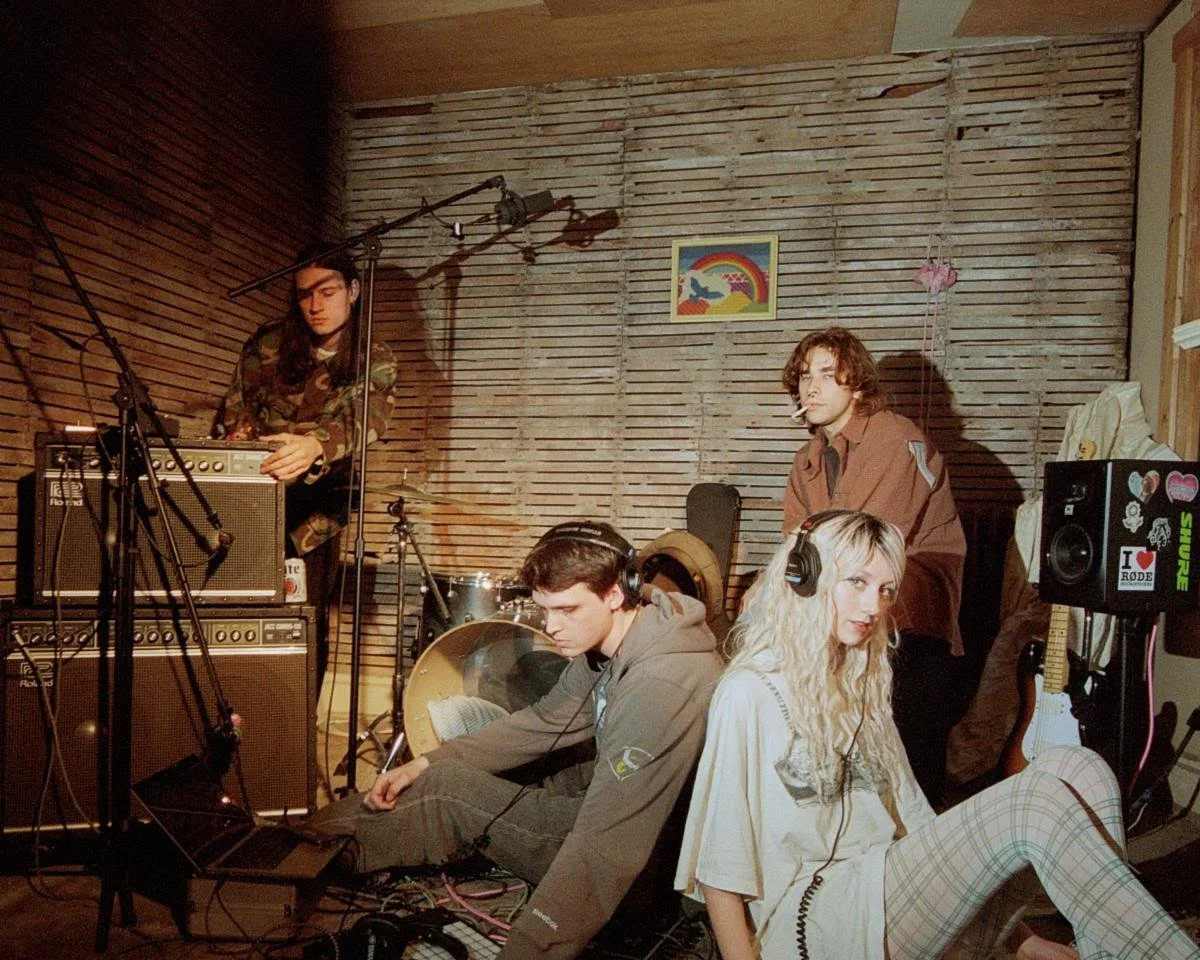
photo credit: Eve Alpert
SC: Bitknot dropped the same week it was announced, after a 3-year gap between albums. Was a short album rollout always the plan for LP3?
Lydia Slocum: There wasn't much of a plan. I think that we just didn't think there was an album, and then all of a sudden there was. So, then we thought, well, why wait around? We can just put it out. It kind of happened spontaneously, but it suits the album.
SC: Between Bitknot and your last record, everything has gotten bigger for you guys, the attention, the stages you play, and your fanbase. Did that affect your recording process at all?
Sebastian Kinsler: I think our process changed more on the last album (Girl with Fish) than this record. I definitely felt more pressure and more uneasy while making the last one, but on this one, I felt pretty comfortable that we could just do it.
SC: How did Ryan's departure change the approach to the new album?
SK: He always lived in a different state from us, so he was always remote. Lydia and I have always made music together, so it didn't change that much apart from us having to lock in together and write more than we did before.
SC: What’s the collaborative process like?
LS: I feel like none of us go into the studio with a set vision of what the song's gonna be because Seb and my brains work so differently that you can't really like control what the other person's gonna do. So it's more like, I want your mess on this, and so whatever happens will happen. At least for me, I would never be like ‘I have a vision of what this song will be, and you have to conform to that.’ And the same goes for Seb.
SK: Yeah, anytime we've done that, it's ended up just changing drastically from the original.
SC: You record all your music at home in Pittsburgh. Do you think you can hear the city in your music?
LS: I feel like it's something that we'd have to see in retrospect. I'm sure there is an impact, but it's not something you can really pinpoint in the moment. I definitely think it's a good place to study and absorb. I do a lot of that with music instead of being like ‘I'm going to invent something from nothing.’ I'm more interested in absorbing, and I think a lot of people in Pittsburgh are, too. I don't want to speak on their behalf, but it's like there are a lot of schools here, and people are here to learn.
SC: How has the Pittsburgh scene supported the band over the years?
SK: It helped a lot while we were starting out. Everyone was really nice and supportive, and there was always a basement that we could play in, which was great. Nowadays, there's always an exciting act to go see that's trying something different.
SC: What are some of the Pittsburgh bands that you've been checking out recently?
LS: I keep going to see Useless, which is a new band.
SK: My friend Spencer has a project called Alvin Row, and he was doing a side project called Cereal Brothers, which is like this experimental, improvised ambient music.
SC: “Rewind” is a favorite of mine on the record and is such an earworm. When writing a track like that, is it a conscious effort to give it a pop sound or make it catchy?
LS: Well, I think that we're always kind of aiming for catchy. But it's kind of this abstract thing at this point.
SK: Because what is catchy?
LS: Aiming for a pop song, though, is so abstract now because it's kind of always the goal. And we might end up with something that's so obviously a total failure of a pop song. So yeah, it is intentional, but like it's not something that you can just be like, ‘Okay, I'm gonna write a catchy melody. There you go.’ There’s definitely no perfect science to it.
SK: I don't think we have, or I have ever written a song without aiming for the catchiest version of that song. Catchy is always the goal, because it's fun.
SC: What are your reference points for a catchy song?
LS: We're always pulling from a wide rainbow of artists. I’m thinking Gucci Mane, Liz Phair, Oklou, Bassvictim, Imogen Heap, Kesha, and Charli XCX. It can be anything because they all do it.
SC: Outside of music, what were the things inspiring you while recording and writing the album?
LS: Well, near the end of making Bitknot, I was also finishing school, and I did my capstone. I was like really into Herbert Marcuse, so I was reading this book, One-Dimensional Man, which I've talked about a lot [laughs], but that book inspired me to just sing from a perspective like ‘Okay, I'm in a capitalist society. I'm going to talk about being in it.’ So that was definitely a non-musical thing that inspired me.
SK: I'm mostly inspired by music when I make music. I'm just that kind of guy.
SC: Another super catchy track on the record is “Dior.” There’s a lyric, “You are not David Berman, you are not Kurt Cobain.” Whenever an artist name drops another artist, the song can take on a life of its own. What was the origin of that line?
LS: It's almost like an inside joke with myself, because they're kind of like buzzword men who boys like to mansplain to you. But basically, I felt like I couldn't listen to David Berman forever because my ex-boyfriend from way back when would talk about David Berman all the time, and I was like, ‘Oh, I can't listen to this. It's literally him. It has him all over it.’ Then I was like, ‘Wait, you're not David Berman. David Berman didn't know you, fool. He didn't care about you at all.’ So I realized I can still enjoy David Berman.
Then my best friend's ex-boyfriend was like, ‘Kurt Cobain saved my life,’ and all this stuff, and I'm like, ‘You're not Kurt Cobain.’ It's kind of for two different men because my friend and I did this archivist ritual where we combined our feelings about our ex-boyfriends and then burned them.
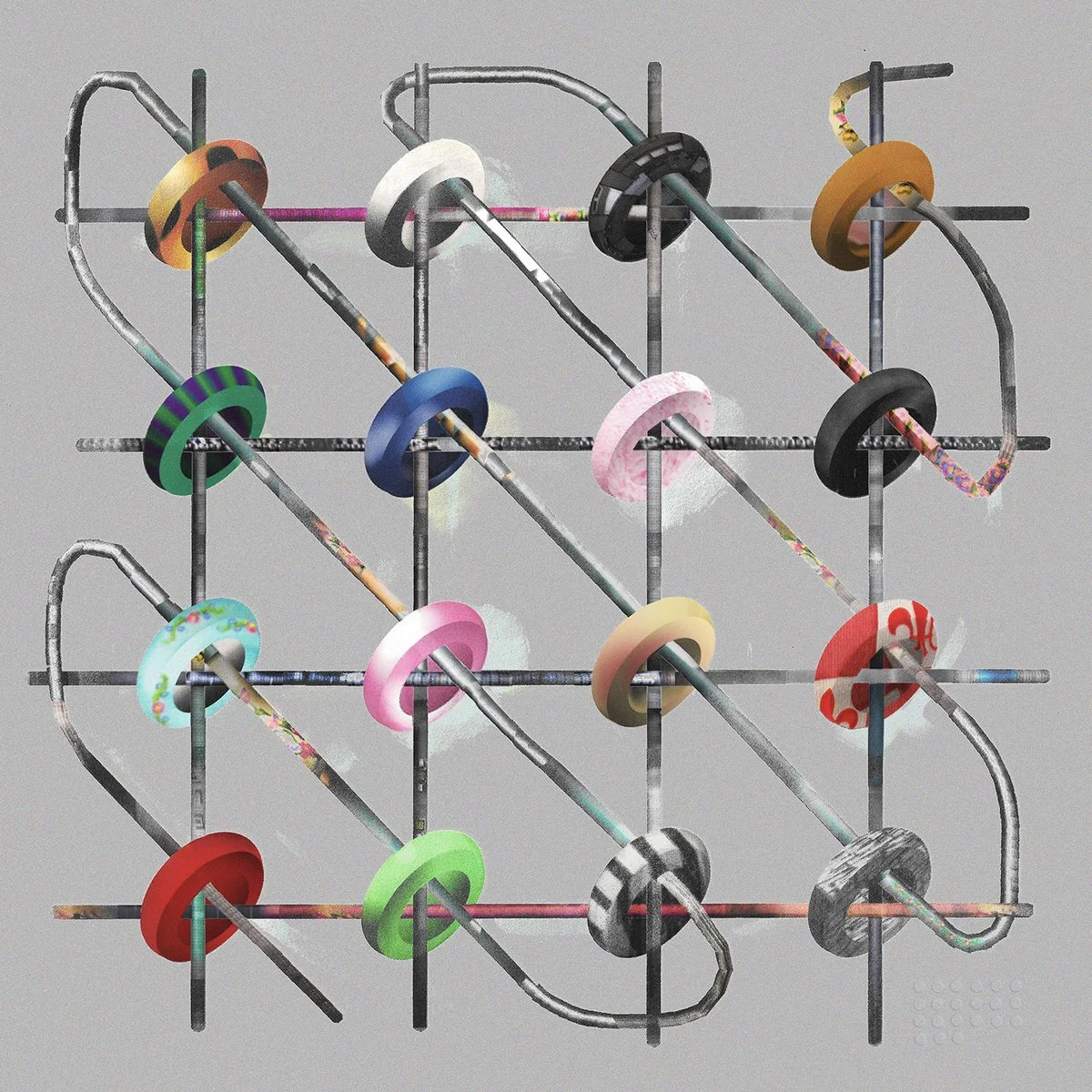
SC: Lydia, you do all the visuals for the band, including the album cover. Can you tell me about the Bitknot cover?
LS: I was looking at this book from the Prinzhorn collection, which is kind of a problematic book, but it's a collection of drawings that schizophrenic men drew. They were drawing these machines that they thought controlled them, and I was thinking about the iPhone and how it's such a part of my life, and all the other little machines. I was like, ‘What if I thought of something I don't understand,’ and I drew it out, so that's the coincident-core-magnetic-memory-matrix thing that’s on the album cover. So, the cover is my rendering of something that has a power that I don't actually understand.
SC: What did your Bitknot moodboard look like?
LS: Old GeoCities websites, and the old internet in general was very inspiring. My friend Henry, who goes by Dimwit online, definitely inspired me. His website inspired our website, and he coded it. That's definitely his shit. But yeah, I was just inspired by like the old internet that is gone.
SC: The old internet aesthetic is visible in your physical releases as well. The vinyl packaging for Bitknot is so well done. The record comes with a poster, a letter, a bookmark, and a dog tag. Why is the physical media side of things so important to you guys?
LS: Like, why not, you know? I feel like maybe it's because I feel bad about making garbage. Like, I can buy eco-friendly products, but at the end of the day, I'm generating all this waste by, like, reproducing CDs and vinyl. So as long as what I’m making is not garbage, and if nobody wants to throw it away, then I'm not making garbage. If I make it really special and a treasure, people won't throw it away.
But also, I think we're just perfectionists, and this project means so much to us that it's like if we can make it better, we should. I know how to do graphic design, so I'm like, ‘Why wouldn't I do my very bestest?’
SC: Do you try to preserve a cohesive visual aesthetic between projects? Or do you want each to feel like its own thing?
LS: A little bit. When I'm just working on cover art, which is such a rare thing, we do think about how they look together and if it’s cohesive. Besides that, it's the time that has passed that is making the visual aesthetic different. Tastes grow and change, and abilities grow and change. So, I guess it's all kind of approached similarly, just piecing things together in a way that feels fun. It’s similar to how we make music. So, I think there's cohesion there, but I'm never aiming for just one look we have.
SC: Your tour continues in the fall. What’s on your tour to-do list?
SK: We chose all the openers because they're fire, so they're going to be sick. Playing with MOP is going to be so dope. They don't play outside of California that much, so I haven't gotten to see them. That'll be awesome, and I'm trying to hit French Canada. Like every bone in my body is screaming for me to visit French Canada. It's going to change a lot for me.
SC: While everyone has been listening to Bitknot this summer, what music is Feeble Little Horse digging?
LS: Honestly, it's not gonna be good what I say [laughs]. I've been listening to the Addison Rae album because it's just in my car. The CD is in my car, so I just keep listening to it over and over again. I'm loving it.
I love Figurine very much, and Lali Puna, and The Books. The Books are crazy. I keep listening to their elevator music album, and I'm not sure if I'm just forcing myself to sit through some of those songs or if I like them. I might be trying to convince myself I like it, but as of right now, I think it's awesome.
SK: I'm listening to that new Loukeman album a lot, and the God of War record that came out like a week ago.
Feeble Little Horse’s third full-length album, Bitknot, is available now. Their North America tour resumes this fall.