
by: Sam Cohen (@thevinyljournalist)
Record stores were once filled with rock and punk compilations. Comps like Rough Trade and Nuggets found the obscure, the immersive, and the necessary, and pressed their vinyl debuts. For many garage and punk bands of the ‘60s and ‘70s, these comps preserved the underground’s legacy. Then, digital and streaming took over, making most comps obsolete.
After a few years of being the indie Bill Graham of the rising Chicago scene, Eli Schmitt (they/them) gave rock comps a second chance. On paper, Schmitt does too much. They’re one third of TV Buddha, the architect of Unresolved Zine, the visionary of New Now, and the creative behind the rock comp of our time, Red Xerox.
Schmitt moved to Chicago during Covid, and inserted themselves into the scene through their show for Radio Depaul. Eli connected with Horsegirl, Lifeguard, and Friko long before any of them signed with an indie label. The scene was minimal, but alive. Eli knew their friends had talent, and realized sitting on the sidelines wasn’t an option. So, they created New Now – a lo-fi, DIY spin on MTV segments like 120 Minutes and Unplugged.
Wherever Eli could host a show, they did. Bands like Post Office Winter, Free Range, Dwaal Troupe, and Autobahn played in living rooms, attics, and bedrooms. The momentum of the early years (2020-2022) led to the blossoming of countless new bands. Eli was at the middle of it all, but worried there wasn’t a physical way to remember the years on the rise. Red Xerox was the answer.
Red Xerox is the culmination of hosting house shows and radio sets, playing in bands that needed a drummer on last-second notice, hand-making zines for a few young punks, and honoring the scenes that came before Chicago and the big pop explosion. Kai Slater, of Sharp Pins and Lifeguard, called the comp, “A beautiful painting of the original era, with many more eras to come.”
Following the release of Red Xerox, I spoke with Eli about the comp, the value of physical releases, and where Chicago music is headed next.
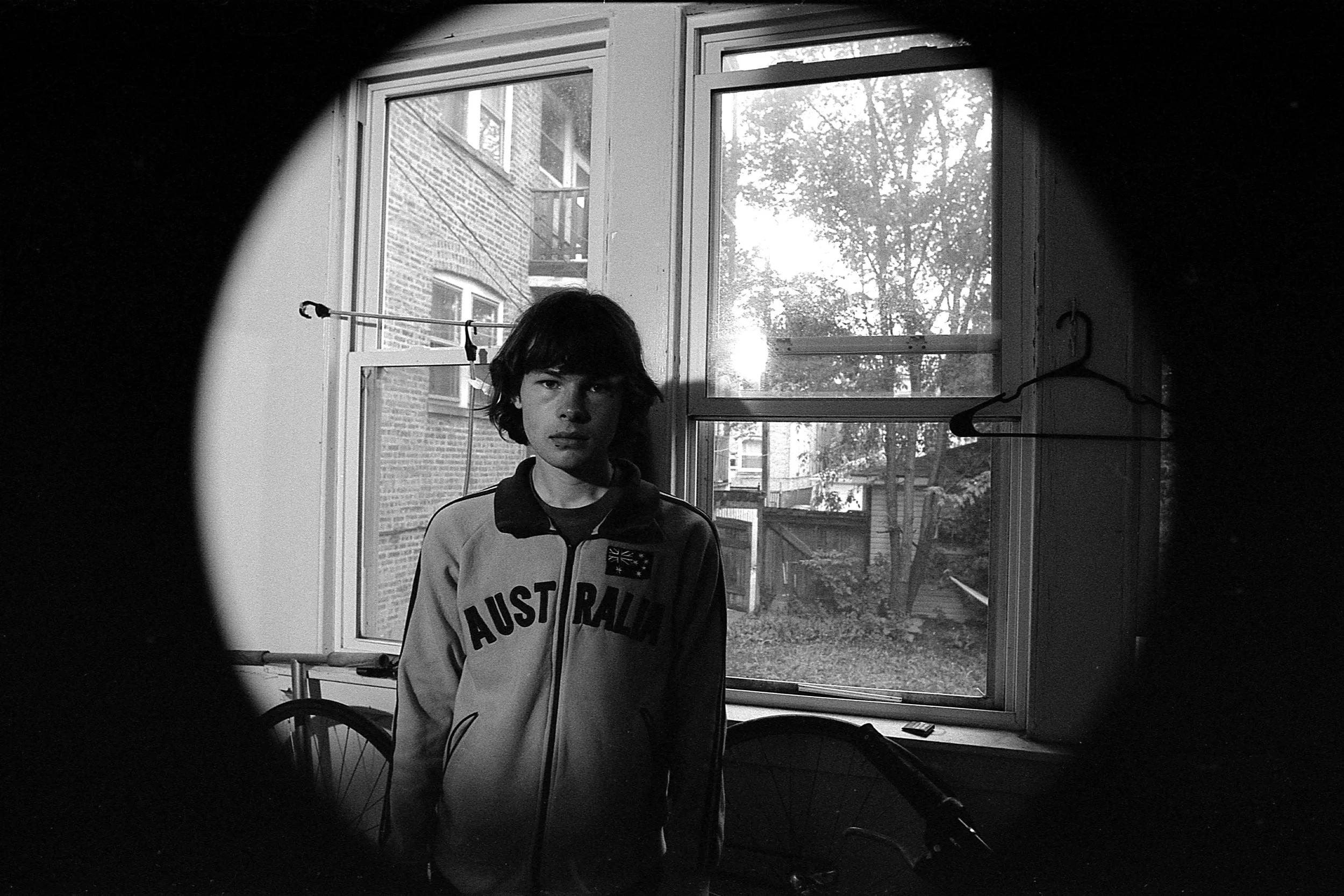
by Braeden Long
Sam Cohen: Tell me about your introduction to the Chicago indie scene and why it intrigued you in the first place.
Eli Schmitt: Well, I came to Chicago during Covid so I knew nothing. The only thing I knew about Chicago is that there is a really big jazz scene here, and I was a really big fan of the label, International Anthem. So when I moved here, I kind of pictured myself going to those kinds of shows. But obviously, none of that was happening.
I was aware of Horsegirl through a friend of mine, and I was doing a radio program at my college, and I wanted to do an episode about local music. And I was like, “I should reach out to Horsegirl and see if they'd let me play their song on the radio,” which I didn't know was not a normal thing to do. Usually, people just play the song on the radio and don't ask. But I asked, and they were like, of course, that'd be great.
I was at a small gallery opening, later that spring, and they were there, and I was so nervous, and I was like, “Oh my gosh, it's Horsegirl, it's them.” And they were not, like, big at all. This was probably before they even signed to Matador. They came over to me, and we just started talking and became friends. So I kind of stumbled into the scene that way, where all of a sudden Penelope would be telling me about Lifeguard and Friko and most of the bands that are on side A of Red Xerox. They were so inspiring to me, like, “Wow, there are actually young people doing these things, and actually people that are younger than me.” I remember feeling like, “I'm too old. I'm 18, and I'm never going to be able to do anything as cool as these guys.” But it was a very welcoming group, and I really felt at home with it all really fast.
How did being part of college radio help that connection with the scene?
I feel like my college radio experience is a lot different from most people's because of Covid. I was mainly making all the radio shows at my house and mixing them myself. I didn't know anyone else who did radio; it felt like I was just putting the radio out just for myself.
A lot of my first year in Chicago was doing things for myself. I was grasping into the dark of things, and then all of a sudden, I found these people, and it was like, “Oh, it all makes sense now.”
I couldn’t imagine doing college radio without physically going to the station.
College radio is amazing, and it's so empowering and such a special place outside of normal music listening habits. There's so many things I've gotten to do because of college radio now. The Big Pop Show is something that's kind of brought to you by college radio. It's something we get most of our funding for through the radio station and the universities, so I'm always super grateful for those networks.
How did you take your connection with the bands and build the momentum to put on the bigger shows?
It was always very friendship-based, and I never saw myself as a musician for a long time. I always saw my role in it as someone on the inside who could help connect and unite all the different ideas and themes. That was super inspired by Kai’s zine, Halo Gallo. I thought it was the coolest thing ever, and I would love to make a zine. So I started my zine Unresolved as a way to be like, “I can uplift both visual artists and musicians and have this small curatorial space for those.”
I didn't really get into booking shows until I met some friends at SAIC who had a spot called The Attic in Chicago. It was the first DIY space I ever was in, and they let me throw a couple of shows there. I hosted one with Lifeguard and Post Office Winter, and this band called Frazzle. And it spiraled from there, where I was like, “Wow, I love putting on shows, and it feels like something I can be good at, because I'm really good at like planning.”
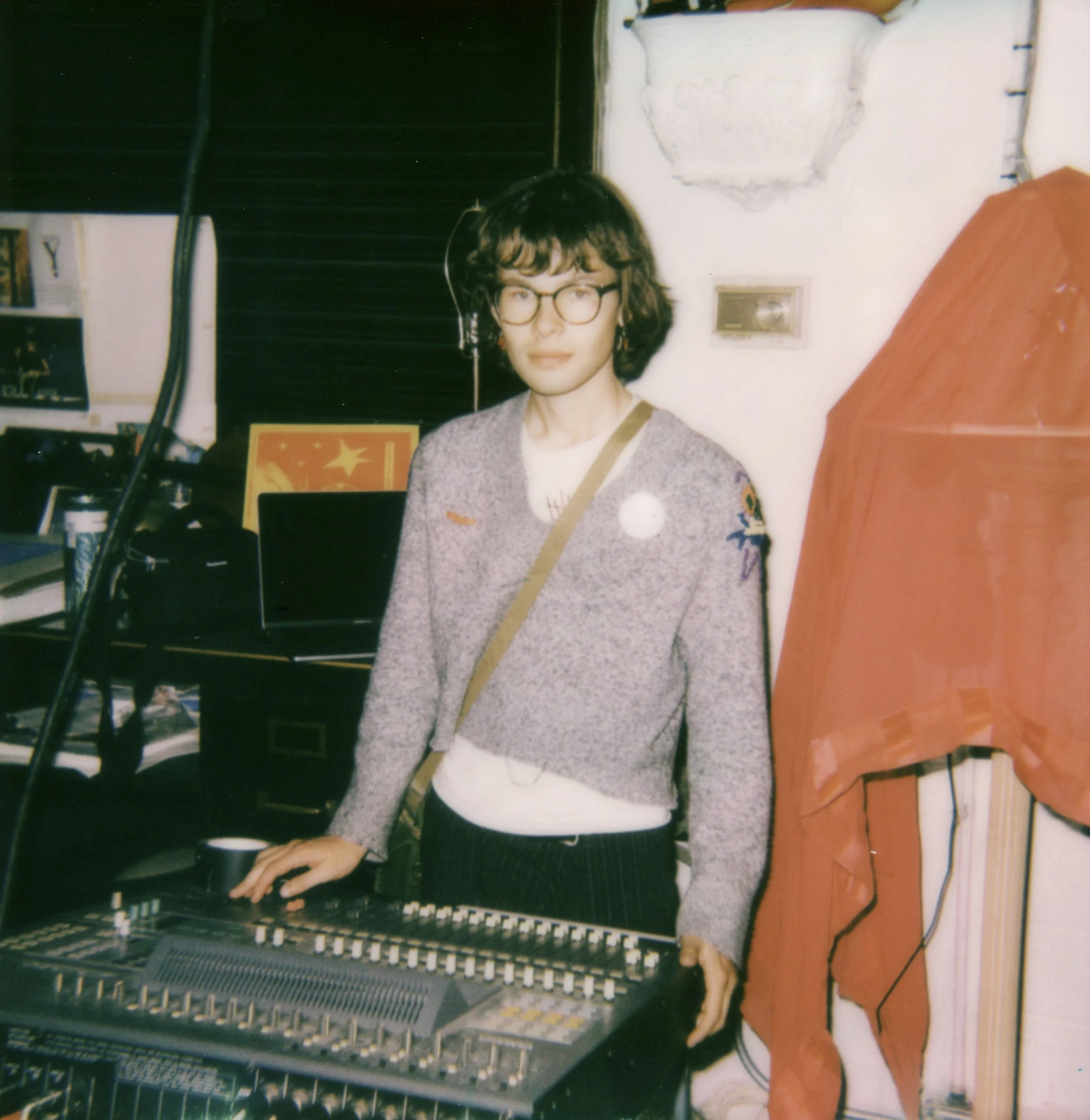
by Malcolm Riordan
Let's get into Red Zerox, when did the idea for a formal comp come to mind?
It came to mind when I was on tour last summer. At the time, I was feeling like I wanted to move from Chicago, which isn't really how I feel right now, but I had that feeling, and I was like, “I would really like to do one last huge project, and bring all of these voices together.”
I was working at Numero at the time, and I was seeing the way that people's stories, and stories of scenes and bands, are warped and changed by outside perspective 20 years in the future. A history in the form of a record like this is always going to leave out things, and it's always going to skew some sort of story. There's only so much you can fit on 45 minutes of disc, which is why I did a larger tape compendium, with it too, to contextualize the whole thing a bit more. and, like, And bring more people into the celebration of it all.
At least from the way people talk about Chicago from the outside, it feels like there is a beaming light inside that radiates inspiration, freedom, acceptance, and warmth. There's a lot of work that's been put into being really kind and non-competitive, and being supportive of each other. I thought it would be really important to put that into a physical form. Who knows what any of that will mean in 20 years, when people look back on a record like this, but I felt like it was important to have everyone write their own story and have it all in one place.
The vinyl and tape release is so important because physical comps are something of a lost art. In the ‘70s and ‘80s, punk compilations were so crucial for underground bands. A lot of those bands eventually found a following because of the vinyl pressings. Did the history of vinyl comps inform you in any way when creating Red Xerox?
A reason I was able to do this project in this way was my friend Sydney Salk, who has this really good zine called Compilation Nation. The whole zine is all about those (second-hand) vinyl compilations. She reviews old comps and talks about them, and it's a really, really awesome zine.
She's been working on a record about the New York scene that I think will be released in a couple of months. But she was the one who got me in contact with Gabe at Desert Island to make this project happen. So there's already a thread with that, where the idea was to continue that kind of art. Also, a lot of the design choices on the record are all ripped from folkways, and that's a history that I'm super interested in. Folk music is just the music of the people, and Red Xerox represents an anthropological look at a place at one time.
From a perspective outside of Chicago, because of all the amazing music, it feels like there is a folk energy there. That being said, along with the vinyl is a companion tape of Midwestern bands. Was it difficult to put together the track listing because the scene is so popping and there are so many bands to choose from?
It was really difficult. I tried to showcase as much different music as possible. I'm probably going to do a second series, which is kind of the thought I've been having this week. Because I'm looking at it right now, and I'm like, “Well, this sold out really fast.”
I was gonna make a second pressing, but now I'm kind of like, “Why don't I just make a new one?” Because there are so many other people I really want on it. It'd be kind of cool not to do a second pressing and just do a whole nother one. Not in a way that I want to milk this project for all its worth, but in the way that there's more room to open the floodgates for everyone.
I definitely think there's a value in making it into a series. There's so much music to hear, and it's a lot of music that, unless you're really tapped in, you're not aware of. It's such a clever way to promote the bands, and you’re bringing back an “old” form of music discovery.
Yeah, and I think it's an easier way to make compilations happen. I'm working on a compilation for the Big Pop Show that we just did. We recorded all the sets, and I want to turn it into a large project, like a song from each band that played. But it's too big to do on vinyl, so it's probably going to be a double CD, like a 120-minute cassette, and just pack it all in.
How did you put together the track listing for Red Xerox?
I split the track listing into years: side A is 2020-2022, and side B is 2023-2025. I did that because I wanted the record not only to exist as a historical thing, but also to be a present thing in that span. 2022 was like a really pivotal year for the Chicago scene, and it was between 2020 and 2022 that it was super, super insular and really small, with just those (Side A) bands and a couple more.
All the bands on side B came out of that explosion, and came out of the point in which Horsegirl started to get way more recognition, and Lifeguard signed a matador, and Friko signed to ATO, and Post Office Winter moved away, and Dwall Troupe disbanded. So Side B was kind of like a second wave of things, showing how much has changed and expanded.
With the record is a Hallo Gallo-style zine. Why was it important to include it with the vinyl release?
I tried hard to tell the stories of the bands in broad strokes up until now, which was the same goal of the first Hallo Gallo issue. That first one was like the expanding point of the scene, where it was just like 10 of us, and said, “This is what we stand for, and this is what we're about.”
Now that Kai isn’t really doing Hallo Gallo in the same way anymore, I thought it would be kind of cool to bring it back around and be like, “Hallo Gallo isn't just Kai. And it's something that can stand for all of us, and be a kind of beacon.” And the sheep (on the cover) can mean more than just youth revolution now.
The design is a crucial aspect of Hallo Gallo. What went into the design of the Red Xerox cover?
The album cover is my take on a Numero cover. Well, it's my take on what I would do with a Numero cover. One thing I really learned there was that you have to know the cover of an album, and the photo has to tell you everything you need to know about the album. So I thought it should be a photo, and the photo is a picture of Gigi from Horsegirl, holding cymbals and a tambourine. And it's kind of like, “I'm holding everything at once.” It's kind of ramshackly, but there's no one's face on it, so it could be anyone holding that, which I really like.
How did you land on the title 'Red Xerox'?
I was going to call it Hallo Gallo, but then I thought about it more and decided it would be fun to make the title its own thing. ‘Red Xerox’ just felt right. It's like xerox, zines, copy and paste, red. We love the color red. I'm wearing the color red right now. Red is like the people's color and the proletariat's color. And I was like, that feels right to me.
Let’s talk New Now. The series is reminiscent of 120 Minutes and Top of the Pops, which are now long gone. How did New Now get started and find its legs?
New now started because I wanted to have bands play on my radio show, but because of Covid, they were like, “Well, we can play on Zoom.” I was like, “That sounds terrible. That sounds like it's gonna sound really bad.” So I thought, I'll just do it myself. I started having people play in my apartment, which started a bit like a radio program, and I would air episodes of the bands playing.
Then it became just the YouTube channel, and it's been such a labor of love, and it's gone through so many different phases. My friend Dylan Clancy is recording all the audio now, so it sounds really good. People were bullying me online, and being like, “This sounds terrible. This sounds like shit.” The bands deserve a really good-sounding mix, even if the video is kind of lo-fi.
It's almost at its five-year anniversary, which is really wild to think that I've been doing this this long. It's great because it is a very personal history, and it’s very much informed by what I like and by the people I've been around. I'm realizing it's almost its own label. Traditionally, what a label always is is people putting out records, and there’s a curation thing. It's interesting to think about a YouTube video as its own record. YouTube is this free place for music, so it's cool to think of it as its own thing because it's true to heart and a DIY way of doing it.
The New Now videos are so special. Horsegirl was the first one I watched, and I’ve found so many bands on the page.
Awesome, I’m actually planning a New Now tour right now. I'm gonna drive across the country by myself and go to bands now. I don't know how it's really gonna work yet, and where I'm gonna record them, but I'm gonna figure it out.
Everyone I’ve told, I’m like, “Pick a place that's special to you and that you think would look cool.” I don't live in these places, and I don't know what the right spot is, but maybe they do. I like the unknown aspect to it.
It seems like the scene is starting to leave Chicago a little bit. Horsegirl is in New York, Sharp Pins is blowing up, and even New Now is hitting the road. What does the future of the Chicago scene look like?
My favorite thing about the scene right now is how special it is to me that the ethos and heart of the scene have expanded beyond Chicago. Chicago feels like it's the center, but it's almost like the next biggest bands from the scene are like, Good Flying Birds and Parking, and neither of them live in Chicago, but they're such Chicago bands. They play here more than they play in their hometowns. They are
I kind of see in Chicago that things are fracturing out into their own, smaller, little things in a really cool way. Everyone has taken the knowledge of what the original Hallo Gallo scene was and been like, “That’s cool, but we need to do our own thing.” I'm excited about all the really crazy directions that people are going. It feels more expansive and all over the place than it ever has, which is really cool and something that I'm excited about.