
by Pat Pilch (@apg_gomets)
Columbus three-piece Golomb have a new EP out today, and it’s as electric as their high power live performances. The Beat Goes On and On and On features one new track, two reworks, and three incredible remixes from Laraaji, Sonic Boom, and Wishy. While Golomb’s classic sound is rooted in rock tradition, their influences run the gamut of pop music.
Ahead of their upcoming European tour, Post-Trash chatted with Golomb bassist Xenia Shuman and guitarist Mickey Shuman about being a power trio, the importance of The Velvet Underground, and their excellent new EP.
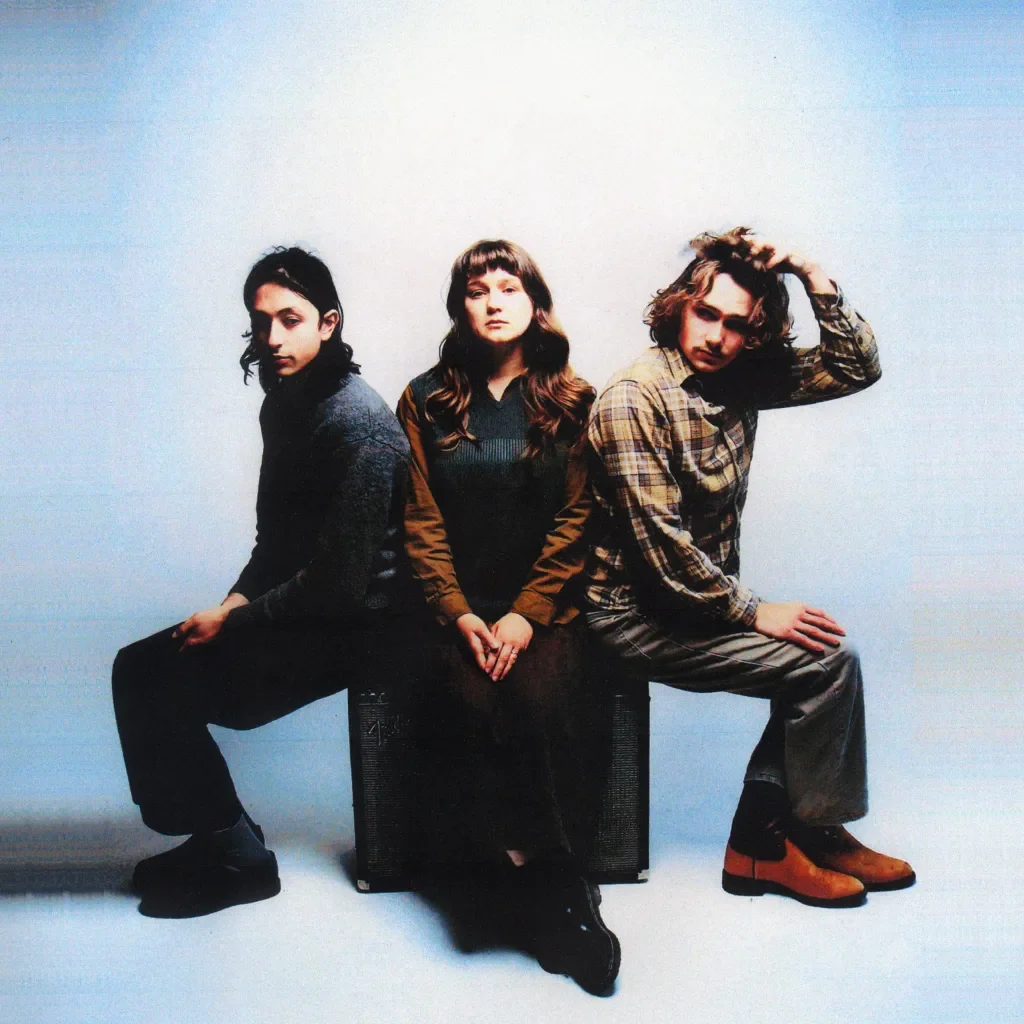
Golomb by Grace Lillash
This interview has been edited for length and clarity.
Post-Trash: Golomb really started up with the pandemic, right?
Mickey Shuman: Yeah. Me and Xenia had been playing in a band for a couple years before, but Hawken wasn't in the band yet. Then we moved away but COVID happened. The three of us were all living at their parents' house. That was when it really went down.
PT: I feel like there's like a ton of bands that have come out of the pandemic. I read something that said the pandemic almost parallels 9-11 in that it created a “fuck it” mentality for musicians. How did the pandemic affect this project and ethos?
Xenia Shuman: It physically brought us all into the same space, which was really important. Mickey and I just began living in California but moved back to Columbus. Hawken (Holm), my brother, was still in high school. I was 22 and he was 18. I feel like that's the point where our age gap felt like the furthest.
Bringing us all into the same house definitely shaped things in a major way where it was physically giving us the opportunity to occupy the same space and work together on something.
The pandemic began in our very early 20s. In terms of the ethos, the formation of the band solidified, for better or worse, that no matter where you think your life is taking you, some shit can completely shake that up at any second. We just moved across the country, and we were starting to set our life up in LA. Then we moved back and life completely steered in a different direction. You don't really know what's gonna happen next.
MS: It also informed the songs. I feel like it’s all prevalent in a lot of music and movies, which are probably the main forms of art that I consume. I feel like everyone's kind of scared and confused about the same stuff, which made itself prevalent through COVID.
It makes sense that people are making really cool art right now, in the same way that happened after 9-11. Not to make light of it.
XS: It was a huge thing that shook everybody up. Sometimes those things shake the art out of you.
MS: I think all that is informing music, and all sorts of stuff right now.
PT: I know you’ve got a bunch of pals Who and what you're excited about?
XS: There’s so much. We just toured with Greg Freeman, which was awesome. We've known him for about four years now. That was like, that was like a dream come true. Honestly, so much fun. We really love Good Flying Birds out of Indianapolis. And we've known those guys for quite a while.
MS: Big Fat Head is a really cool Columbus band. I feel like there's so there's so many that are like, killing it right now. Another is Star Cleaner Reunion. They’re unbelievable to see live. I've been really into using the word “horsepower” to describe people's live performances recently. Greg's a perfect example where you can talk about his record in literary, big brain terms or whatever. But you wouldn't expect him to show up with the the 410 Music Man.
XS: Starcleaner Reunion is the same. I love all their recordings but their live show is almost a totally different thing.
PT: My coworker and I were talking about the power of odds, specifically the power of three. There's that De La Soul song. How does that translate creatively? How do you keep one another in check?
MS: I think we all have really specific roles. Hawken is almost the rhythm guitar. He's really good at lifting up the stuff I do and filling in where I can't do. And same with Xenia. It lets me and Xenia cheat a little bit with our instruments. I wouldn't say either of us are the most technically proficient players.
XS: But we're proficient as a group. We know how to fit in around each other. We lock together so that each of us has to work a little bit less.
MS: It’s funny, we've been playing. We've been playing as a different band. We're playing all of Xenia's songs, but a couple other people are playing with us. We thought it would be like, really easy. Because we're like, oh, we're already a band. We having to totally change how we're playing.
XS: Mickey was doing way too much at first. He didn’t need to be playing rhythm guitar and lead guitar att he same time.
MS: I understand what you're asking about. We've just kind of figured out how to like, lift one another up.
XS: We can only do so much as three people.
MS: It also just forces us to have limitations.
PT: I find creative limitations to be almost like a tool for creativity in ways. Would you say that that's true for Golomb?
XS: Totally. We each have to max out our contribution to the sound, but respectfully. We definitely are not ever trying to play too much.
MS: A couple years ago before things were trudging along, we were playing like a lot in Columbus. We would have homies like sit in with the band pretty frequently. We'd have extra guitars or saxophone or whatever. After a while, it felt like we were losing touch with what our band was actually supposed to sound like.
XS: But it was a good learning experience, like understanding the power of three and realizing that was actually what made our sound our own was not having an extra guitar player, it was figuring out how to play.
For a long time, we would not play “Other Side of the Earth” as a trio, because we couldn’t figure out how to make it sound good. But eventually, we began to use those limitations to be more creative about how we were going about it.
PT: So the new EP that's coming out. Can you tell me about the mode you were in going into making this EP?
MS: Me and Xenia made a version of “The Beat Goes On” a couple years ago with that backing track and Xenia playing organ. About two years ago, we made a cassette and the demo version of it is a secret track on there. At our album release show, we played “Real Power” acoustically with the violinist who's on the EP. And it kind of rocked.
In the back of my mind for the longest time I was like, “Oh, it'd be so sick to get Laraaji to play on this song.” Then I just hit them up. I had hit Sonic Boom up before too. And then I've been obsessed with that Wishy EP for a while.
I was just kind of like, “Oh, I'm gonna just hit these people up.” Then they all they all said yeah. I hope the EP relays our vibe a little more.
PT: Tell me about your relationship with and the significance of Velvet Underground's live at Valleydale Ballroom in Columbus, Ohio 1966.
MS: It might be the only Velvet Underground show recorded in full that has Nico and John Cale on the recording. And it's at the Valleydale Ballroom in Columbus, Ohio. It's pretty close to us.
Every time I'm on YouTube I'm getting recommended like... Earl Sweatshirt mic type beat.
XS: All our voice notes when we're making songs are like... Fugazi type beat.
MS: So I just thought it would be funny. Also I feel like lots of people, when talking about our band is always like... Built to Spill or Pavement or whatever and it's like...“No guys.”
PT: It's Velvet Underground.
MS: And I mean we love Yo La Tengo and Built to Spill. Meat Puppets. But it's just funny to me how the one we just don’t really listen to is the comparison we get. Nothing against any of it. It's all really cool
XS: I think the reason we get that Pavement comparison is because you were actually quite sick when you recorded the vocals for “Play Music,” which was already maybe our most Pavement sounding song. And you kind of have this different voice going on.
MS: If you've not listened to that bootleg of that Velvet Underground show... It is an extremely harsh recording. But it is unbelievably cool. I love it.
PT: Have you seen many shows at Valleydale?
MS: No I've never been there. They had a festival a couple of years ago called Soup Fest. A great band from Columbus called Dana played. Do you know Dan Deacon? He played it. But they don't have shows there frequently. Hopefully we'll play there at some point.
PT: Mickey, can you tell me about your prophecy?
MS: Yeah, I saw recently that Matt DeMarco was talking about Cameron Winner and Mk. Gee. My prophecy, which I have come up with maybe two years ago, was that Geese or Mk.Gee is gonna be the ones who are the next Nirvana.
Me and Xenia saw Geese almost two years ago in Columbus at a really small bar. On my Instagram story, I was like, “this is the most important band.” And I called it.
Pavement, Breeders, Dinosaur Jr; I feel all those bands are still around today because Nirvana got popular, in a way. I think it's a fun experiment to participate in to contextualize the bands now with that skin kind of pasted over it. If they’re the freaks who are making it into the mainstream, it's exciting to think about how much other cool new music is happening right now that I'll listen to for the rest of my life as much as I'll listen to Velvet Underground at Valleydale Ballroom, or Paranoid or Marquee Moon. I'm probably going to be listening to this upcoming Starcleaner Reunion album just as much as those for the rest of my life. That's the prophecy.