
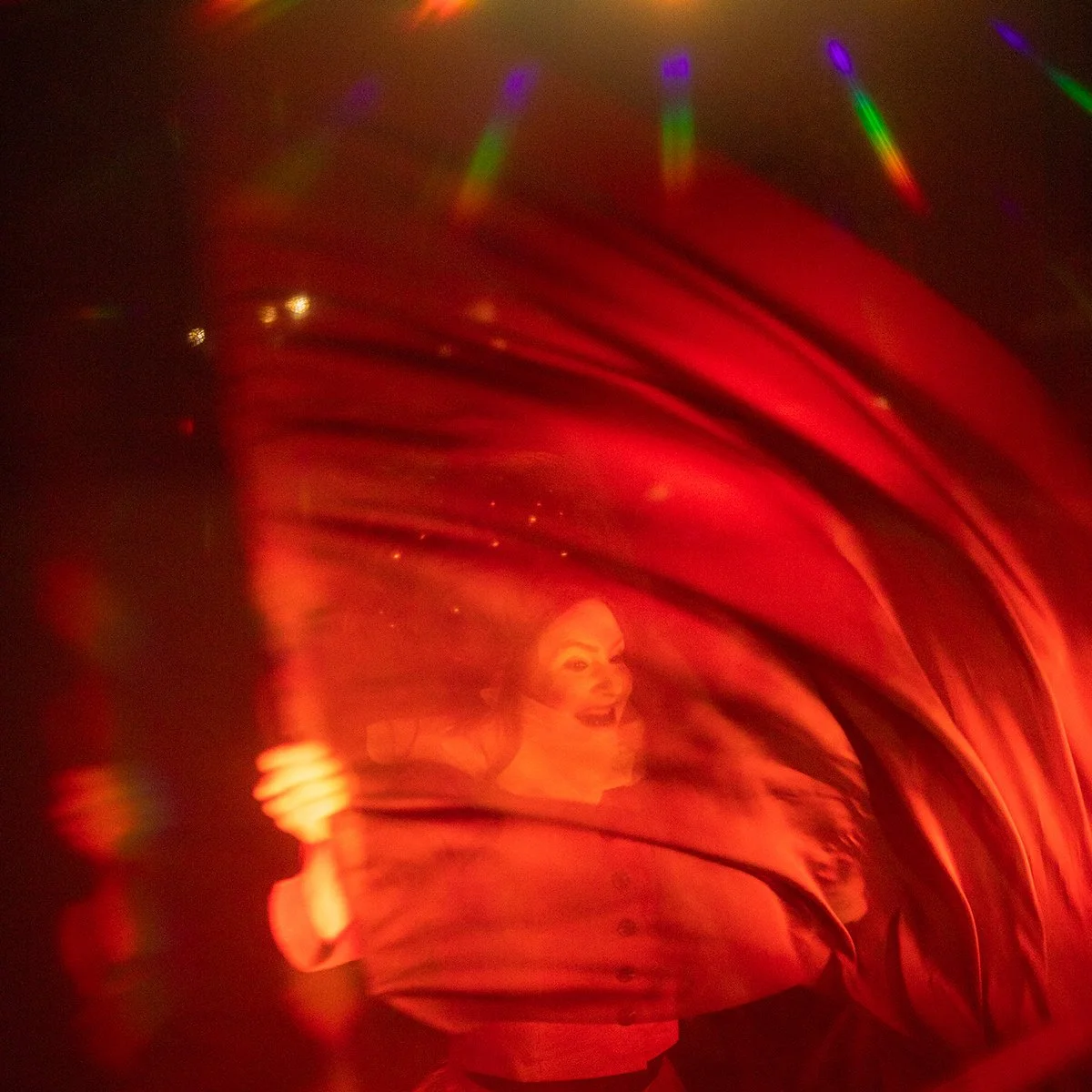
by Weajue Mombo (@absent.sounds)
The first time I saw Emma Ruth Rundle live, performing Engine of Hell inside a cold cathedral in Tours, France, the entire room wept. Her music knows how to find the grief our bodies carry, forcing it to the surface. For years, Rundle has stripped away emotional distance, her work living in a vulnerability that is both beautiful and violent. Her latest studio album, These Killing Times, magnifies that bruising. She continues to claim her ground, but this round, she isn't exhaling alone.
Where Engine of Hell captured a startlingly insular solitude, These Killing Times looks directly outward. Written in early 2025 and co-produced with Sonny DiPerri, it’s her first release on her own label, Errant Child, and it brings back the sound of a full band, with Marissa Nadler, Patrick Shiroishi, Amelia Baker, Gina Gleason, Jess Gowrie, and Troy Zeigler among the fold. Rundle has said she went full band because “we need other people right now,” and she didn’t want to spend years on the road alone.
The week the album came out was like every week in the history of life. Someone died, something broke, and the world kept turning, unmoved by our anguish. Yet having someone or something to witness our grief changes it somehow. That something is These Killing Times.
The record opens by piano lift once again, an instrument that feels deeply personal to her, and “Powerless” shatters it into a heavy, droning wall of guitar. Over this eruption, she delivers the album’s central thesis: “Let me die here with a hammer in my hand / One for smashing, one for making something better”. The song holds fragility, destruction, and rebuilding in the same breath, and that friction defines the architecture of the album.
Rundle has never been one to seek easy resolutions. She and DiPerri spent a month tracking the record, giving the subtle transformations more time than ever to linger and melt. The pacing stays taut as it moves into “Enough,” where the arrangements shift into quiet fury and distortion-laden space. Most tracks run past five minutes, and you still want the record to meander more in that weight, to drone a little longer instead of closing. Then comes “Human Kindness,” which runs over eight minutes. Its lyrics move through lists, from the things we share freely, to war and ruin, to the strain of wanting and feeling, until the final line turns into a burial of the song’s title. Across those minutes, Rundle makes space for the full claustrophobia of those emotions to collide. The distorted low end pulls at her soaring vocal until, for a moment, the song embraces infinity.
The truth of the album’s belief in community lives in its closing track. On “Oceans of Time,” Rundle plays keys and sings, joined by Baker, Lukas Frank, and Nadler on additional vocals. Having so many voices around her is the argument, embodied in sound. These Killing Times is one of Rundle’s best records. She no longer sounds alone with her grief. She has found a home in the people with her, together crafting arrangements that feel punctured, bruised, and wept for. This record is the sound of that home.