
by Patrick Daul (@patrickdaul425)
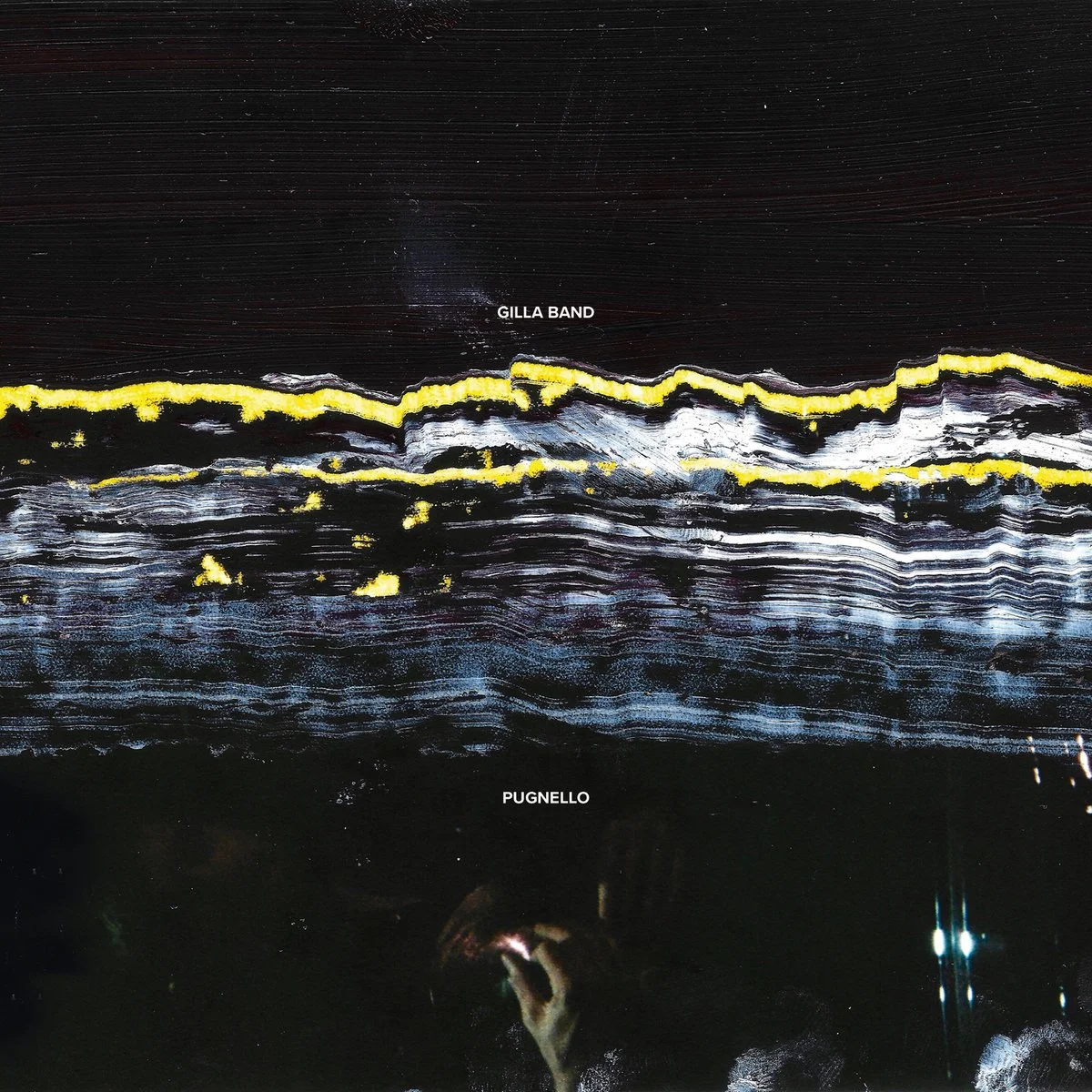
“Have your midlife crisis as early as possible” sounds like unsolicited advice from the worst divorced dad you'll meet in your entire life. But on “Alogia,” off of Gilla Band’s tempestuous new LP Pugnello, it’s one of rock’s most inventive lyricists encouraging these ugly indulgences. Now five releases, a name change, and more than a decade of touring under their belts, the Irish group (and especially singer Dara Kiely) have seen a thing or two. The once-youthful quartet now carry themselves with some grizzled authority with which to give said advice, or at least morbidly play devil's advocate.
Gilla Band have been lumped in, rightly or wrongly, with the buzzy wave of Irish and British post-punk groups like Fontaines DC, Gurriers, Shame, etc. With each release, the quartet has distanced themselves further from this loosely defined scene. Their music now has much more in common with the haunting experiments of Mandy, Indiana than with IDLES, and further digging reveals increasingly apt Jesus Lizard and Daughters comps. Pugnello is just another step away from that Britpop-reminiscent zeitgeist towards a more abrasive abyss.
Opener “The Angelus” begins like at least a dozen Gilla Band songs, with ominous guitar blasts backtracking a string of Kiely’s wailed prose. The similarities end almost immediately, with a crescendo of trip-hop beats and apocalyptic blasts of distortion. Fleshing out the electronic elements of their sound represents the latest artistic leap, as the band now settle into almost techno or trance-like beats as they stack or remove layers. Plenty of rock bands adopt a new accessibility when they incorporate electronics into their sound but Gilla Band’s cache of synths and samples brings out their most nightmarish textures yet, especially on the droning “Giraffe” and stabbing digital bleeps of “Computer Sadness.”
The echo on Kiely’s vocals, along with the incensed delivery, suggest he’s performing somewhere claustrophobic. Almost frustratingly cryptic lyrics mine the depths of his psyche, having undergone a mental health emergency and subsequent schizophrenia diagnosis in recent years. But strangely enough, he’s venturing further back by contemplating an estranged relationship with his father. References to childhood distractions abound, with the singer name-dropping everyone from the Power Rangers’ deus ex machina “Megazord” to Bananas In Pajamas. Even his teddy bear and Coldplay enter the fray. But levity comes nowhere near these recollections, as the soundscapes of Pugnello are prohibitively unsettling and the themes too enigmatic.
Certain listeners, ones accustomed to songs where the band as a whole operates towards some coordinated melodic pursuit (i.e. most pop music), will be put off by Gilla Band’s disharmonious arrangements. But that audience likely wouldn't venture further than a teaser track, let alone wait around for a rhythm section to eke out a recognizable pattern. Each member of Gilla Band seems isolated in their contributions, with the pieces fitting together seemingly by happenstance.
Daniel Fox’s gnarled, pulsating bass has often been the driving force of their compositions, or it’s at least the most jarring element of their sonic makeup. At one moment, a cacophony of fuzz and low-end bludgeonry. The next moment? Utter silence. Then on again. Off again. Now Kiely’s stream of consciousness lurks behind Adam Faulkner’s beats. Somewhere, eerie spoken passages warp to the point where they resemble ghastly found-footage from some slasher flick, all while the album’s peppiest percussion and slinky bass rhythms emerge on “Crisp Pop.” Alan Diggan’s shrill guitars and atmospherics build, and build, then they break. Kiely seems to unravel through the course of the record. As Gilla Band concludes Pugnello with “The Gallop,” his already warped voice becomes lost in distortion, ultimately mutating into something entirely unrecognizable.
Friction has always been Gilla Band’s first tool out of the kit. Whether they release it or let it take hold is the central question you face when pressing play. This is as true, if not more so, of Pugnello than previous material, but these Irishmen are bringing more toys to play with this time, to terrifying and intoxicating results. If you thought they’d smooth out those rough edges, you’re sorely mistaken. They’ve, in fact, sharpened their sound to meet today’s horrors, internal and external.