
by Giliann Karon (@gilposting)
Joyer adopted the demonym “East Coast” to cover a wide area across the Northeast Corridor. With roots in Philadelphia, New York City, and Boston, brothers Nick and Shane Sullivan have collaborators within driving distance. Between larger cities lie college towns and suburbs, each with its own storied venues and local heroes. Endless cross-pollination leaves no shortage of regional and national bands.
Their 2023 album, Night Sounds, crystallized their place in the larger shoegaze ecosystem. Soon after its completion, they began writing what would become On the Other End of the Line…, their fourth album as a band and second on tastemaking label, Julia’s War. Their latest record hones the band’s identity without placing them in a box. The shoegaze renaissance is alive and well, but experimentation and a broad range of interests presents a confident and evolved take on the genre.
“We were always on the same page,” Shane gushes about Slow Pulp’s Henry Stoehr, who produced the album. Their partnership alleviated the brothers’ apprehension to relinquish some decision-making. Instead of re-recording demos in the studio without any changes, they trusted Stoehr to flesh out their zany creative visions.
On the Other End of the Line… reflects Joyer’s new position in the broader East Coast shoegaze landscape, rife with experimentation while maintaining the qualities that got them to where they are. I caught up with Joyer before heading out on tour with villagerrr and Teethe.
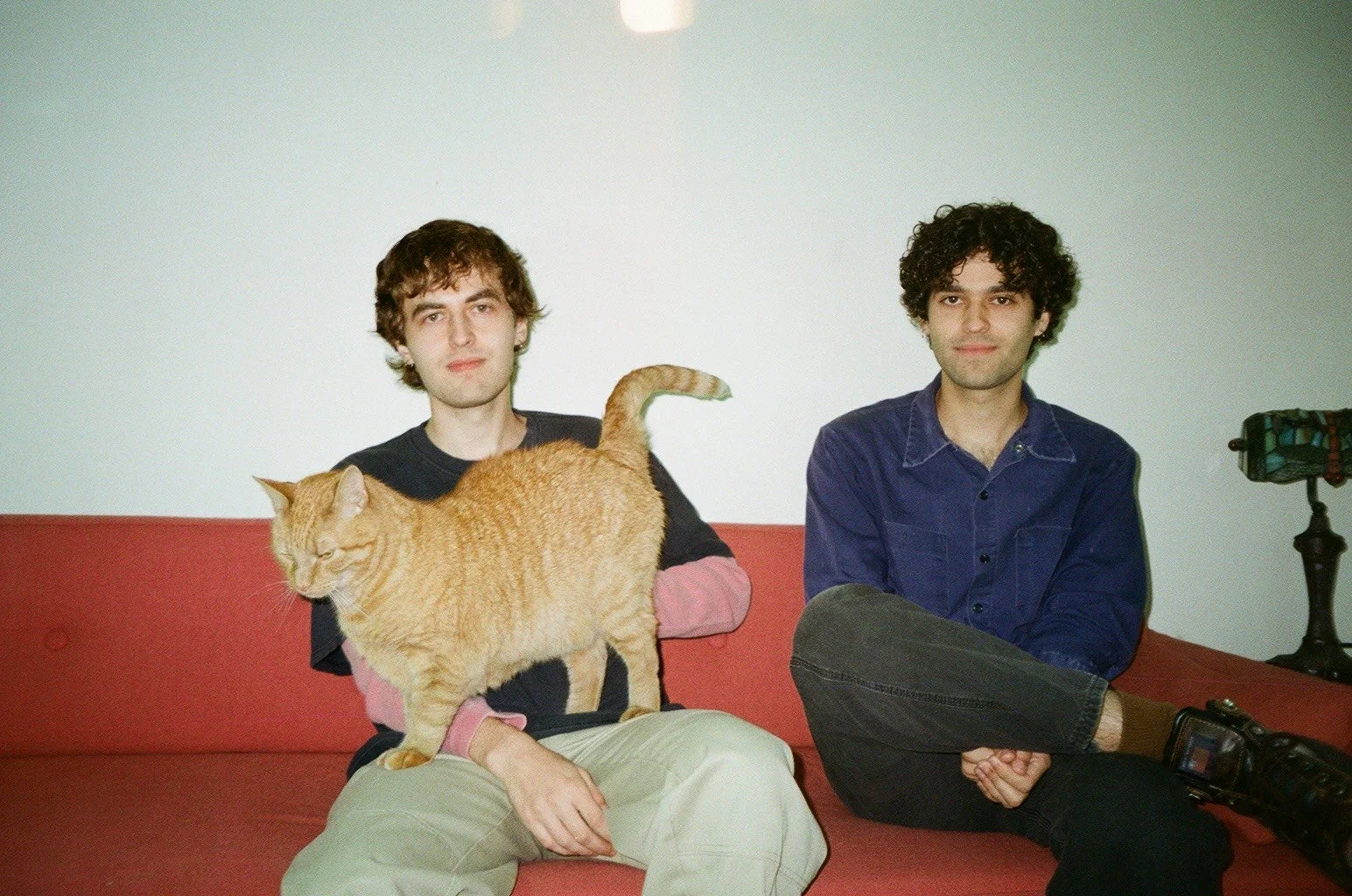
Joyer by Maria Gelsomin
GILIANN KARON: So much of your last record, Night Songs, draws upon the introspection that fills the empty space when you're on the road for extended periods of time. On the Other End of the Line… was written under similar circumstances between moves and on tour. When you decided it was time to work on a new album, how did you want to distinguish it from your previous material?
NICK SULLIVAN: We both wanted to dig into the aspects we liked most about Night Songs, but abandon others. It’s more melodic than we’ve been in the past. We wanted to further that, but strip back some of the more tone-heavy parts and focus more on songwriting.
SHANE SULLIVAN: We wanted to lean into the poppier side of songwriting, which is why this record felt like an immediate continuation from Night Songs. We started writing soon after Night Songs was released to continue some of the musical ideas we had touched on.
GK: You've always written in transit or in different cities. What did you learn in your last album cycle that helped you gain confidence this time around?
SS: This is the longest we ever spent recording an album. We flew out to Chicago and spent eight days in the studio. Before, we would record it all in three days. This time, we were able to sit with these songs longer and pay closer attention to details, adding different layers and giving each part of each song much more attention than before.
We were able to experiment more in the studio and try out different things because we weren't so rushed to track them. That time to explore was important for this record.
NS: We learned we like experimenting in the studio. We still experiment in the writing process, but this album was definitely refined more in the studio. In past albums, we would perfect everything and have it exactly how we wanted in our demos before we took them to the studio. This time around, we went into the studio expecting things might change or that we’d want to try out something new.
GK: I picked up some twang/folk influences – “Glare of the Beer Can" and “Cure,” whereas Night Songs is more of a true shoegaze record. What was the conversation about trying to experiment with different sounds and expand your palette?
NS: I don't know if there was an exact conversation. We have pretty broad music tastes, and the things we get attached to come in waves. While making Night Songs, we listened to a lot of shoegaze and heavier bands.
We love sixties and seventies folky stuff, too, and that's what we were more into at the time. There was a conversation about leaning more into melodic stuff, but much of it came naturally. We didn't know what we were going for until we started writing it.
SS: We never like to get too stuck in one genre. We have so many different musical interests and playing around keeps things exciting.
GK: You guys are often lumped with other East Coast shoegaze bands – TAGABOW, Knife Play. Bedridden, Horse Jumper of Love – all of which have roots in DIY. What do you think is distinctly East Coast about the music you make and your creative approach?
NS: That's an interesting question. You can easily foster community on the East Coast 'cause all the cities are super close together. It's easy to cross paths with bands that you're into.
We grew up in New Jersey, so we were right between New York and Philly. It's a lot easier to pick each other's brains or see these bands over and over again when you live where they come through. I think that's a big part of it – being exposed to so many things.
GK: What is your favorite texture or effect that you used on this last album?
NS: I don't know if this counts, but in the studio, we kept making this joke about how funny it would be to create the sound of pulling the plug from a TV, and it going like, *imitates unplugging sound.* We were doing it as a joke over and over with Henry, who recorded us. It sounded really goofy.
And then when Henry was mixing "Song at the Movies," he was like, "I put this in. I hope you guys are okay with it because I know we were joking about it," but he did it in a way that was super tasteful. There's a wind-down sound that kicks into the instrumental part.
Every time I hear that part in the song, I'm always so hyped about it, 'cause I'm like, "wow, he made it not silly, like how we were doing it." It's an inside joke, but it sounds sick. I think That's my favorite.
SS: Yeah, I agree. I think it's fun and special that it made it onto the album.
GK: How do you guys resolve conflict when you're not in the same city?
NS: Honestly, it's probably better because we can be like, "all right, talk to you later," but just being brothers, we squash it fast. We've grown up together and fought over things all the time. But when someone's your sibling, you still need to exist with them.
SS: Since we're not in the same city, the times that we are able to be together are special. We always feel like we need to make the most out of our time together, trying to talk things through and think as rationally as possible, because that time is so valuable. We both realize petty arguments can’t happen because we have to get stuff done.
GK: What was the hardest song to complete?
SS: I think “Test” was the hardest. There are a lot of parts to the song, and a lot of directions we could have taken it in. It was hard to strike a balance between catchy and poppy, with noisy elements, without it becoming total chaos. I think it came together in the mix.
There was a lot of back-and-forth, trying to dial everything in perfectly so it would sound how we envisioned. We had a very specific vision for it, and it took a while to fully carry that out.
NS: For me, it was a favorite because that song needed to be super succinct for it to work. I had a very specific drum pattern in mind. For all the instruments to work together, everybody needs to be super locked in.
It's hard to know when the parts change. We didn’t need that many takes, but I remember being stressed about it. I held my breath the whole time I was tracking the drums 'cause I'm like, "I can't mess this up."
It was hard even articulating it to Henry, or to each other, how we want it to sound. Sometimes, when you're making music, it's hard to figure out a descriptive word that helps people understand the picture you're trying to paint.
GK: I can tell you guys have a very specific objective when you write each song. How do you figure out when to give up creative control and trust the people you're working with?
NS: I’m always working on that. With our older stuff, we’d complete the album ourselves and then go into the studio to rerecord it. We'd be married to what we did. It'd be hard to open up and let people do their own thing on it.
We realized the key for us is to choose collaborators who make their own music that we respect and admire. I talk myself into it, and it's always been for the best.
SS: This time around felt a bit scary and risky 'cause we had never worked with Henry before. We hadn't even met him before joining him in the studio.
We're always a bit nervous to work with new people because we have specific ideas about directions we want to go in. It felt like a big risk to work with someone we had no prior relationship with, but it ended up being a perfect match.
He was such a joy to work with. We were always on the same page. He completely understood all our weird ideas when we couldn't articulate them very well. It was a great partnership, and we're thrilled with how it came out.
GK: Are there any songs that didn't make it onto the record, and how did you decide what to cut?
NS: Usually, we write and record extra so we can cut it down to make sure we have the best of the best. We actually booked studio time before we finished writing the album. Everything that's on there was everything we wrote. We didn't cut anything right, Shane?
SS: First time we’ve done that.
NS: It's always worked out that we always agree when we have to cut material. We also like to get feedback from people whose ears we trust. It’s usually pretty unanimous.
SS: This record was very different from all of our other ones. Usually, we have almost double the album's worth of songs and choose the very best 10 or so. This time, we nearly added songs at the last second. Nick was working on "Spell" the day before we left for the studio. Everything came together right in time .
GK: What did you listen to while writing this album, and do you think it shows?
SS: I hadn't listened to much Slow Pulp before working with Henry. Once we decided to work together, I started going through their catalog and got really into it. Listening to the production he did with his own band made me really excited about choosing him for our more melodic songs.
That definitely showed up. I was really into the way Slow Pulp writes interesting pop songs. We were trying to go that direction with some songs.
NS: We were listening to a lot of Lilys, but not their shoegaze stuff. We were really fascinated by their Britpop era. We thought it was cool that it's still very Lilys-sounding, but he's writing these Beatles and Kinks-esque songs. We didn't wanna make a Britpop album, but we thought it was cool to keep your sound while exploring other pockets of rock and pop. That was a big inspiration for us.
GK: Who was on your Spotify or Apple Music Wrapped? Or whatever streaming platform you use.
NS: I'm a music teacher, so mine was kinda messed up, but let me see *pulls out phone.* Warren Zevon, Neil Young, Ramones, Alex G, and Pavement.
SS: My top artists were the Kinks, Guided by Voices, Alex G, YHWH Nailgun, and Horse Jumper of Love.
On the Other End of the Line… out now on Julia’s War. Follow Joyer on Instagram.