
by Giliann Karon (@gilposting)
Helen Ballentine, best known as Skullcrusher, wields softness with swordlike precision, though her stage name implies toughness and pulverizing weight. On her sophomore LP, And Your Song is Like a Circle, these elements of darkness appear through lingering echoes and hazy synthesizers that conjure longing and isolation.
She began writing Circle after moving to her picturesque hometown of Hudson Valley after a decade in Los Angeles. While wading through difficult life transitions – a breakup, a sick cat – she found solace through musical experimentation that often blurred the line between human and machine. Using contact microphones “[created] really scary sounds,” she explained in a press release.
“I like thinking about my work as a collection, and every time I add more to it, I’m adding a rock," Ballentine says. "Eventually it might form a circle. Each time I make something, I’m putting another line around the body of work. It feels like I’ll be trying to trace it for my whole life."
Circle isn’t a snapshot of a moment in time, it’s the residue left behind. Grief and physical pain can linger until they become as all-consuming as the event itself. Ballentine’s aches and losses compound into something greater than the sum of its parts. Similarly, a drawing of a circle begins to render after repeated pencil strokes. The pencil wobbles and shakes, no matter how much the artist tries to control the grip and direction. The end result is a ghost of the original vision, intention and struggle still visible.
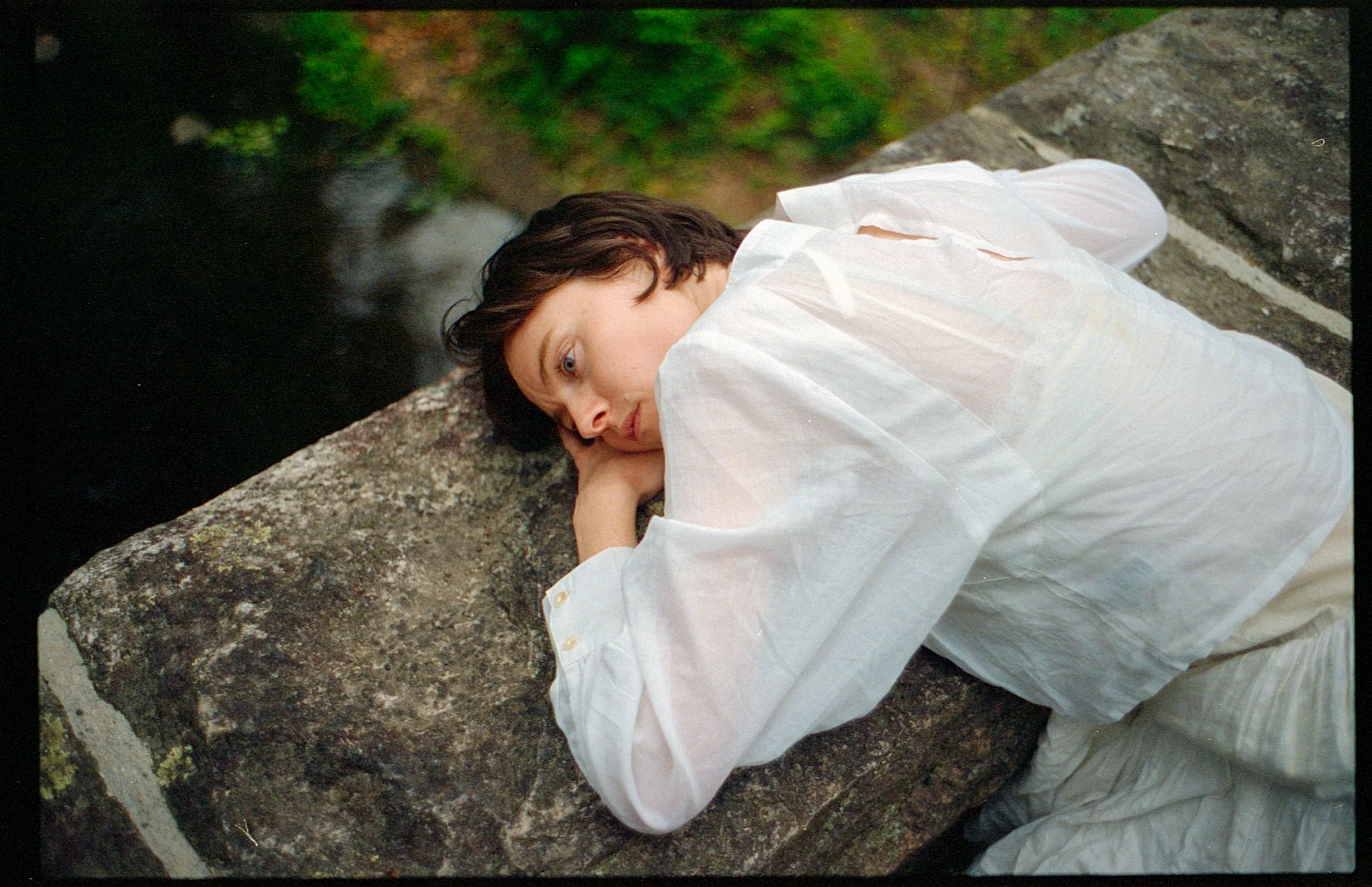
Skullcrusher by Adam Alonzo
GILIANN KARON: You wrote your album over a period of a few years. How did you decide when it was done?
HELEN BALLENTINE: I think about a lot when I'm making a body of work. It's an intuitive feeling, plus the circumstances of timing. If nobody had given me a deadline, I probably could have kept writing, but it coincided with starting to work with Dirty Hit and some life transitions.
I think that sometimes a body of work will align with a period of life, and then once that feels like it's coming to an end, you're like, "okay, yeah, this feels ready to be done." It's not super rigid of an ending.
GK: Was this different from your previous album or your previous EP?
HB: This one was more drawn out and loose because I was transitioning between labels. When I wrote my first album, Quiet the Room, it was during a chunk of time when I was intentional about writing, but it's always guided by intuition. I remember people on my team would ask, "are you done or are you still writing?" I’m always writing. You have to decide for yourself when it's done. When I hit 10 songs, I was like, “that's a nice even number."
GK: Major themes on your album are detachment, alienation, and ephemera, but your music has always been very longing and atmospheric. How do you separate Circle’s themes from themes of your previous work?
HB: I think it's definitely all interconnected, as you said. This one feels more present and more influenced by my experience while writing. It was a reflection of what I was feeling in my body while writing, whereas a lot of my previous writing was rooted in thinking back to a period of time.
GK: While working on your record, your cat got sick and you joined an underground Zoom group to access a medication that had not been approved by the FDA. How did that factor into the songs and did it alter your recording process at all?
HB: That was happening prior to when I fully started to get into recording, but I think it did ground the experience more in New York because I couldn't move around much. It kept the process more home-based.
I think he was still sick when I met Isaac and started going into the city to record with him. He would sometimes come to my mom's house, where I was living, and we would record on the piano there. It definitely made the experience more intimate because I felt like I needed to be home.
The writing process was absolutely related to thinking about loss and grief. I had gone through some pretty big changes. I'd gone through a breakup. I had left what I saw as my home in LA. I had been there for 10 years, so I was already grieving those things. And then, my cat got sick and that was very all consuming. It made me focus on what I had versus what I had lost, but it was also very hard to feel grounded. Everything that comforted me felt far away.
GK: So many albums that took root during the pandemic are finally being released and it's cool to see what the recording process was like. It mostly took place at home or band members sent voice memos and Google Drives back and forth.
HB: I wonder how it would've changed my first EP. Technically it was before COVID, but I think the fact it was recorded at home resonated more during the pandemic because other people felt more connected to that style. I love home recording, but sometimes I want to be in a space that has access to certain things.
GK: Had you recorded at home before?
HB: I have done a lot of home recording. My first and second EP were both mostly done in some kind of home studio. Different locations, but similar way of doing it. It's something that's pretty familiar to me.
GK: Your role as a caretaker ramped up during this time. On Circle, you experiment with some new vocal techniques. Do you think this was another way to take back control of what you were going through and process what you could and couldn't have agency over?
HB: That's absolutely part of it. It’s a way to cope and find relief. The physicality of singing and playing music is quite meditative for me. A lot of coping mechanisms that we use are ways to control things, even in small ways. For example, mindfulness is a way to control what you're focusing on.
Singing, playing music, and recording was a way for me to deal with the overwhelming feelings I couldn't control. Part of being able to accept and surrender to your environment is to focus more on the things you do have agency over and the things you can pay attention to.
I've always been drawn to making things for that reason, whether I was aware of it or not. It's been a relief for me – small things that you can focus on, tend to, and cultivate.
GK: Something that stood out to me about your album is preserving some of the mistakes you made during the recording process, like the wrong note on “Dragon.” How did you decide to keep these parts and how do you think it furthers your album's narrative of the cyclical nature of life and death and surrendering to it all?
HB: One of the intentions I had going into this recording process was to be as present as possible and leaning into the traces and artifacts of each moment. I've always been drawn to mistakes or indicators that this was done in a moment of time. Keeping those things makes the song more rooted in the recording experience, rather than outside of time. All of these things are related, whether or not I intentionally made those connections.
The act of drawing a circle was the seed of this album. It relates to this idea of letting imperfections build and take you to the next form, like how drawing a circle happens through all of these imperfect forms that interact with one another, eventually finding and shaping the perfect circle.
GK: Female artists are often typecast as diaristic, passive, confessional. How do you use softness as a weapon?
HB: It's so important to me to express how much power there is in silence and thoughtfulness, and listening when there's a lot of noise and fast movement. I think there's a lot of interesting things to be found in that. But for me, strength has come from more unlikely places. I think it's important for me to reinforce that in my music.
I hope it's valuable for other people not to be stuck in certain assumptions of values around those female artist pigeonholes. As much as I can, I try to demonstrate that those things can equate strength and power, heaviness and darkness.
And Your Song is Like A Circle is out now on Dirty Hit. Follow Skullcrusher on Instagram.