
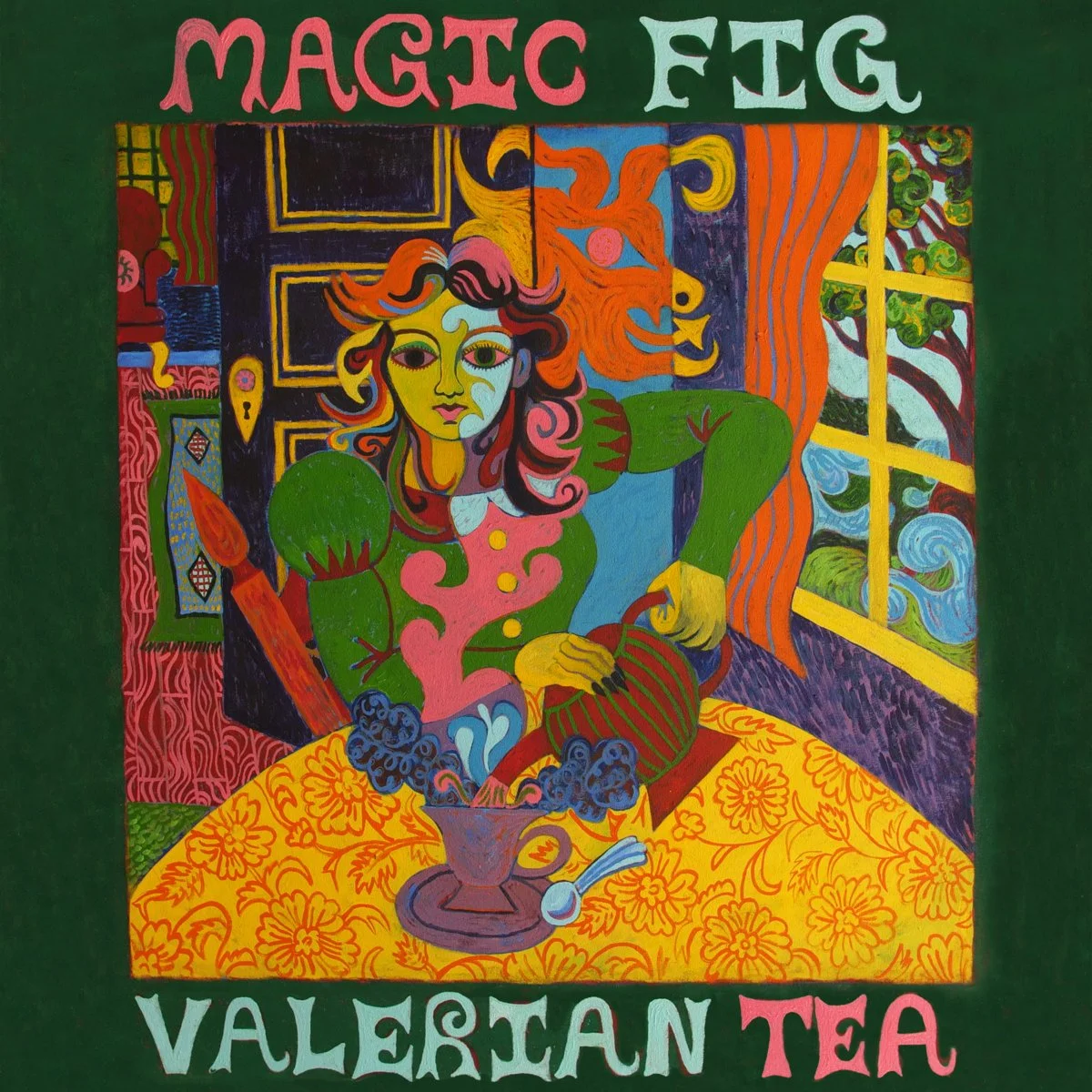
by Brett Abrahamsen
Magic Fig’s cryptically titled sophomore album Valerian Tea inaugurates them as heirs to a glorious, long dormant psych-prog tradition. This spacey, expansive record steers (for the most part) well clear of any second album trappings - in fact, this album is perhaps better than their eponymous debut. Those who enjoyed that album will likely enjoy this as well - the sound hasn’t changed much - and newcomers should find much to appreciate. The Bay Area stalwarts have hit upon a solid formula: Ozric Tentacles-style melodic fantasias mixed with Jefferson Airplane-ish flower power languor.
The results are often stellar. “At The Garden’s Gate,” for instance, achieves a euphoric majesty of a sort seldom heard since the 70’s (the very proggy title is perhaps cheesy, but it’s also fitting in that the song is a worthy successor to the prog rock greats of a bygone era). It is perhaps unsurprising that the band are capable of this sort of effortless grandeur considering the fact that the band members are alumni of various other Bay Area psych bands. Here, they fuse their collective talents together. Opening track “Flammarion” is an apt summary of their aesthetic, yet the band is also capable of throwing various curveballs - check out the melancholy, haunting “Sensation Seeker” where we’re seemingly transported to a monastery midway through the song.
The variety is certainly part of the appeal here: a potentially derivative project such as this needs a modicum of creativity, and they bring it. They even show an unexpected flair for pop with the title track and the numerous interludes aren’t just here to fill space, they’re intriguing compositions in their own right. Saving the best for last, “Sleep of Reason” could be the album’s standout (though “At The Garden’s Gate,” “Goblin,” and maybe “Sensation Seeker” give it a run for its money).
Magic Fig remain, at this point, an underrated band. It’s been nearly a year since the release of this album and the band is still languishing in obscurity. That deserves to change. Jon Chaney (piano, keyboards, synth), in particular, is a virtuoso - if his style can at times be considered cheesy, it cannot be denied that he gives some mind altering performances on this album - check out the middle of “Goblin,” for one.
All in all, the only thing perhaps missing from this band’s arsenal is a ferocious Red-era King Crimson-style attack (which could elevate these already creative compositions into stunningly intense masterpieces), but that’s a minor complaint. My other complaint is that “Walking Shoes” is a shocking misstep on an album in which every other track is excellent, but this can surely be overlooked. Overall, this is perhaps one of the greatest prog-psych albums in ages, and anyone who thinks either of those two genres are dead should absolutely hear this.