
by Christopher J. Lee (@haijoondontbesad)
The self-titled debut of Heathen Axe provides one answer to that perennial (if frequently unasked) question: what if Loveless had been recorded over a single weekend in a garage for $500? Okay, the currency is wrong, but Loveless famously took shape through an interminable number of sessions in London and elsewhere in Britain with a wild budget that nearly brought Creation Records to the brink. The question still stands. If there is a solitary critique to be made of My Bloody Valentine’s magnum opus, it is that it may be too high-minded for its own good, a recording bound to be substantial and significant given the amount of time and investment put into it. This isn’t necessarily to minimize the unambiguous talent of Kevin Shields and Bilinda Butcher who co-wrote their masterpiece. But Loveless is also like a Fabergé egg: beautiful, unrepeatable, carefully wrought, esoterically out of reach.
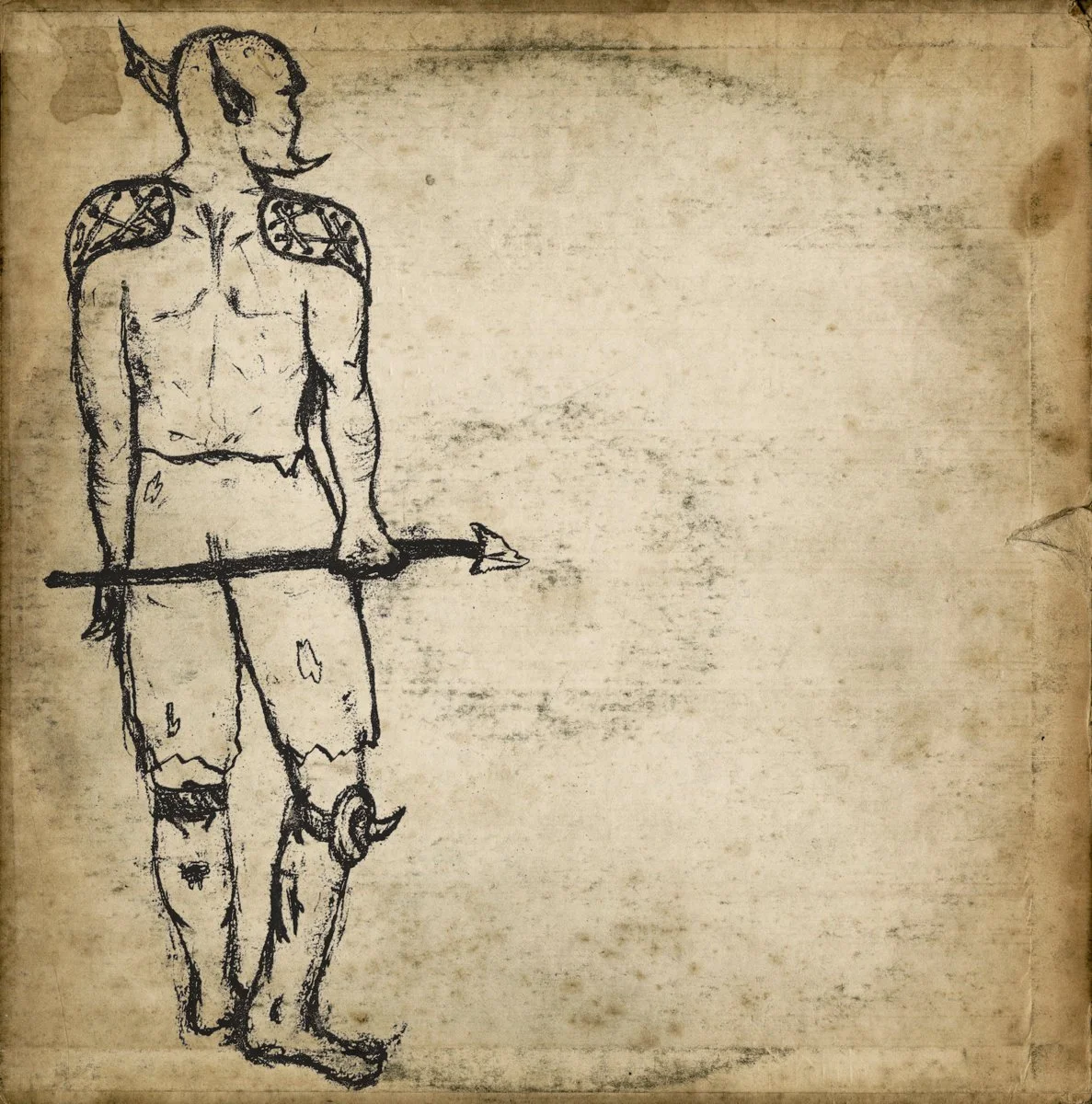
Heathen Axe flips the script by working a low-end theory but without sacrificing a key element: a deep love for impossibly loud guitars. The twitchy needle reading never leaves the red. Perhaps unsurprisingly, John Dwyer of Thee Oh Sees (and its various spellings), Damaged Bug, and Bent Arcana is the mastermind behind Heathen Axe. As explained in the ransom-note-like liner notes, he wrote the album’s six songs in a week, rehearsed them once with Tom Dolas (bass) and John Hodge (drums), and recorded them on the second take with his favorite four track. Dwyer deadpans, “I wanted to make a totally fried recording, quick and dirty. Sort of a cathartic expulsion. Clean the cobwebs.” Mission accomplished.
To be clear, Heathen Axe sounds almost nothing like Loveless. It is more proximate to the relative earthiness of the You Made Me Realise EP, which heralded an alternative future had MBV had they taken a less austere route. That said, there’s a shared essential backing principle. With everything turned up, the vocals are blown out into space, while the guitars press up against the glass. The opening track “Guzzler” sets the tone with Dwyer’s indecipherable vocals slithering in and out of dark corners of chaos, his guitar’s distortion coming in and out like a very bad AM radio. Hodge’s fast-paced drumwork nominally grounds the noise in some version of reality. This madhouse ambiance largely continues with references gradually emerging from the din ranging from the Stooges on “False Floor” to Led Zeppelin on “Infected,” which may be the best track on the LP. Dwyer sounds remarkably like mid-70s Robert Plant on this track (listeners can practically visualize the open shirt and bell bottoms), even if his approach is more in the acid-damaged spirit of Roky Erickson. Fans of West Coast garage/noise rock in the vein of Comets on Fire may experience flashbacks while listening to Heathen Axe.
Like Shields, Dwyer is one of those restless guitarists on an unstated journey toward achieving a particular sound. Throughout his many projects, there appears to be a tension between gunning excess and quiet dissatisfaction, with each recording and experimental collaboration staging yet another attempt at achieving that elusive melody, tone, or noise in his head. Heathen Axe has all the markings of a one off, but it is part of a larger body of work tilted in this direction. This LP may or may not be construed as a janky, psych-rock Loveless, but it bears all the same features of an artist committed to pushing music toward its absolute limit.