
by Benji Heywood (@benjiheywood)
It’s been a busy last couple of years for singer-songwriter-cellist Nina Winder-Lind. The Sweden-born, Brighton-based musician released a critically acclaimed album with The New Eves, her post-punk band that sounds like Jefferson Starship crash landed on Planet Joy Division. Then, Winder-Lind published a book of poetry.
Somehow during all this, Winder-Lind found the time to record a stunning suite of folk-rock songs under her own name. Propelled by her unmistakable vibrato, the songs on her debut solo album Wild Love are just that—feral bursts of protest infused with the joy of being alive.
If her recent run of creative output has slowed Winder-Lind down, she doesn’t show it. Effortlessly polite, the artist spoke to us from her home in Brighton, exploring her childhood in Sweden, the raw moments that went into recording the album, and how collaboration and catharsis are integral to making art.
This conversation has been lightly edited for length and clarity.
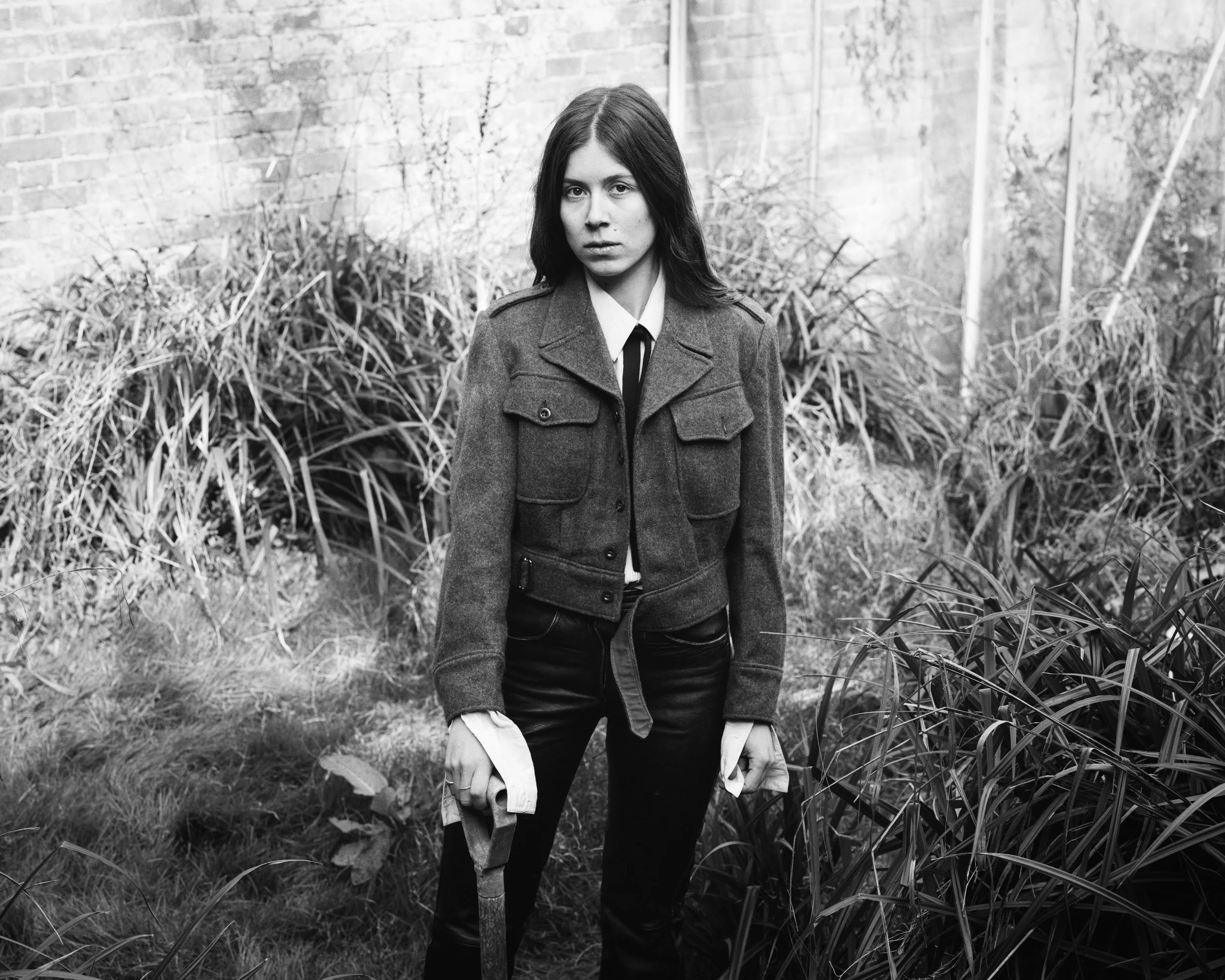
photo credit: Silken Weinberg
Post-Trash: My grandma was Swedish. In an alternate reality, maybe I would have grown up there. What was growing up in Sweden like?
Nina Winder-Lind: I was born in Stockholm, and my parents lived there. But also, I spent a lot of time with my grandparents who live out in the countryside. We get ten weeks vacation from school in the summer and I would spend it in the country. It makes me feel like I’m from the country as well.
PT: When you think of that time in your life, what musical memories come to mind?
NWL: Music has always been in my life. My parents always listened to music, and me and my siblings had kids records and tapes that were actually really good! I'm really lucky to have had that. Then when I was 10, 11 [years-old], I was discovering music on my own terms and finding Led Zeppelin and getting very obsessed. I watched a live DVD from Madison Square Garden or something, and I was like, man, I want to do that.
PT: What about Zeppelin captured your attention?
NWL: I was very drawn to Jimmy Page. He was bowing the guitar—and I was playing the cello—and I was sort of thinking, well, I could do that. There was some kind of connection. But then also I idolized Robert Plant. I thought, imagine if I could sing like that.
PT: Who was it that made you realize you could sing?
NWL: I think Patti Smith probably did that. She doesn't have a conventionally beautiful singing voice, but she's conveying all these emotions, and she's a woman, which is easier to identify with than Robert Plant (laughs).
PT: (laughs) Fair.
NWL: Then I remember hearing Nina Simone for the first time, and it was such a crazy feeling. I didn't know if this person was male or female or what was going on. It was the most incredible thing I ever heard. So that was very influential—not in the sense that oh, I'm gonna sing like that—but like, wow, this is someone doing something real with their voice.
PT: These women who inspired you—it makes me think of the lyrics of “Grandma and Robert De Niro” [on Wild Love]. For people who maybe haven’t heard it yet, there’s a lyric that talks about if Bob Dylan were a woman, would you still have had his posters on your wall? Can you tell me a little bit about that sentiment?
NWL: It’s about going through the process of reckoning with the patriarchy. Let’s be frank. If Bob Dylan were a woman, things would be very different for Bob Dylan, and for his fans, and for myself as well. I think it's also about internalized misogyny. When a woman acts and thinks in misogynistic ways 'cause that's what society has taught you and how society has treated you. It's not intentional. But it's there.
PT: Now you’re based in Brighton. The move from Stockholm was supposed to be temporary, but you ended up meeting a bunch of people in the music scene and decided to stay. Do you remember the moment when you realized you were exactly where you were meant to be?
NWL: Yeah, I remember making a phone call to my parents to tell them that I was actually gonna stay, and that was hard. I really felt that I found the people that I needed to be with, and the place that I needed to be, and I hadn't had that [before]. Being a teenager in Stockholm, I didn't have friends, and didn't have a musical context apart from college.
PT: You’ve said about the song “Girls” that writing it unearthed a “deep sadness and heavy memories of loneliness.” Were you talking about this time in Stockholm? How did you navigate those feelings?
NWL: I would say I had a happy childhood. I was very lucky in a lot of ways. It was when I became a teenager, 13, 14, that there was so much change that I really was not okay with, and I didn't know how to deal with it. I think I was clinging on to being a child. I wanted to be a child, and that was hard. So, how did I navigate that? I mean, it was kind of all escapism. It was like, I'm gonna learn everything about the Beatles and Lord of the Rings. I had my iPod, I had my DVDs, I had music.
PT: I think it’s interesting that you make that distinction—that feeling of wanting to still be a child even as we grow older. That feeling is part of what first drew me to this album. There was something childlike that remains, a wonder to Wild Love that reminds me that something can be insightful and also positive. It’s so. . . uncynical. Do you know what I'm talking about? Do you feel that at all?
NWL: That's nice to hear, because when I get that from other artists, it’s something that pulls me in and connects with me. For me, that's one of the most important things: being humble to life and being a human. It's like, okay, yeah, I'm not five years old anymore. But when you're five years old, you have this wonder of the world, you know? Because you don't know how it works—and I still don't know how the world works! There's so much that I don't know. Curiosity is such a powerful force that can drive you anywhere, and I love that.
PT: Curiosity! Yes, that’s what it is. There's a certain celebration to just being alive. Is that something that you think about often? Being thankful for being here, is it enough?
NWL: Yeah, I think about that a lot. It grounds me. People wonder, "Oh, what's the meaning of life?” I'm like, "Oh, you're alive! That's amazing!” You can be grateful even when things are really hard and the world is going to hell. If you can remember these small things, and you can remember that you're here, you can center yourself around being alive and grateful.
PT: Was that the mindset you carried into making the album?
NWL: I remember when we did the second part of the record in the chapel. [writer’s note: Wild Love was recorded in part beneath legendary Bristol venue The Louisiana, as well as a converted chapel.] I remember driving to Bristol from Brighton—which is quite a long drive—and there was this incredible stormy sky with sunlight and clouds and rain and everything, and it just felt like a sign. I felt this is how the record's gonna be. I wrote down some lines and kept that feeling with me when we were recording.
PT: How did that second session contrast with the first?
NWL: When we were in the studio the first time around, we all had to be so present because we had very little time. There was no time for overthinking or overanalyzing. It was just like, okay, go in there and play this song. We have to be together because we're playing it live.
PT: Were you recording the vocals live, too?
NWL: Yeah, most of them.
PT: There’s this great moment on “Headfirst” where you can hear you stepping off the mic a bit. It’s one of those moments that reminds us of the danger and excitement of live performance. It’s so cool.
NWL: I'm glad you noticed that because I completely agree with you. I love when you hear someone laugh or you hear something a bit wrong [on a recording]. Because it's real music, you know? When Jack Ogborne, who produced and recorded the album, heard [me step off the mic], he was like, "Yeah, that's great. We're keeping that.”
PT: Tell me a bit about what working with Jack was like.
NWL: He’s amazing. We were friends before we worked together. I trust him as a friend, but also as a sound engineer. He knows so much and knows what he likes—he knows what's good. Like a lot of people when they record, I can be very self-critical. It’s vital to have a person like Jack to tell you, "No, that was a great take.” He believes it's much more about making music in a room, getting the right feeling in the studio instead of doing lots of post-production.
PT: I think people sometimes don't realize that a lot of solo artists who are recording under their own name—it's still a collaborative process. Do you want to talk a little bit about some of your collaborators on this album?
NWL: Yeah! Everyone in the band is so crucial to the record existing and to me being where I am. There's been years of supporting each other and believing in each other. There's a lot of that in Brighton—people giving their time and energy to each other’s projects. I'm so grateful that I get to work with these guys.
Like Finlay [Burrows], who was the lead guitarist—we tried to make a band eight years ago, and it didn't really go anywhere. And obviously Ella [Oona Russell, drums, flute, vocals in The New Eves]—we have a strong collaboration there and her partner Toma [Sapir] is like the most crazy-amazing drummer ever. Then Edward [Deeney] plays the bass and I've played cello in his own project.
There's been all these exchanges, and we know each other musically and as people. I’ll write a song, bring it to them, and then we make it into an actual song together. It is such an amazing process. Everyone brings something very special.
PT: When you go to record, how much are you discovering in the room versus how much are you capturing a performance of what’s already been written?
NWL: Mostly it's capturing the moment. But then with some, like “Headfirst”—which was a new song—I went in not knowing if we would have time for it. Then it took shape while we were recording it, so that was fun as well.
With the more acoustic, scaled-down songs, that process is a bit different. I had made some demos on GarageBand, and I added some things, but when we were in the studio, we tried other things, overdubbing this and try that. But the rock band songs, we went in there and we played, and then it was done.
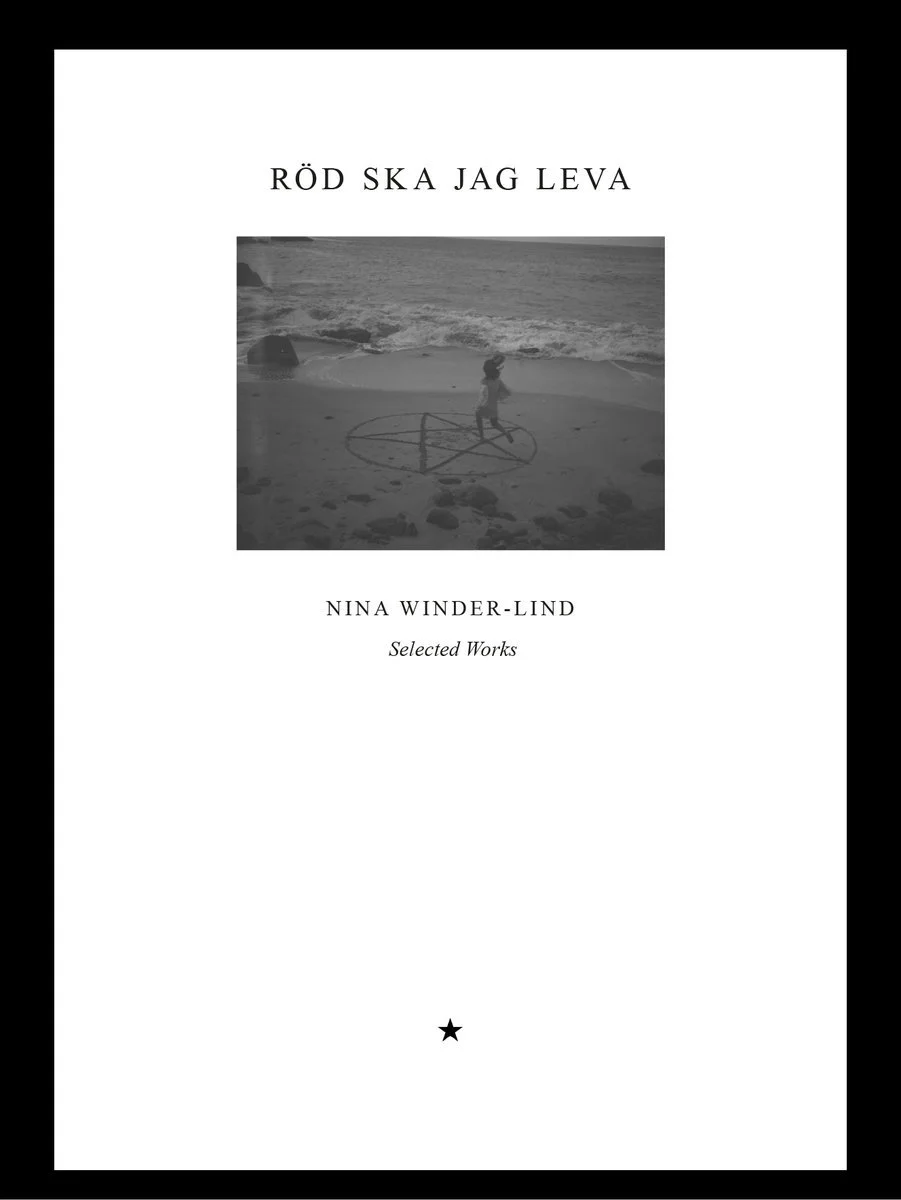
PT: I know you put out a book of poetry recently. Obviously, you write songs in a couple of different bands. What is your writing process like?
NWL: It comes in surges. I'll go through a phase of writing a lot, when I have the time to actually feel. For me, it's not so different writing a poem to writing a lyric. A lot of the time, they're interchangeable. The thing that's really hard is when you write something on an instrument, and then you need lyrics for it. There's something so much more difficult when you have a melody and then you have to force the words into these shapes.
PT: Is there an example on the album of this?
NWL: Actually, yeah, with “Grandma and Robert De Niro” it was a bit like that. I had to really think about the words. It took a long time, which was a different process for me.
PT: I read somewhere that you’ve described writing as “putting words onto explosions.” Can you say more about that?
NWL: You have very intense emotions, and they can explode in a good way, and it can explode in a bad way. Sometimes you don't even know what [way] it is. Making songs or making poems, it's a way of translating that experience into something. If you put words to your experience, then someone else might understand it, which can be an amazing feeling.
PT: Tell me where the concept of catharsis fits in to making art.
NWL: Absolutely. It's such a great word. It really describes how it can feel when you've reached this point of. . . I don't know if it's consciousness, or if it's like physical. Maybe it's both. But you feel so relieved, and you feel so free. We played a show when the album came out and when we were playing at rehearsal, I was like, wow, I actually feel like I'm elevated right now. I felt lifted by everyone and it was so beautiful. And then you can experience it from the other side. If I'm watching someone, I can feel that experience, the catharsis via them. That people can experience this is incredible.
Wild Love is out now via Transgressive Records.