
by Kurt Orzeck
“When you beat yourself over the head with [violent behavior] night after night after night after night for years, you end up kind of a chill guy, because you get it all out of your system all the time.“ -Unsane’s Chris Spencer
Good morning, students, please take your seats, class is about to begin. We’re already running a little late. Carl, turn off your cellphone and turn it in at the front desk. We’ve gone over this. All right, so let’s begin. For those of you who were actually paying attention, we ended our last class with a dissection of the cultural impact and sociological relevance of Max Headroom and Captain Lou Albano. That pretty much sums up the ‘80s. Today you’re going to get some instruction on the decade that followed. You guessed it, the ‘90s.
What mattered most about the 1990s wasn’t the fall of the USSR, the end apartheid in South Africa or even the OJ Simpson car chase. What mattered most of all, and what will be our focus for the duration of the hour, were music videos, primarily those that played on MTV. These videos — or “clips,” if you will — defined not the decade but the character and attitude of an entire generation. Many of them were, as kids said during the time, “rad.” Let me write that word on the chalkboard so it stays fresh in your mind during this class period. It’s spelled “R-A-D.”
Among the videos that were considered most “rad” — or “the raddest,” if you will, were one that simply featured a guy on fire running in slow motion as passersby paid no attention. There was another one with a character who came to be known as “The Bee Girl” and inspired a character in an award-winning indie movie a decade or two later. Don’t worry, I’ll explain what “indie” means in a future class. Then there was an especially rad video that glorified teen jackasses — that term, “jackass,” will be a central focus of our class next week — attempting to pull off skateboarding maneuvers that resulted in them brutally injuring themselves. Young folk thought it was funny back then, and I’m sorry to say that if I were to play it right now in this classroom, many of you would chuckle as well. How far we have progressed in American society.
But I digress. The band that concocted the music for that video, which was called “Scraped,” was a group from New York called Unsane. Director Steven Soderbergh used that word for one of his many low-budget flop films decades later — but again, I digress. Unsane blended hardcore punk and metal into what became known as “noise rock,” which you’re all quite familiar with now because music trends are cyclical and the music industry largely regurgitates old sounds due to a lack of imagination… but back then, the subgenre was rather novel and only popular among bratty punk kids like Scotty over there in the back and Daltry, who of course is absent once again.
Anyway, as you can tell, I had a long night, and you’re already not paying attention to me because ADHD has infected all your minds like some mutant alien worm larvae, so in an attempt to actually get some of you to focus, I’m going to play for you an interview I recently conducted with Chris Spencer, who was my idol — second only to Max Headroom — and with whom I recently had the pleasure of interviewing.
Now sit up in your seats and pay attention, dammit.
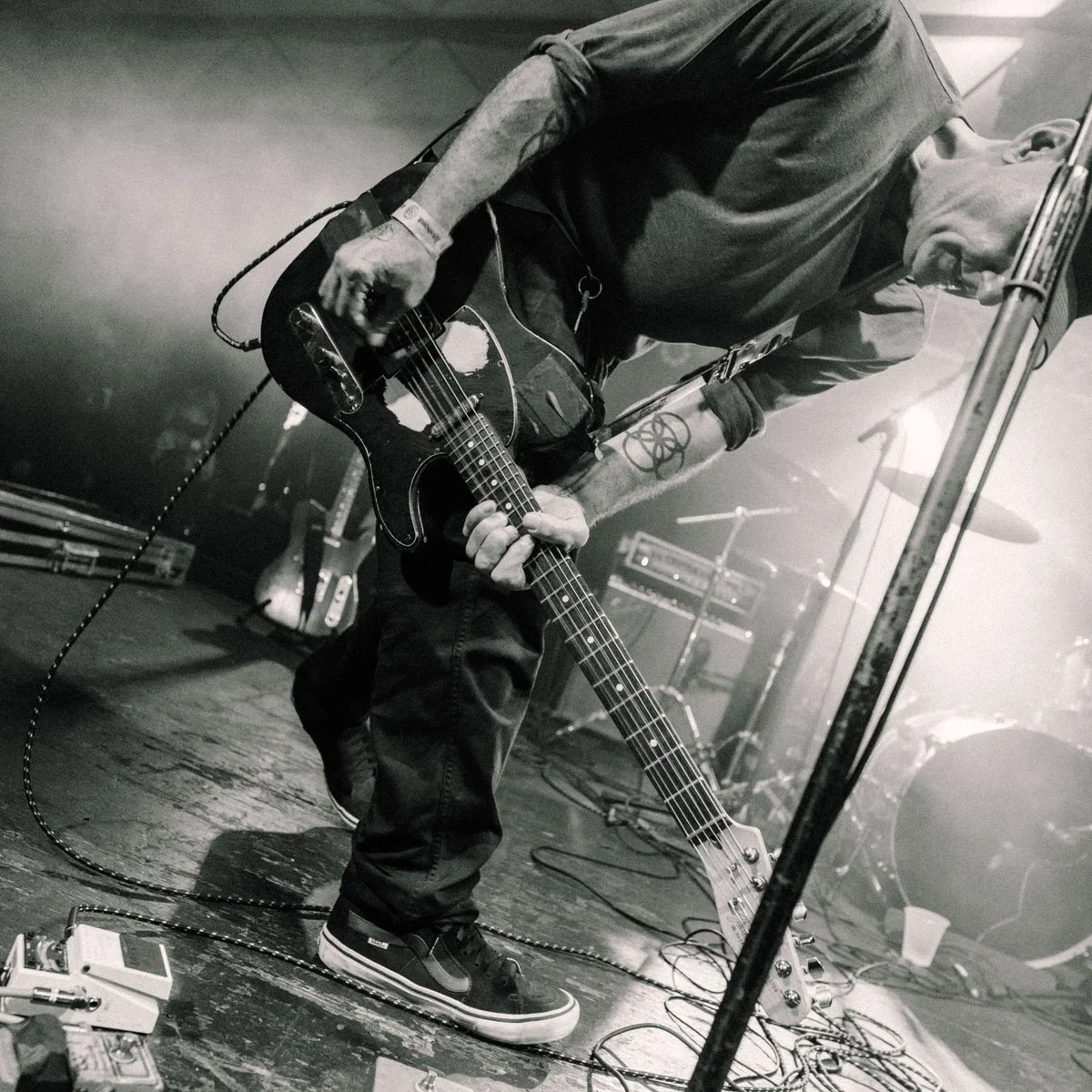
Post-Trash: How’s life treating you these days, Chris?
Chris Spencer: My life has changed a lot. I moved out of New York a while ago and now live in the Redwoods of Northern California. It's fucking awesome: low stress, I play a lot of guitar, I've been starting to surf recently – which is a little crazy but pretty fun. I'm tired of the rat race. So I just hang with my girl and wait for her to get a new dog. Going on tour is really fun now. It used to be not, because I didn't play enough. My life was really chaotic before. Now, shit is a lot more centered.
PT: Are you comfortable talking about what went haywire?
CS: It’s no big deal. Before the band started doing well, I went to [New York University Tisch School of the Arts]. I was driving a cab. I was doing tons of heroin, quit that and started drinking like a fish. You know, crazy Lower East Side of Manhattan shit. Then I started touring constantly, [which was also] a mess: playing all the time, grinding for years. My life was really chaotic. It was chaos and overstimulated craziness with extreme volume and noise – which I love. Now that things have chilled out, it's good to be pure and enjoy just volume and extreme band shit. I don't want to tour ten months out of the year, like I did before. Now that I'm growing older, I can pick and choose what I want to do, which is great.
PT: Back in those crazy days in New York, when the band was touring a lot, when you’d go to a college party, did you feel pressure to be the wild guy in the room – especially considering your band was called Unsane, and your sound and delivery was so intense? Was it hard to extricate yourself from the personas you had created for yourself and the band?
CS: Yeah, that was something of an issue. But when you beat yourself over the head with it night after night after night after night for years, you end up kind of a chill guy, because you get it all out of your system all the time. It's a full-blast expression in cathartic behavior. I feel really lucky in a way, because I had the outlet and people were receptive, which to me was crazy. Like, why would you want to hear some guy totally spazzing out? I didn't understand why people would even like that. But, you know, that's music. That's part of why I loved doing music: I locked into something that was really pure and expressive. I was really a big Flipper fan, despite them having 30-plus members over the years. The ethos of that band was just great.
PT: Well, they get David [Yow] in their corner now, right?
CS: He's not doing it now. They're getting somebody else. They actually asked me if I would do it a couple years ago. But I'd rather just go out with Unsane or Human Impact [a super-group founded in 2019 and featuring Spencer and members of Cop Shoot Cop, Daughters and Swans].
PT: You mentioned playing a stunning number of shows in a row, over the course of 69 days or something like that. Surely you’re more conscious of routing and playing gigs more selectively when you tour these days, yes?
CS: Kind of. Geographically, it becomes challenging because I don't want to drive fourteen hours between two shows, and then take a night off. It's better geographically to hit, hit, hit, hit, hit and try and avoid what we call the “Star of David” tour, where you [dart from one place to another], then you're back where you were. Our booking agent's been pretty good about that. He sends us our shit, and we look at it, and we're like, “You know, let's not play Paris, Berlin and then Orléans [in France] after that.”
Forever, we talked about just doing major cities, but it's just good to go everywhere. That's my attitude. There's a difference between what I and, for example, someone like Paige Hamilton [from] Helmet – really nice guy, great guy – wants.
PT: You guys are tight, one assumes.
CS: Yeah, love him. But when we first started our bands in the late ‘80s or whenever, I was hanging out with him one night and… you know, Unsane was playing shows repeatedly: The Lismar Lounge, ABC No Rio and all these local shows in the East Village and Lower East Side… We were getting to a point where we were going to have to leave town because we were playing so many shows locally. We were just becoming aware of the sort of play-once-a-month ethos that we should have started doing [earlier]. But [Paige] was like, “OK, what I'm going to do with Helmet is play three shows and ask for a lot of money from a label… a big label.” At the time, my naive self was like, “Oh, fuck that. I'm going to get in the van with my friends and play all the time.” I didn't give a shit about the commodity aspect of what I was doing.
So we had a different attitude about playing. Do you do selective shit or do you just play all the time and make the most of the time you have on this planet, you know? It's debatable, because they both kind of work. You could grind yourself into the ground playing every night… but then shit could weigh on you, and then what are you going to do? There was this band called Surgery that was from our neighborhood who got signed by Atlantic [in 1993, with an assist from Sonic Youth’s Kim Gordon]. It was during that whole Nirvana period of time, where all these labels were grabbing bands that they thought could be potentially viable. Basically throwing shit at the wall to see what sticks. And [Surgery] went with a big label as soon as possible and got fronted like – what for a big label was probably a minimal amount of money, but 150 grand. They made a record, and it didn't do so great. Then they made another one, and it didn't do well at all in the mainstream.
Meanwhile, me and my friends were playing every day, driving to Chicago and Minneapolis and all over the country. Surgery got back-burnered by Atlantic, because they signed for all this money and they had a three-record deal. The second one really didn't pan out. So then they came to understand that the label just did not support them, didn’t want to put out a third record. Later, the singer, Sean [McDonnell] – who was a very close friend of mine – died [from a severe asthma attack]. So that ended that. They were already going through this thing where they couldn't get a record out.
When no small label is going to buy out your contract for a shit ton of money, and the label you're on does not want to deal with you anymore because you didn't make them a ton of cash immediately… all I’m saying is that we're not a mainstream band. We got lucky and did a skateboard video of people hurting themselves [for their song “Scrape”] that got on MTV, and that helped us a lot. Touring like mad men really helped us a lot too. The “selective” thing just doesn't pan out for everybody. It kind of worked for Helmet — they still are touring and doing great — but we had a different attitude.
PT: Bob Dylan hasn’t stopped touring. He’ll stay on the road till he’s dead.
CS: Oh yeah, he still tours?
PT: Yeah, man. He decided, in the ‘80s I believe, to launch the “Never Ending Tour” and he’s been touring ever since. I saw him play with friggin’ Willie Nelson last year. It was somewhat mystifying, like, “Why keep doing it?” I guess maybe they found out what they’re meant to do on Earth. Can you expand on how you managed to transition away from that nonstop touring lifestyle? Not to get too personal, but did you go to counselors?
CS: No, I didn't do any of that. I didn't go to rehab or any of that bullshit. For what? Having been so deeply embedded in that sort of drug scene? If you want to stop, you're gonna fucking stop. It's up to you. You gotta make that decision and knuckle up and do it. You know what I mean? I understand that's not for everybody. But that was my attitude. Life is good. I feel really lucky, because I actually figured out what I love doing, which is, playing a Telecaster at extremely high volume, making noise and that kind of thing. Touring, in a lot of ways, got me out of the crazy New York crazy. But then there's clubs giving you alcohol every night. So you start drinking all the time. Then eventually you just stop drinking.
PT: Joe Perry from Aerosmith once said in an interview that you only have so many drink tickets in your life, and once you use up all of them, you can’t drink anymore.
CS: That’s kind of true.
PT: Something that started happening three or five years ago is that the term “noise rock” rose back up to the surface. Did you guys ever consider yourself to be a noise rock band? How did you feel about that term being used back then and now?
CS: I don't mind that at all because it describes heavy rock that’s super-noisy and uses feedback. I don't think we're limited to just that genre, but it's kind of flattering. There are a lot of good bands that are considered noise rock: the Jesus Lizard, Melvins… I don't know if the Butthole Surfers would be considered noise rock, but their early stuff would have fit that bill. Or even super-early Sonic Youth. They were the bridge between No Wave and punk, right?
PT: I'm glad you mentioned Jesus Lizard, because they're one of my favorite bands of all time. I had the opportunity to interview Yow and Denison recently. I asked them if they thought it’s crazy that, in the ‘90s, the biggest topic of conversation among indie bands was whether they’d sign to a major label and, if so, that their fans would abandon them for selling out. That’s totally unfolded. Do you think that battle was worth it, in retrospect?
CS: Oh, I don't know. If you can sign to a major label, do what you love doing, do exactly what you want to do without making concessions to the label, because you owe them a shit ton of money or aren’t tainted by all the cash… a lot of people are in bands for different reasons. I've noticed over the years, from touring, that some people just want to be rock stars and some people want to be in a van with their friends and kick ass every night. Everybody has their own motivation for what they do.
Not against anybody, but it seems like the bands from the early ‘90s around that whole Nirvana period of time — Mudhoney, Soundgarden — we lived in a van and played all these shitty-ass clubs all over the country in the late ‘80s and into 1991, and then that shit blew up. It was a cool scene in that we knew each other and played together, because we were all really noisy, crazy, sort of punk-ish. We weren’t ”punk-rock,” but we were punk-rock kids.
At the time we were playing in those bands, we wanted to do something a little different, something that had a little less of a three-chord, beat-you-in-the-head kind of thing going on.
PT: I think I first heard about you guys by reading the liner note credits, the thank-yous in the back of Bleach or Nevermind.
CS: Oh, wow. That's true.
PT: As a quick aside, what's your most salient memory of traveling with Kurt Cobain?
CS: We didn't travel with them, actually. We played shows with them at places like the Pyramid Club [in New York City]. We did one-offs with them. But we were all of the same ilk. That's like how I met the L7 girls. When they came to New York, we would all play CBGB or the Pyramid. The Mudhoney guys would too. It was part of this giant circuit that we would all do around the country.
When we would get to a city, smaller up-and-coming local bands would play with us, like Pussy Galore or, at the time, Helmet. But, like I said, they signed to a major label, Interscope, pretty quickly. “Unsung” was huge.
I dated a girl who did reception at Sub Pop and answered all of Kurt's and Nirvana’s fan mail.
PT: So what prompted you to recently delve into and reissue your past material? Is it because you feel like the technology is good enough that it can breathe new life into the band?
CS: Yeah, totally. My good friend, Andrew Schneider at Acre Audio, he did three Unsane records, later ones like [2007’s] Visqueen. Really good-sounding records — well, I think, anyway. So he's got a whole setup, and a lot of those [early Unsane] records, when they came out back in the day, didn't have the full frequency spectrum going on. They're a little mushed up. These days, you can really open it up and have it sound really great. And Andrew's really good at doing that.
During the pandemic, my manager, Todd Cote — also a very good friend of mine — he had nothing to do, because tours were cancelled. So he asked me if I would be interested in working with him to get all the rights back to all the Unsane albums. And we did — except for one Atlantic album [1993’s Total Destruction]. When Matador got bought out of Atlantic, we put out that album. And they've been real sticklers about giving it back to us. We're still negotiating that one, but it’s totally amazing we got all the others back. Todd did a great job.
I was going to reissue them chronologically, but there were issues trying to do that, because it would’ve included 1994’s Peel Sessions, which came out on Matador. So we did three. We're trying to add in one that was not released and do a vinyl version of Peel Sessions. But the BBC has so much shit going on… they want not a ton of money, but some money for it, and then they also don't answer our emails. We spent a couple years trying to work with them. Then eventually I forgot.
PT: It was like a musician equivalent of being in development hell for a movie.
CS: Yeah, totally. But we got most of our catalog back. We reissued Improvised Munitions, which was technically our first record but never came out because the guy from Circuit Records who was going to put it out disappeared. We got the test pressing, but we learned a few months later that he owed a drug dealer a shit ton of money and nobody ever heard from him again. So while I had the test pressing, I was in the van with my friends touring around.
I lived in this crazy basement space on Clinton Street with all these money-grabbing junkies who sold all my records that I had left in my room while I was out on tour – one of them being the test pressing. We found the guy who bought it, that one test pressing of that first record … it was a fucking insane story. We located him and got the record from him 25 years later. So we remastered that from the vinyl, which is fucking rough, but it sounded really good. Andrew helped me with that. We were able to reissue, or actually just release, our first record that never came out. It had a lot of songs from the Matador record [1991’s Unsane], but it was that first session.
Now, we're reissuing Occupational Hazard, which I have right here. I have the tapes and all kinds of crap that were discovered. I had them sitting in that closet back there [to which he points]. So I dug a bunch of shit out and was like, “Holy shit.” I have demos which are also coming out as a digital download with the vinyl of Occupational Hazard. We did demos of songs for Amphetamine Reptile [Records] that were to become Occupational Hazard. We also have an unreleased song called “No Soul,” which we recorded at Hyde Street in San Francisco with Frank Kozik — rest in peace, good friend — and his Man’s Ruin label.
All in all, it’s cool to be able to go back and really have the record sound better and bigger. Technology these days is way better than it was back then. I mean, I love recording to tape. I'm a big advocate for using tape. But once you’ve done that, you can do a lot more.
PT: So do you feel fortunate, or have you reflected at all on the fact that your “re-entry,” in a sense, is coinciding with this noise rock explosion and also a huge popularity in vinyl? It seems like just the right time for you guys to be coming back and doing a huge tour and all that.
CS: I don't know. I heard that same thing ten years ago, that noise rock was on its way back and that kids were buying vinyl again. Time flies. I'm surprised anybody likes this shit. I honestly don’t know why. It’s really noisy. It's really abrasive. But I love doing it. So I'm going to keep doing it.