
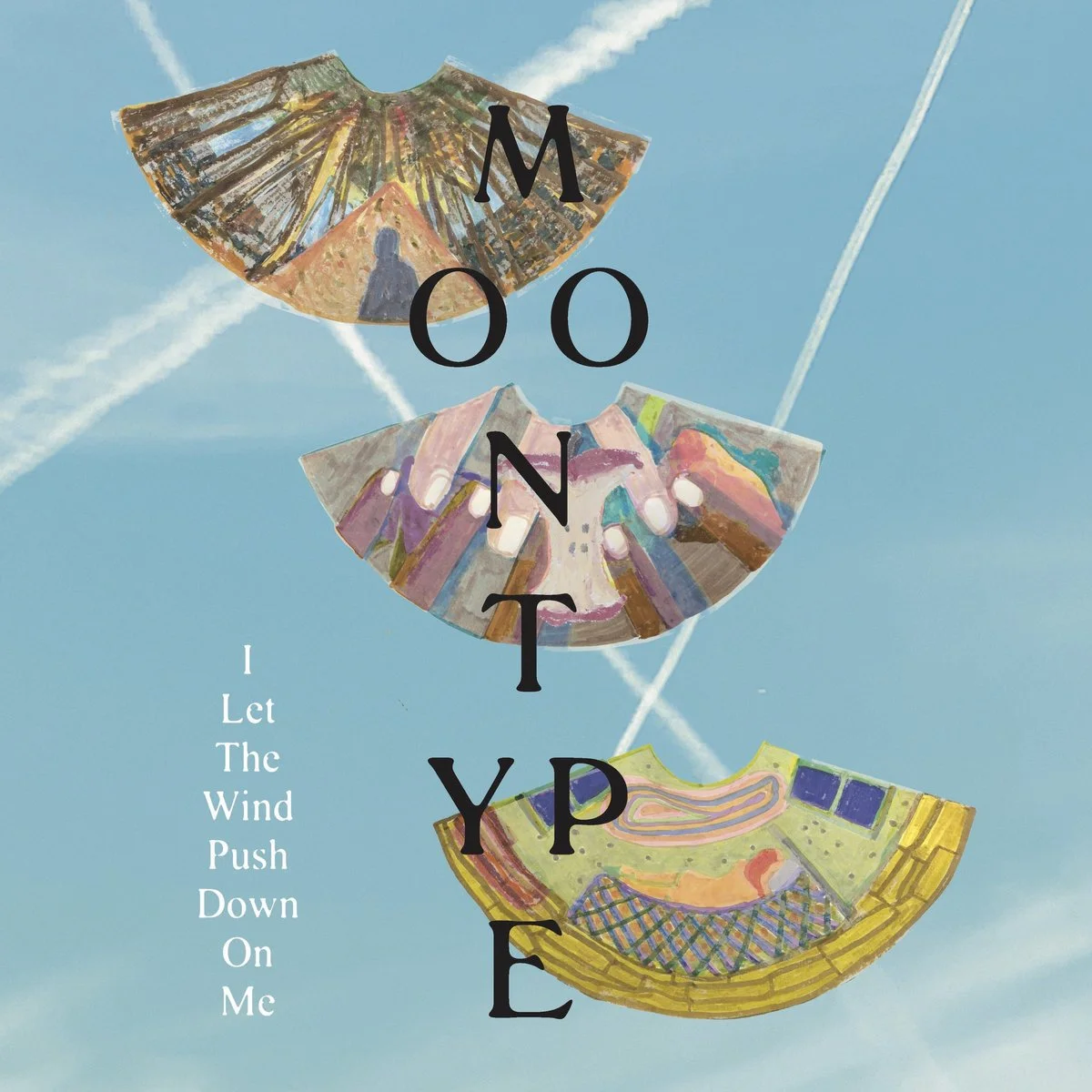
by Nick Levi
One of the most compelling aspects of music is watching artists evolve over time. Fans of Moontype can certainly attest to this. What began as a solo project by Margaret McCarthy while she was studying at Oberlin College eventually developed into a full band after she reconnected with fellow Oberlin musicians Ben Cruz and Emerson Hudson following graduation.
McCarthy studied technology in music and previously made electro-pop—this background feeds into Moontype’s gradual shift from sparse, bass-led compositions into an idiosyncratic blend of indie rock, folk, math rock, jazz, and shoegaze textures. In 2021, the trio released their debut album Bodies of Water, establishing the core preoccupations that have defined the project since: friendship, emotional vulnerability, and geology, the latter influenced by McCarthy’s academic background.
Five years later, their second album I Let the Wind Push Down on Me arrives. As emotionally charged as its predecessor, it plays like a document of McCarthy’s twenties, shaped by loneliness, self-reinvention, and addiction. The most notable shift from the debut lies in its relationship to nature. Where nature once carried a restorative, almost consoling quality, here it feels colder and indifferent. Forests, oceans, gulls, and weather no longer offer refuge but instead function as emotional projections.
Beyond this, the album is anchored by recurring themes of solitude and self-destruction. On tracks like “Starry Eyed,” references to drinking and compulsive habits underline the tension between temporary euphoria and its longer-term consequences. The record’s emotional peak arguably arrives with “Let Me Be,” which distills this conflict into a moment of quiet acceptance rather than resolution.
Musically, the album moves fluidly between indie folk, dream pop, art rock, and jazz-inflected arrangements. A clear development is the more intricate guitar work compared to Moontype’s debut. The instrumentation often rests in restraint, drawing on math rock precision and shoegaze textures that oscillate between haze and abrasion. When it does intensify, it tends to do so gradually rather than explosively, shifting between delicacy and controlled release. McCarthy’s conversational vocal delivery won’t be for everyone, but its closeness and restraint reinforce the record’s emotional focus rather than competing with it.
However, that same restraint becomes a limitation over the course of the album. What initially feels immersive and cohesive gradually flattens into uniformity, as individual tracks begin to blur together in tone and tempo. McCarthy’s vocals rarely stand out in a contemporary landscape where many artists adopt a similar understated, conversational style. One exception is “Click Clack,” which breaks from the prevailing mood with a more playful, almost ska-leaning energy. However, this moment of contrast arrives too late to meaningfully reframe the album’s broader arc.
Ultimately, I Let the Wind Push Down on Me is not a weak record. It demonstrates clear growth in musicianship and greater confidence compared to Moontype’s debut. However, the album would benefit from sharper dynamic contrast or a more selective tracklist, as its uniformity causes its strongest moments to lose distinction within the whole.