
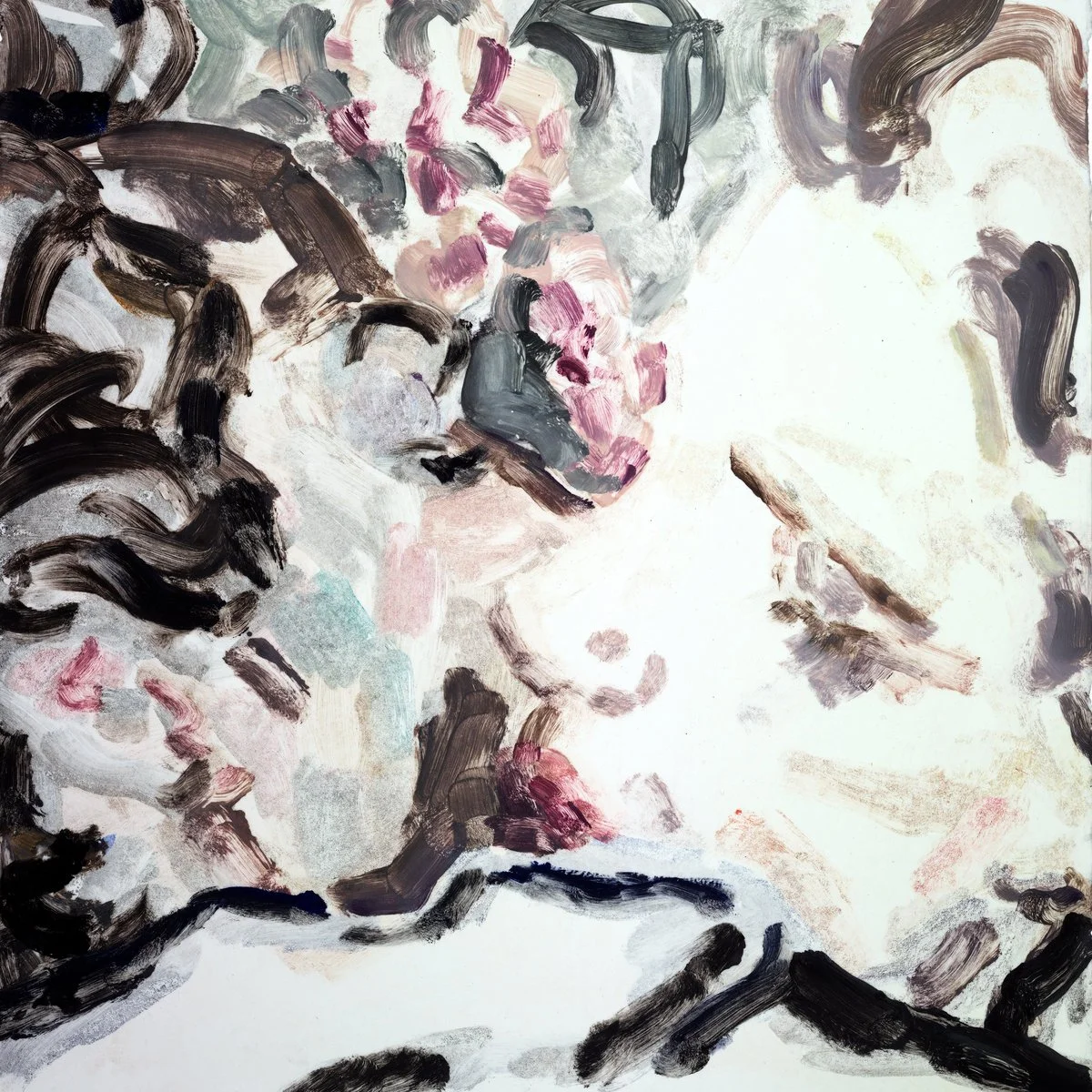
by Devin Birse (@devvvvi.b)
Five years on from Seek Shelter, Copenhagen's Iceage are still marching. In the interim, Iceage frontman Elias Ronnenfelt has cultivated a steady solo career marked by collaborations with legendary London experimentalist Dean Blunt and two solo albums—one a collection of free-wheeling Americana and the other a slab of delicate psychedelic trip hop that saw him edging closer to his hometown's burgeoning art pop scene. The easy expectation after such a gap is for something that practically leaks in grandeur—Iceage is a band marked by restless evolution after all. Each release finds them shifting around their axis to accommodate a new vision for what the band can be. For Love of Grace & Hereafter continues that evolutionary streak but does so while looking backwards.
Recorded in the same remote house in rural Sweden where the band built their landmark third album, Plowing into the Field of Love, For Love of Grace is the band's least adorned work in over a decade. Gone is the hefty orchestration, backing choirs and rapturous horns; what remains is a collection of songs built around a solid core of driving drums, bouncing basslines and intertwined guitars.
Lead single “Star” brilliantly marks Iceage’s new direction. Its dance grooves and clashing guitar lines trade melodies between the casual beauty of Ronnenfelt’s vocals. It suggests the band had reemerged from their slumber catchier than ever. The focus on hooks and melody is laced throughout the album. Opener “Ember” begins as a driving slab of garage punk, its doomy bass and searing guitars setting the stage for a return to the gothic gloom of their mid-career highlights. But the chorus gives way to an anthemic heart. Strummed acoustic guitar aligns with Ronennfelt’s strains before diving back and forth between the gloom and the beauty. Iceage have always operated between melody and terror. Even their vicious no-wave flecked debut New Brigade was prone to switching between guitar screeches and anthemic sing-alongs. But For Love of Grace pushes that dynamic to its limit, the band's ever-building grip acting as a strainer to reduce their songs down to their most melodic and tender elements.
It’s the result of a renewed focus on tightness and ferocity. Recorded shortly after Ronnenfelt’s solo debut Heavy Glory, the songs abandon the layered excess of Seek Shelters' britpop-meets-Oasis balladry. Everything feels harder and faster in a manner that prevents things from getting too saccharine. A track like “Match Head Girl” could easily end up a piece of indie dance floor cheese, but its noisy switch-ups and clattering percussion edge into far more eclectic territory. Even slower tracks like the lurching “Tender Blades” operate like tightly wound tactical operations. Maybe it’s the intimacy of the recording, the nearly two decades of playing together, or just the razor-sharp production, but every element appears incredibly close together. Throughout it all, Ronnenfelt remains as confident as ever. His time as a pop experimentalist has seen him shift from his Nick Cave gloom into a new and brilliant decadence. Resembling neither the balladeer of Plowing nor the soaring crooner of Seek Shelter, or even the screeching punk of You’re Nothing, Ronnenfelt emerges as a burning, impassioned star. His delivery is closer to the tight rope of late cool and emotional catharsis, walked by the likes of Lou Reed, Patti Smith, or even Julian Casablancas.
Like their influences, Iceage still displays heavy doses of lurid nihilism. But for all the misery, this is clearly a work of an older, more mature band. Ronnenfelt has been playing with guitarist Johan Suurballe Wieth, drummer Dan Kjær Nielsen, and bassist Jakob Tvilling Pless since they were all teens. Those years of work have led to a physically tight band, but also a band who’ve clearly grown and shifted together.
For Love of Grace suggests Iceage is marching ever forward. In a music landscape still plagued by disappointing follow-ups and dull repetition, it's good to know the band don’t just still exist but still explore. Marching further and further towards something better, deeper into the true blue.