
by Giliann Karon (@gilposting)
Shortly after feeble little horse released “This Is Real,” their first new song in two years, guitarist Ryan Walchonski announced he was leaving the band. He’d been contributing remotely from Washington, D.C. since 2021, while the rest of the group remained in Pittsburgh. Together, they’d spent their college years feeding the city’s DIY scene as they climbed from local notoriety to statewide and national indie attention. But by 2025, none of them were in college anymore, and Walchonski hadn’t been for quite some time.
With a backlog of solo work, Walchonski founded Aunt Katrina as a way to meet people, marking a new phase of his musical journey that gave him space to hone his songwriting skills, process feelings about this stage of adulthood, and, most importantly, fill a Pittsburgh DIY‑shaped void. Mutual friends connected him with DMV musicians Ray Brown (Snail Mail) and Eric Zidar (Tosser). After attending local shows, he met Laney Ackley, Emma Banks, Nick Miller, and Connor Peters, who affixed Walchonski’s older scraps into 2023’s feverish electro-pop EP, Hot.
The following year, he began writing what would become This Heat Is Slowly Killing Me, the band’s debut album. Cozy guitar pushes against whirly, wandering lo-fi textures, while atmospheric vocals float atop breakbeat-inspired drums. This Heat wrestles with the transformative suffering and creeping impermanence that define the mid‑twenties experience. At this age, the reality of your choices has crystallized. Is it all you’ve ever dreamed of? Does that even matter?
Everyone in the band fills out a time sheet or punches a clock, as do most musicians in D.C. and Baltimore, where art sits subaltern to the daily grind. The freedoms they've sacrificed for financial stability and material comforts shape their touring schedule, practice availability, and other steps to economize the album process. On the flip side, artists as hobbyists enjoy the freedom to make music independent of trends or social media clout. When searching for like-minded collaborators, Walchonski had no trouble finding them.
The title nods to the summer Walchonski spent driving across D.C. to polish demos with Alex Bass (Snail Mail, Prude) in a car with no A/C. When locals refer to the city as “the swamp,” they’re not talking about government corruption. They’re referring to the oppressive humidity that stains your clothes yellow with sweat. Even the most enjoyable activities feel putrid. Physical suffering compounded Walchonski’s quarter-life reckoning and led him to question whether his dueling careers in corporate America and indie music were sustainable.
Throughout his sweltering commute, the Radio Dept. played on a cassette tape. This Heat nods to the Swedish band’s reverb-soaked polemics on love during fascism, finding respite in the warm cocoon of distortion. Each of the nine tracks wades through different facets of transition and loss – grieving your grandparents, watching friends grow distant, and the dysregulating buzz of other people’s judgment. The innocence and whimsy of saccharine early aughts pop provide a soft spot for these hard feelings to land.
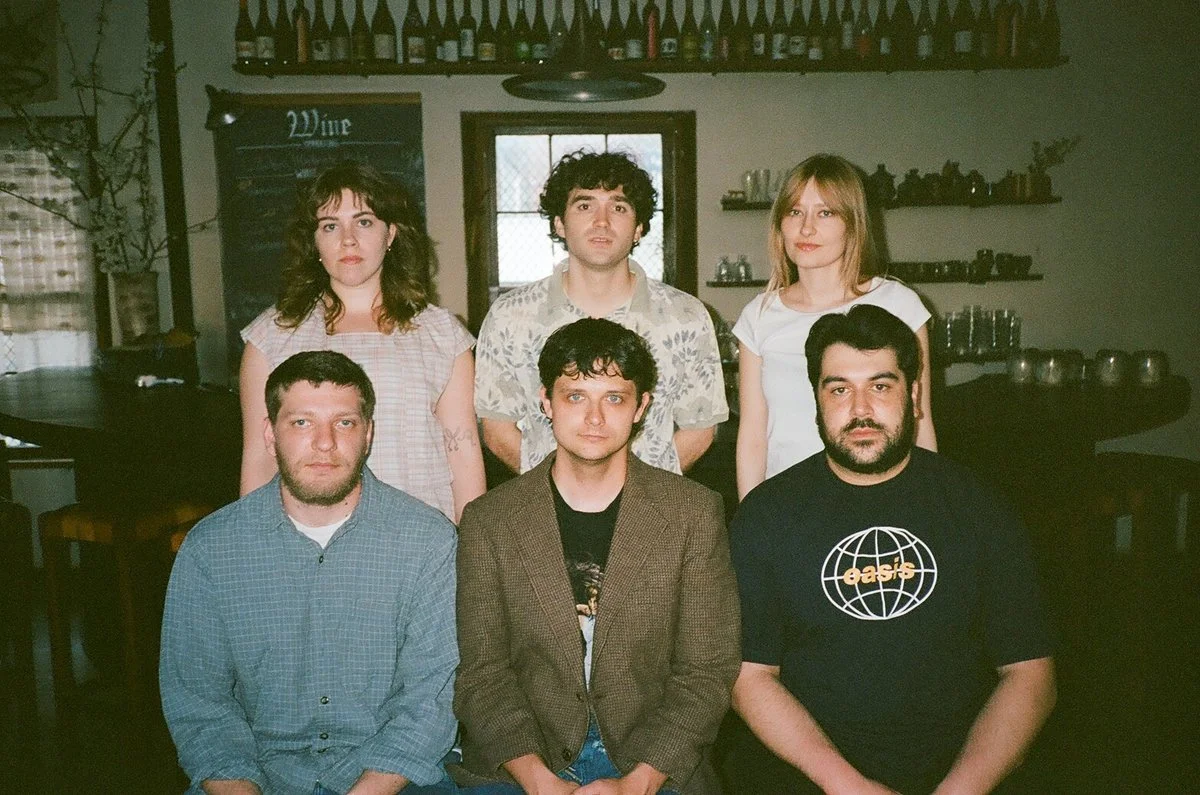
Aunt Katrina, courtesy of the artist
This interview has been edited for length and clarity.
GILIANN KARON: You moved from DC to Baltimore and amicably split from feeble little horse. What hurdles and emotions arose from this period of fluctuation, and how did Aunt Katrina help you move through them?
RYAN WALCHONSKI: Making music is always about processing emotions. It’s easy and safe for me to express myself when I’m writing a song. I'm a very location-dependent songwriter. Whenever I move, whenever I experience a new location, it gives me a new canvas to write on.
Aunt Katrina gives me the space to explore those emotions in a safe setting. Not everything feels safe to write. You hit your mid-twenties and need to take stock of your life. You graduate from college, and that's a big change. But then once you reach a certain point, you're like, “What am I gonna do actually for the rest of my life?”
Aunt Katrina, at least in its current state, is about the fact that I'm 27 years old and trying to figure out if I want to work a normal job for the rest of my life, and I don't know the answer to that.
27 is a special kind of hell. You look in the mirror and are like, “This is who I am.” If you're like me and just work a normal, corporate job, it's a tough pill to swallow that this is what I'm gonna be doing for the rest of my life. We dream, I think, as kids or teenagers, of an exciting life. And then you learn the fact that you're just gonna be working every single day for the rest of your life.
That's really tough. I think a lot of people want to be musicians, and that's okay, but it's not always easy. There’s nothing wrong with having a 9-5 job, but it comes with its own set of difficulties. It's not as exciting, but I don't have to worry about getting paid. Everyone in Aunt Katrina is working normal jobs.
GK: In past interviews, you talked about finding your voice as a songwriter. Now that you’ve released an EP and 2 albums as Aunt Katrina, what do you think that voice is?
RW: I used to think of myself just as a guitar player, and over the course of writing the album that I'm writing right now, I found I want to push myself as a songwriter and as a lyricist and not worry about if this is the best, most interesting guitar part.
Right now, I want to be the best songwriter I can be. Aunt Katrina is a pop band. A lot of the artists I like are pop artists, but the skin you put over changes every time. The instrumentation and the style change with time. But at the end of the day, I'm trying to do the best I can at writing a good song.
GK: Aunt Katrina includes veteran DMV musicians, including Ray Brown from Snail Mail and Eric Zidar from Tosser. How do you ensure everyone gets to lend their expertise and have a voice while maintaining your creative control?
RW: Often, it's looking to these people for advice, both musically and behind the scenes. Everyone has a unique perspective that I care about. I think that's what makes our band special. I care about what these people have to say, and I care about their musical contributions. I want them to feel invested in the group and like it's a safe space where they can have fun.
That's what Aunt Katrina has always been. We get together every month or two. We play a show, have time to hang out, and make music. They feel empowered to come together, perform, and enjoy themselves. It's not so they can make a bunch of money from it. I want them to have a good time.
GK: Were there any scenarios while writing This Heat where input from bandmates shifted your original vision?
RW: I worked on the last album with Alex Bass. He plays in Snail Mail, and I met him through Ray. I write the songs by myself and bring them to him as demos. The songs take shape and completely change with Alex. He's like another band member, but he doesn't play live with us.
Ray adds the drums, which always fill it out and give the songs more power. So much of making music is the relationships that you have with other people. My five bandmates absolutely influence the music I make because I respect them as people and as musicians.
GK: When you say that Alex “shapes the song,” what does that look like?
RW: He helps settle what the song structure should be. I’ll write a song on an acoustic guitar, and he helps me fill it out and decide on the style.
Our tastes in music overlap heavily. We're working on a new album that sounds like Pinback, who we both love. For a lot of those songs, I was asking how we can take a song I wrote and implement some of the stylistic choices they make.
GK: Did you have any moments like that on This Heat where you wanted to make a song in the image of another band?
RW: The Radio Dept is one of my favorite bands. When I was writing This Heat, I’d ask myself how I could use what they were doing. I would come to Alex and be like, "I wrote this song in honor of The Radio Dept., basically. How can I make it sound like that?"
I love artists who put you in a different place, a different mindset, and allow you to be introspective. That's what The Radio Dept. does. I like how they’re political but in a way that's honest to themselves. They're not trying to be a political band; they just are. Sometimes bands are trying to be political, and it feels disingenuous. Or, on the other hand, some bands completely avoid politics, which feels disingenuous in a different way.
There is no way to escape what we're living right now, and maybe escapism is valuable in music, but I like music that empowers me and those who feel similarly.
GK: You wrote This Heat while driving across DC one summer with no A/C and listening to The Radio Dept. Summers in DC are brutal, truly unlike anything I’ve ever experienced. What about this setting was a good backdrop for your album?
RW: The songs are about being upset or uncomfortable, and that’s what DC summers are. They’re oppressive. This Heat is about dealing with discomfort, being upset, and being sad, and I think the DC summer is a perfect backdrop for those feelings.
You're trying to figure out, either in the dead of summer or the dead of winter, why am I even here? Why am I alive? Why am I doing exactly what I'm doing right now? That's what I think Aunt Katrina's music is. It's about trying to understand these complex, often negative feelings.
GK: How do you stay active in the community while growing as an artist?
RW: At the end of the day, staying active in the community is about showing up. If you want to be a part of a music scene, you gotta go to the shows. When I was in DC, I would see Tosser or other bands in the city and take inspiration from them. It's the same thing in Baltimore. I grow as an artist, in part, by taking in what's happening around me.
In Baltimore, hardcore is huge. Turnstile is the band in this city. They just won multiple Grammys, which is so crazy, and they did that partially because they continue to show up for their city. They didn't become popular and then move to LA. I respect how much they keep giving back to their community because not everyone does. So many bands get some steam, and they'll be like, "fuck this city. I'm outta here. I'm moving to LA, New York, or Philly."
GK: Who are your favorite bands in Baltimore?
RW: I like the band Virtua DX. They sound a little bit like The Radio Dept. I think they're 19, 20 years old. They're just kids, and they're great. We saw them the other night in Baltimore. I also like this band, Lean Tee.
I love Flowers for the Dead, and I’ll always love Tosser. I love Nourished by Time, too. I think he lives in New York, but he'll always be a Baltimorian.
GK: What’s unique about the scene in DC and Baltimore?
RW: People are making music to make music. Sure, there’s some pretension everywhere, but people here have other jobs and other interests, and they also happen to be making music. They do it for the love of the game, which I don't think you can say for everywhere. People move to Philly now to be a part of a scene. People move to New York or LA for the same reasons.
Music in DC and Baltimore isn’t influenced by hype, trends, or clout, and I think that's very special. People make music because they enjoy it.
I recently listened to an interview with an artist in the group Playland. He talks about wanting to listen to music made by people who exist within a normal grind, and not people who are just musicians. Career musicians absolutely can make good art, but there’s something special about art made by people who suffer just like the rest of us.
GK: That’s why there’s so much good music coming out of Chicago and Minneapolis, because everyone is a normal person who is also making music.
RW: I don't want to say it becomes disingenuous, but you lose some of that honesty. It's its own kind of grind to try to be a musician, but some people know what it's like to clock in at a job every single day, and some people don't.
GK: You call your music “laptop-gaze.” How would you describe that, and in your opinion, what other bands fall under that category?
RW: It's just DIY. Doing it yourself in your room, in your basement, in your whatever. I really like this band from New York, Nara’s Room. I don't know how they would describe their music, but it seems very homegrown. It's just making fucked up noises on your computer. You don't need much equipment. You don't need expensive things. You just need to have a love for the game.
GK: What was your process of finding samples, and what was your favorite one?
RW: I don’t want to get sued, so I always look for royalty-free or public domain samples, like government speeches or public media. I’ll download a 55-minute news reel and comb through it to find lines I like. I’m not looking for anything in particular, just something that fits the song or I find funny.
In the song “How Are You?,” there’s a sample of some British guy named Maddox reading a book. In my opinion, it fits perfectly within the context of the song. I'm not gonna get sued for it, I think.
GK: What's the last song you heard that changed your approach to making music or opened your eyes in some way?
RW: There are bands that I find that are already doing what I want to do, but I don't know it. When Alex and I were working on this last album together, he showed me this song from Weezer called “The World Has Turned and Left Me Here.” It's just a great rock song. You can make great music just by being simple and straightforward. It doesn't need to be crazy. I don’t know if Weezer's the answer, but maybe it is.